Table of Contents
What to Know Before Visiting Switzerland
Switzerland is a beautiful, landlocked country in west-central Europe, bordered by Italy, France, Germany, Austria, and Liechtenstein. Four national languages are spoken—German, French, Italian, and Romansh. We traveled through the German-speaking region and found that most people also spoke English, but it’s always helpful to learn a few basic greetings. We recommend downloading Google Translate before your trip.
Before diving into our 7-day Switzerland itinerary, here are a few important things to know before you visit.
Getting Around Switzerland: Public Transit & the Swiss Travel Pass
One of the first things to consider when planning your trip is how you’ll get around. We used public transportation for our entire trip and had a smooth, scenic, and stress-free experience.
The Swiss Travel Pass is one of the most popular options for tourists. It offers consecutive days of unlimited travel on Switzerland’s trains, buses, and boats. While it doesn’t cover every mountain train or gondola, it often provides discounts on scenic railways and cable cars.
Other Swiss transit options include:
Swiss Travel Pass Flex – Choose your travel days within a month.
Swiss Half Fare Card – Get 50% off most trains, buses, boats, and mountain transport.
To figure out the most cost-effective option, we used the Swiss Travel Pass calculator from Lost in Switzerland. For us, a 6-day Swiss Travel Pass worked out cheaper than the Half Fare Card.
We highly recommend calculating your own routes. On the SBB website, you can map out all your planned train journeys and compare ticket prices. Be sure to update the calculator to current pricing! For more details on the types of passes visit the SBB site.
First Class on the Swiss Travel Pass
We decided to splurge on the First Class Swiss Travel Pass, and while it’s not essential, it definitely made a difference. In our experience, first class offered more seating availability, extra comfort, and a quieter ride—which felt worth it after long travel days.
We never had to stress about finding a seat, and it was a peaceful way to wind down between destinations. If comfort and relaxation are a priority for you, first class may be worth the upgrade.
Do They Check Tickets on Public Transportation?
Yes—ticket checks are common on Swiss public transport. We added our Swiss Travel Pass to our Apple Wallet for easy access, and it was scanned by train staff on most of our rides.
There are no self-scanners—a conductor typically walks through the train to check tickets and may also ask for ID to match the name on your pass. On a few occasions, we saw travelers in first class with second-class passes get either moved or asked to pay for an upgrade on the spot.
SBB Mobile App: Your Travel Companion in Switzerland
Once you’ve chosen your rail pass, we highly recommend downloading the SBB Mobile app. It’s the official app for Swiss public transportation and was incredibly helpful for planning and navigating our trip.
Here’s what we loved about it:
Plan and save routes in advance for trains, buses, and boats
View real-time schedules, platform numbers, and travel updates
Track saved journeys so you know when to get off—even if announcements are hard to hear
Search by location, even without knowing the exact stop, and get smart suggestions
On days when our schedule was flexible, we saved multiple route options in the app. That way, when we were ready to head out, we could quickly check which train or bus was best—no scrambling at the station.
Switzerland Weather: What to Expect
The weather in the Swiss Alps can be unpredictable, even in the summer. It’s common to experience a mix of sunshine, rain, and cool mountain air all in the same day. Be prepared for changing conditions, and don’t rely solely on a forecast from days in advance.
MeteoSwiss App
For more accurate local forecasts, we used the MeteoSwiss app. While it wasn’t always 100% reliable, we appreciated that it shows the level of uncertainty in each prediction. For example, it might forecast rain but indicate high uncertainty about when or how much. That helped us make more informed decisions.
What We Packed for Switzerland
We have a full YouTube video where we discuss and show how we packed. In the description of the video, we list out every item we brought and linked what we could. Don’t forget to check for the humidity in the summer and be prepared for changing weather. We waited until the very last day to pack because we wanted the best weather forecast possible before we left. Lastly, we each brought a backpack and The Bigger Carry-On from Away Luggage.
Day 0: Travel to Switzerland
Switzerland’s two major international airports are Zurich (ZRH) and Geneva (GVA). While there are smaller regional airports, Zurich and Geneva handle most international arrivals and offer the widest range of flight options.
For our itinerary, Zurich was the most convenient starting point. We took a redeye flight from Phoenix to London, followed by a layover and a connecting flight into Zurich.
If you’re planning your trip, we recommend checking both Zurich and Geneva for flight availability and comparing transportation options from each to your first destination in Switzerland.
Zurich, Switzerland – Arrival & Overnight Stay
We landed in Zurich after 8:00 PM local time, so we opted to stay near the airport for the night. We booked a room at the Hilton Zurich Airport Hotel, which is conveniently located just a few minutes away.
The Hilton offers a free airport shuttle, which made our arrival super easy. After landing, we caught the shuttle and were at the hotel within minutes—perfect after a long travel day.
Travel Tip: Using Credit Card Points for Flights & Hotels
We paid for most of our flights and some hotel stays using Chase Ultimate Rewards® points—a huge money saver!
Here’s how we did it:
We both originally had separate Chase Sapphire Preferred® cards and shared a Chase Freedom Flex® card.
Because we’re in the same household, we were able to combine our points across accounts.
Right before the trip, we upgraded to the Chase Sapphire Reserve® as our shared travel card, thanks to its better rewards and access to airport lounges.
Now, we both use Chase Freedom® for everyday spending and earn points that pool together in the same Chase system.
If you’re planning future trips, we highly recommend looking into a travel rewards credit card. Tools like NerdWallet can help compare perks and find the best fit based on your spending.




Day 1: Zurich to Lucerne + A Quick Hike
On Saturday morning, we were up early to travel from Zurich to Lucerne. From the Hilton Zurich Airport Hotel, we walked to a nearby train stop and took a short ride to Zurich’s main train station (Zürich HB). From there, we caught a direct train to Lucerne.
Once we arrived, it was a quick 5-minute walk to our hotel from the Lucerne train station. We arrived before check-in, so we dropped off our luggage at the front desk and headed straight back to the train station—ready to squeeze in a hike on our first day!
Traveling with carry-on-sized luggage made the whole process much easier, especially for walking between stations and hotels.
Lucerne, Switzerland
Stoos Hike
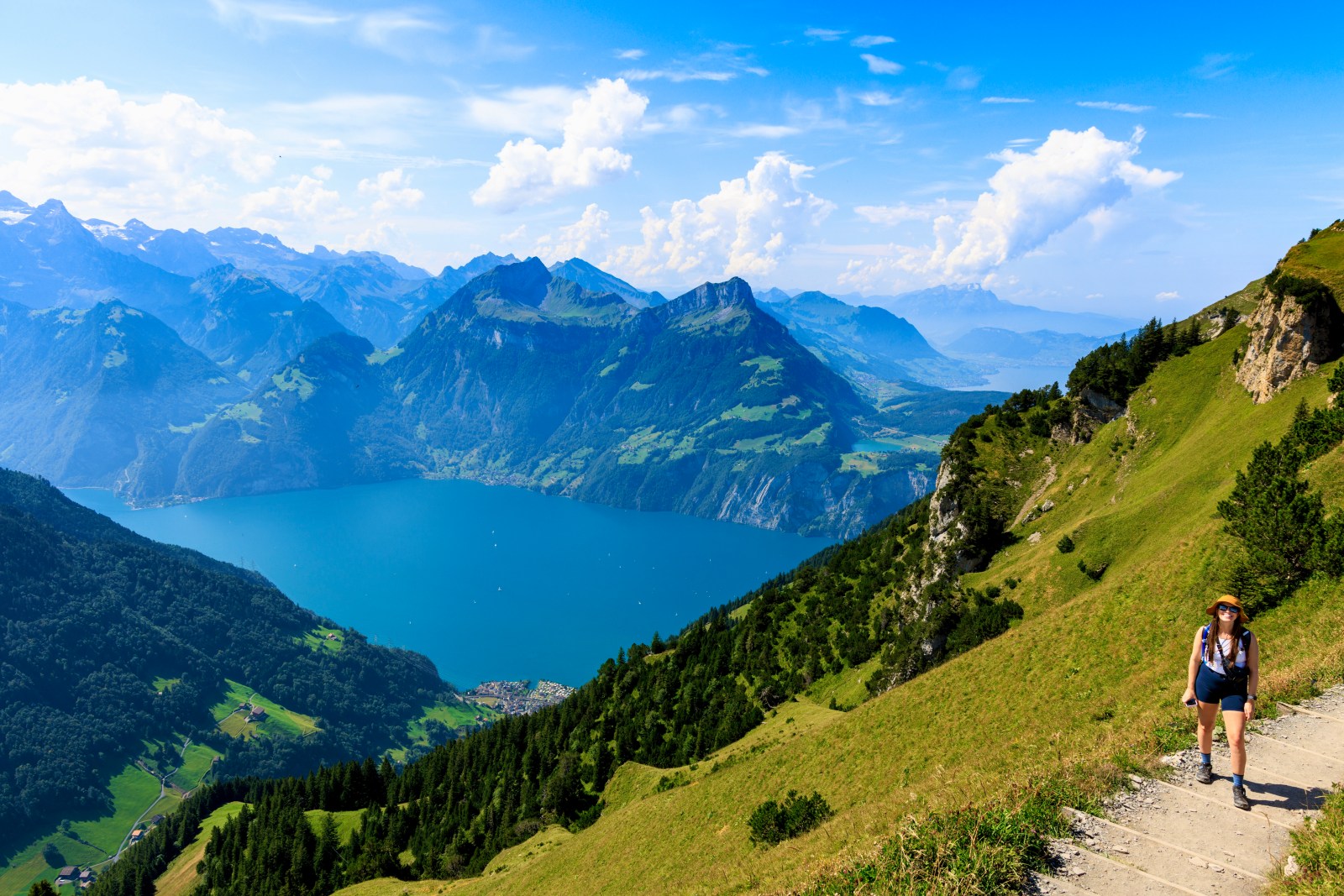
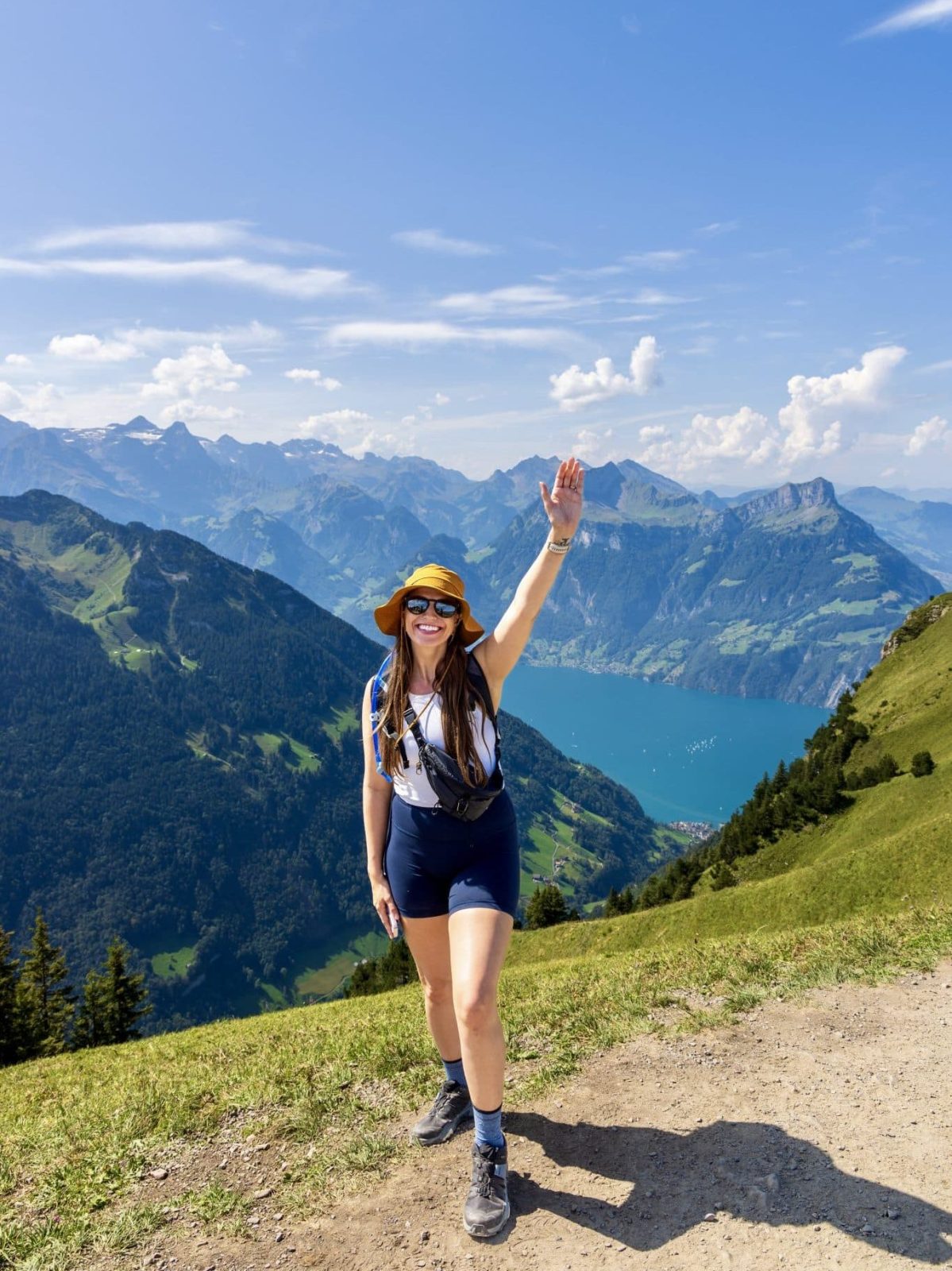
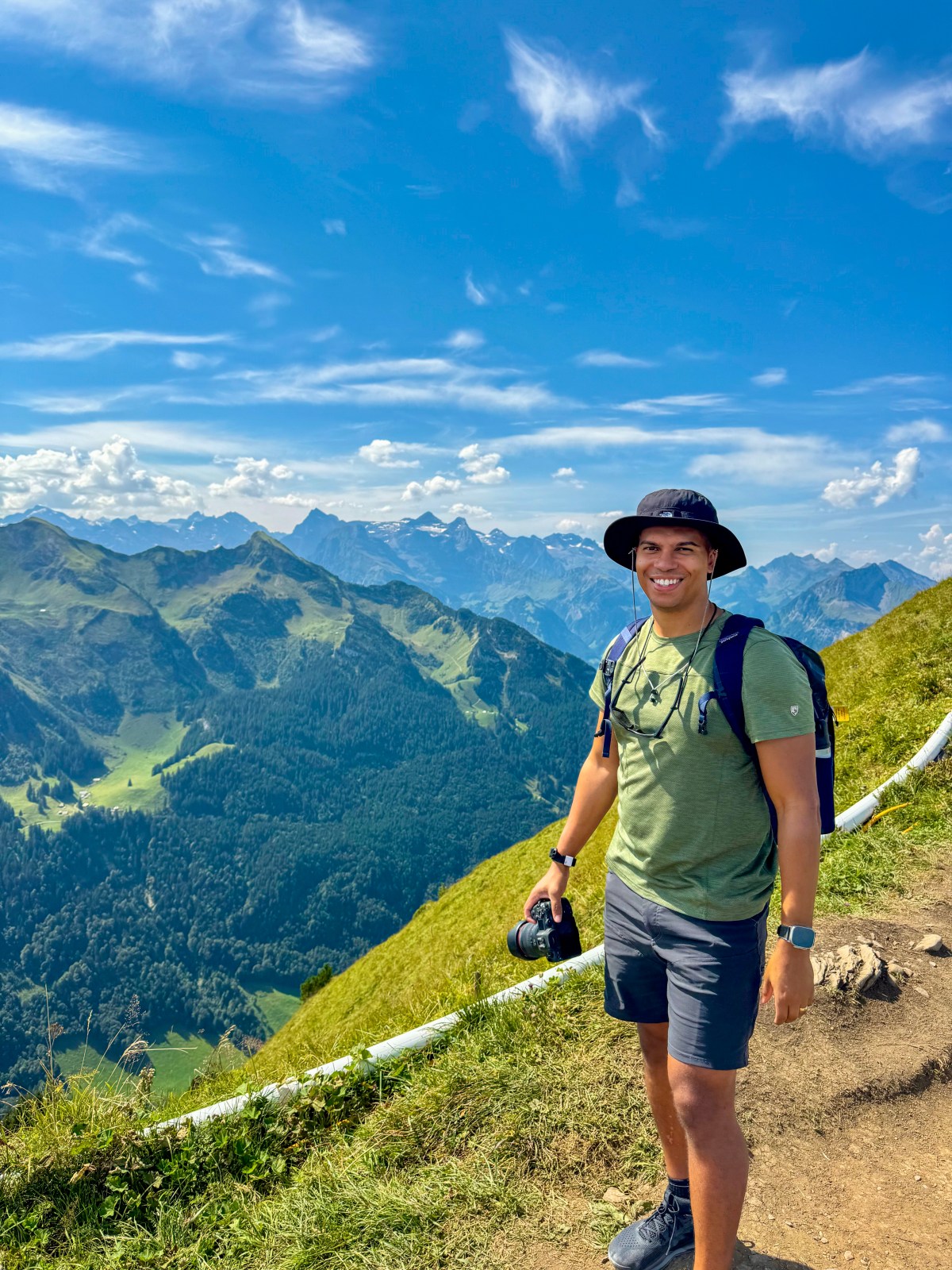
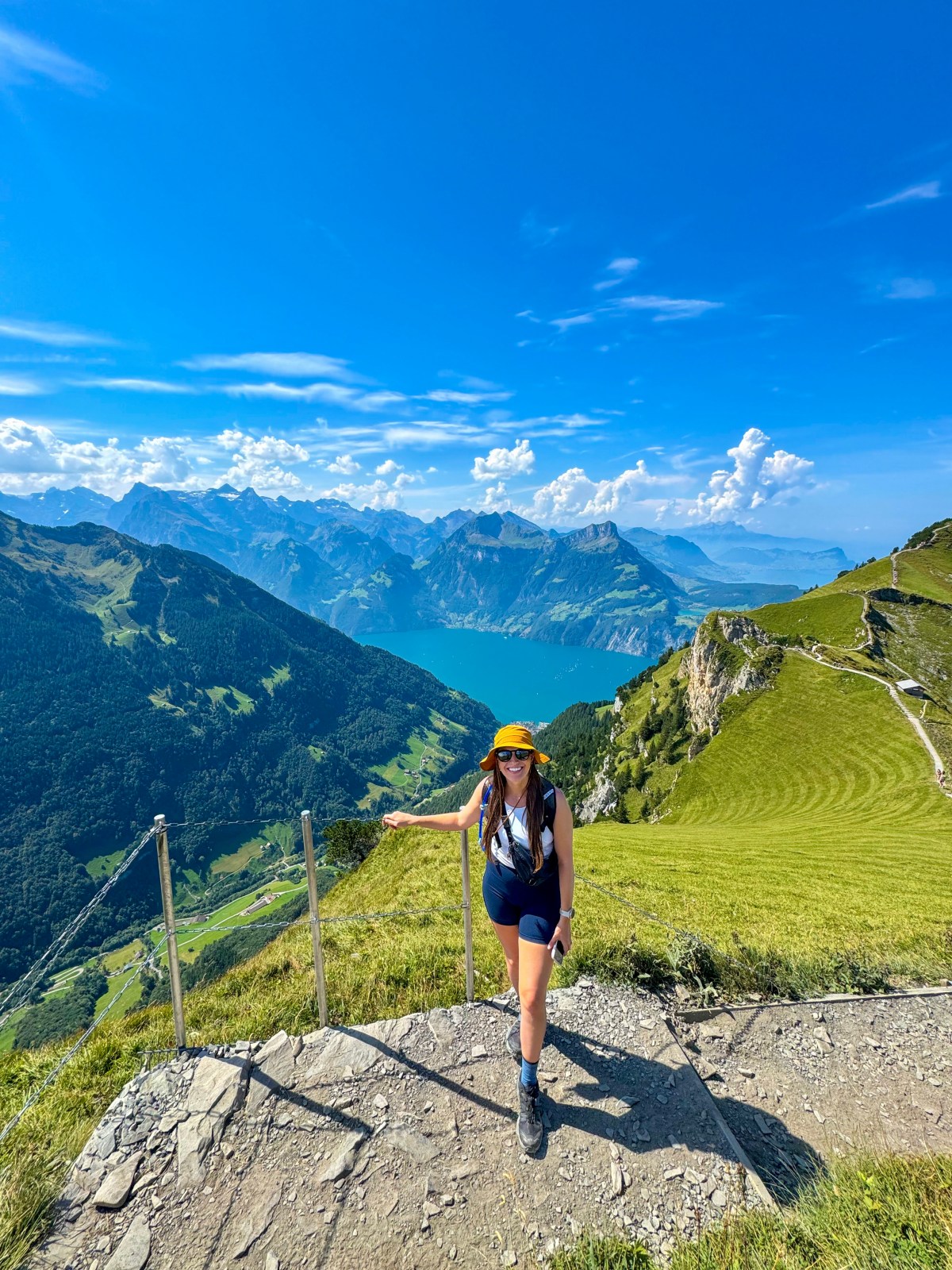
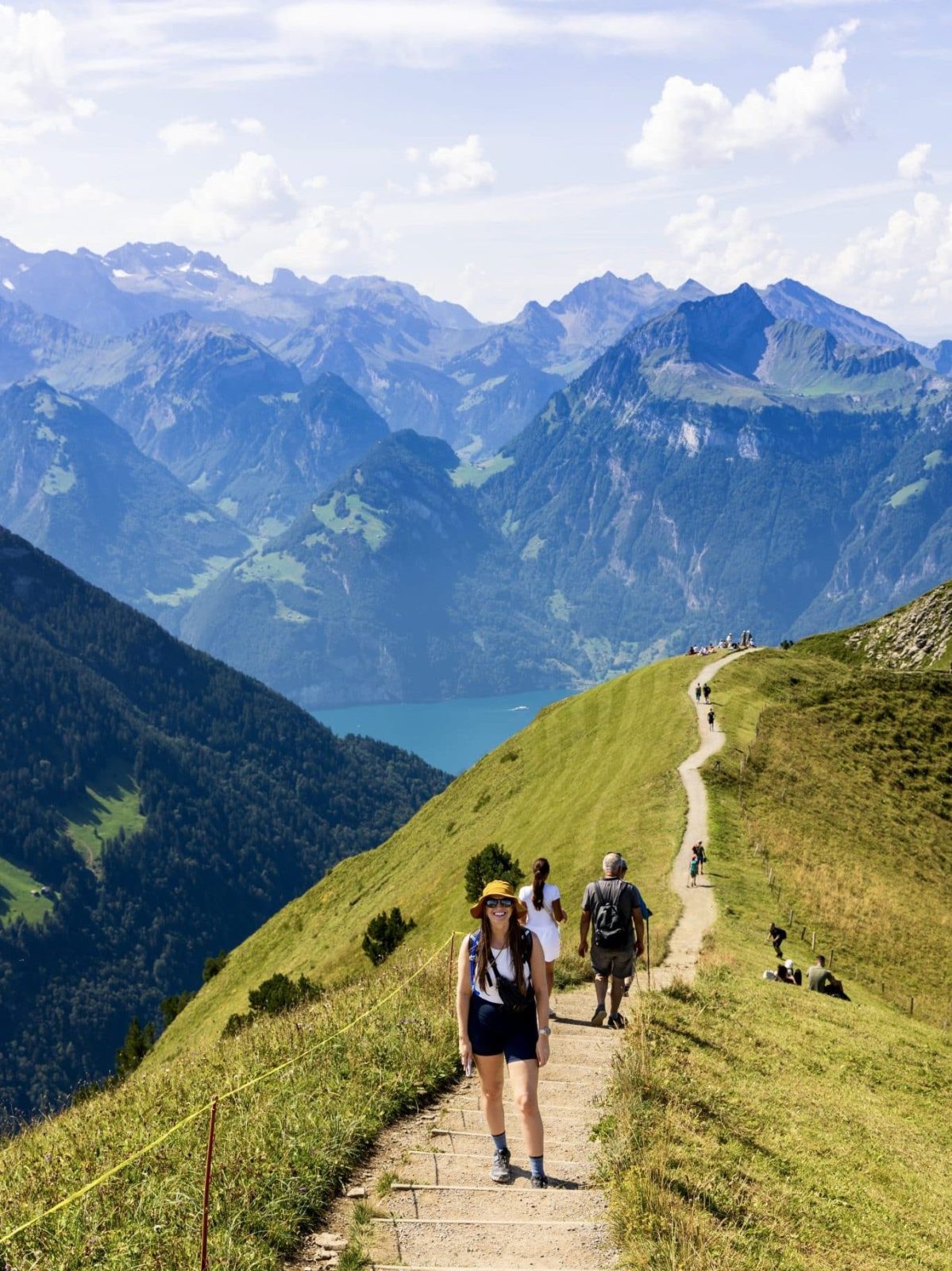
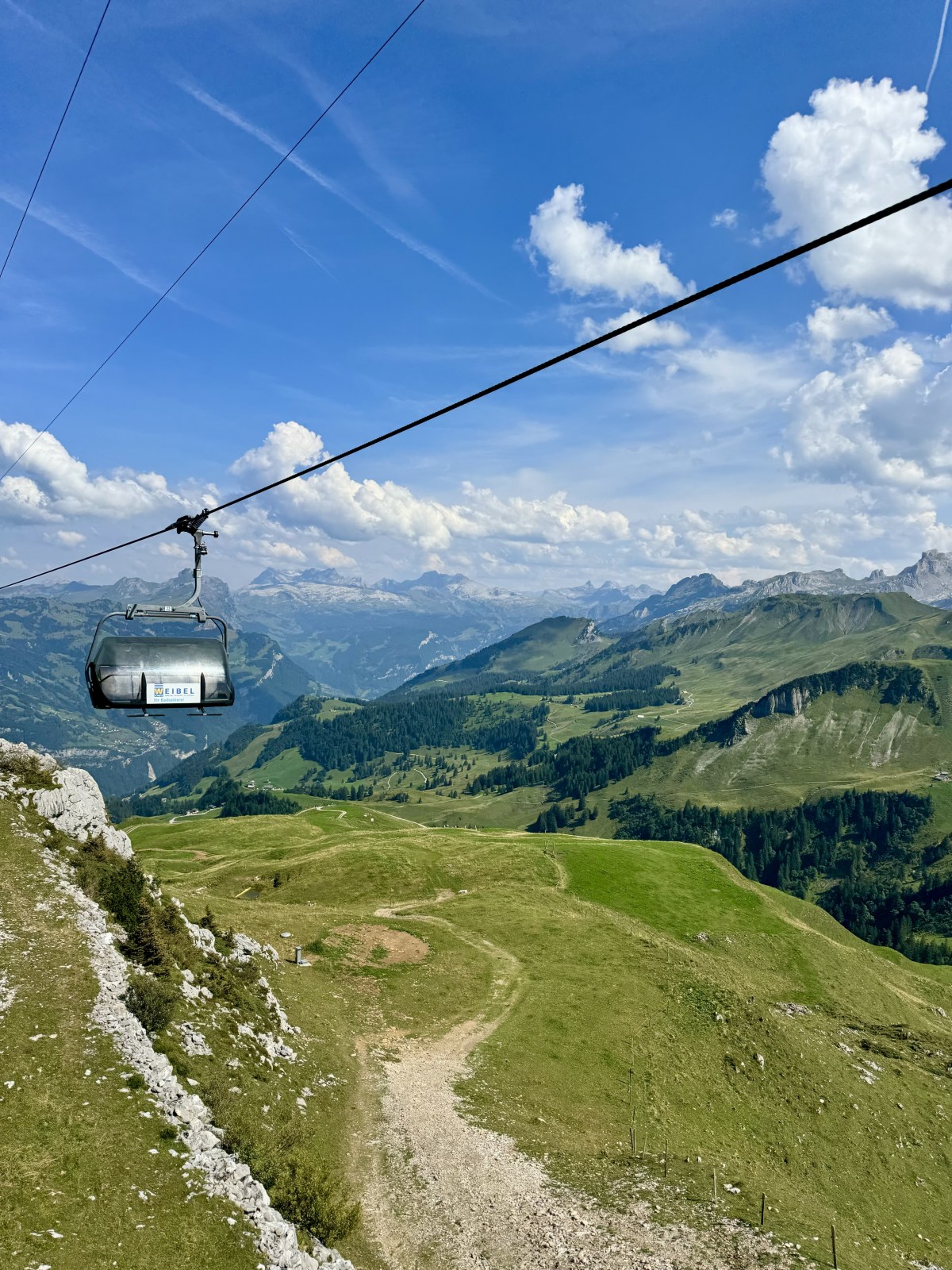
The Stoos Ridge Hike is a stunning trail near Lucerne that rewards you with panoramic views of lakes, mountains, and valleys. It’s a 3-mile point-to-point hike with over 1,130 feet of elevation gain, making it short but moderately challenging.
There are steep sections and exposed ridgelines, so we highly recommend wearing good hiking shoes and being comfortable with heights. The views are absolutely worth it!
How to get to Stoos
We used public transportation to reach Stoos from Lucerne, and the journey was seamless—plus, most of it was covered by our Swiss Travel Pass.
Here’s the step-by-step route:
Train from Lucerne to Schwyz Bahnhof
Bus #1 from Schwyz Bahnhof to the Stoos funicular base station
(The bus stop is directly in front of the funicular entrance.)Funicular to Stoos — one of the steepest funiculars in the world!
Once at the top:
We walked to the Klingenstock chairlift and rode it up to the start of the Stoos Ridge hike.
The chairlift cost 30 CHF per person and is not included in the Swiss Travel Pass.
Want to skip the chairlift? You can hike up instead—just be prepared for extra elevation gain and mileage before you even reach the ridge.
At the end of the hike, we arrived at Fronalpstock, where there’s a scenic viewpoint, a restaurant, and a small playground. Since a line was forming at the lift, we took the Fronalpstock chairlift back down rather than hiking down.
Map of the Stoos hiking area below:







Dinner in Lucerne
After the hike, we took public transportation back to Lucerne, checked into our hotel, and freshened up before heading out for dinner.
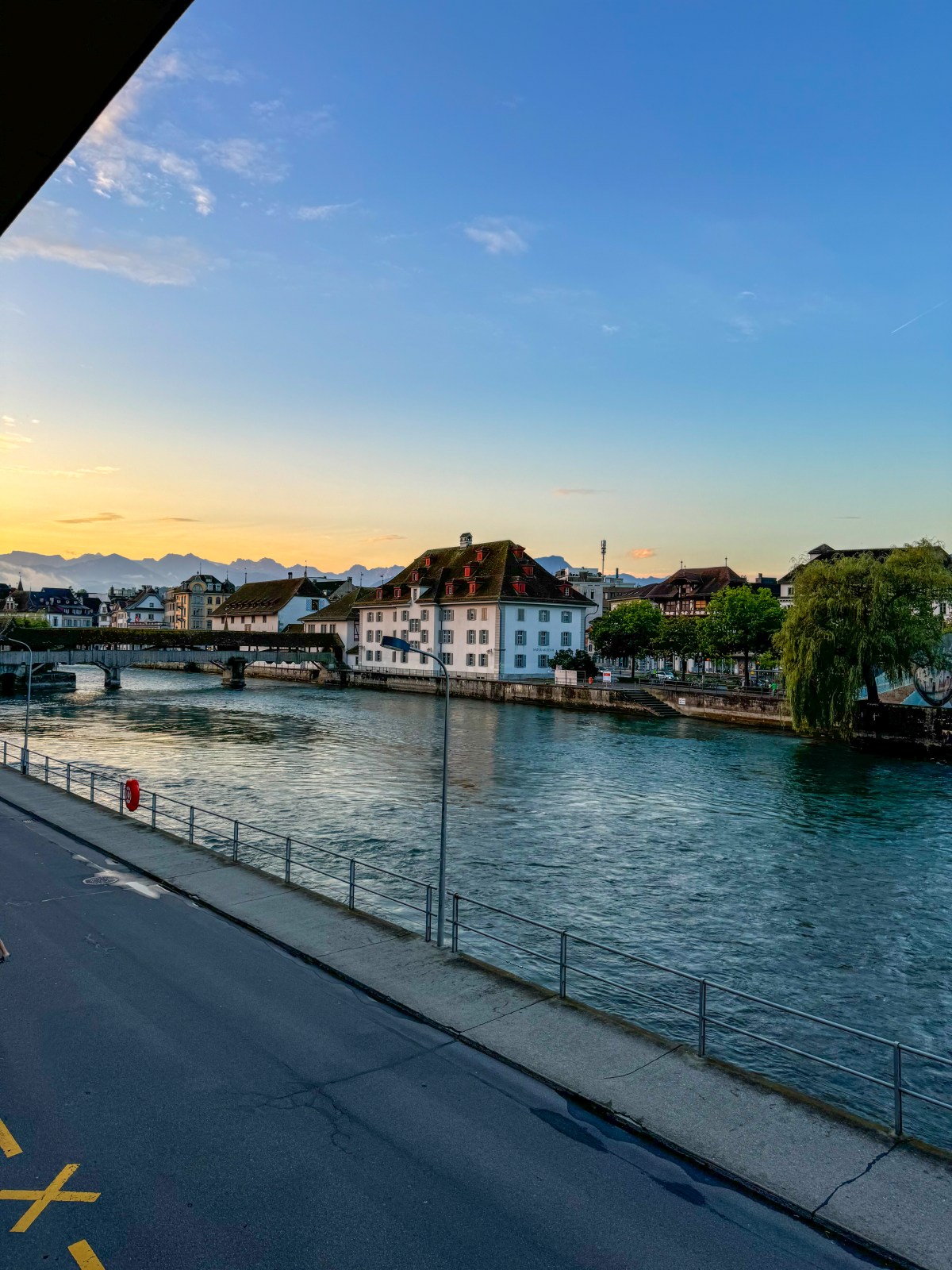
Before our reservation, we took a short walk to visit Chapel Bridge (Kapellbrücke)—Lucerne’s iconic covered wooden bridge.
That evening, we had dinner at Mill’Feuille, a modern restaurant located near Hotel Karl, where we stayed. The food was excellent, and we especially appreciated that they had vegetarian options for Lauren.
Where We Stayed in Lucerne
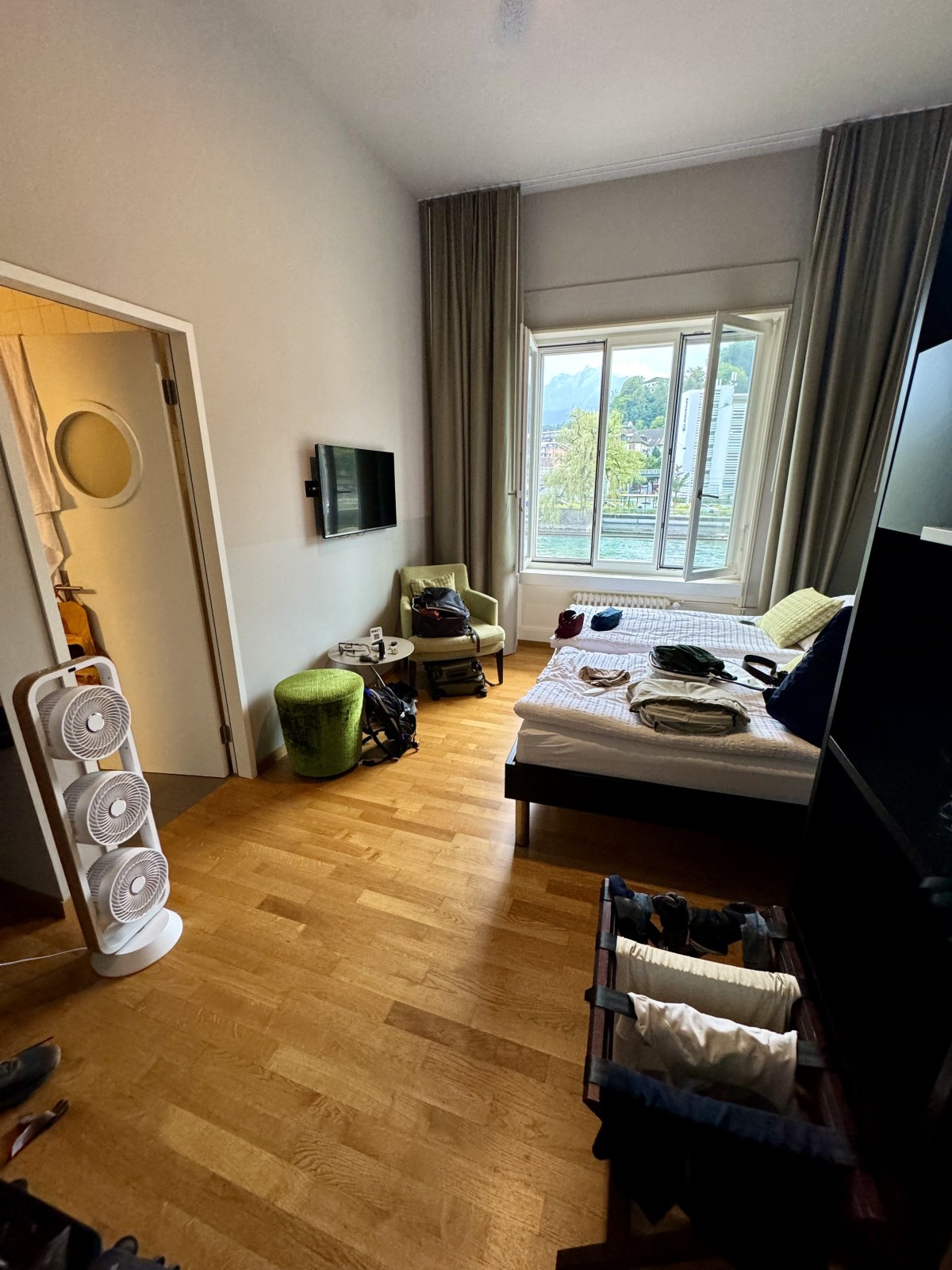
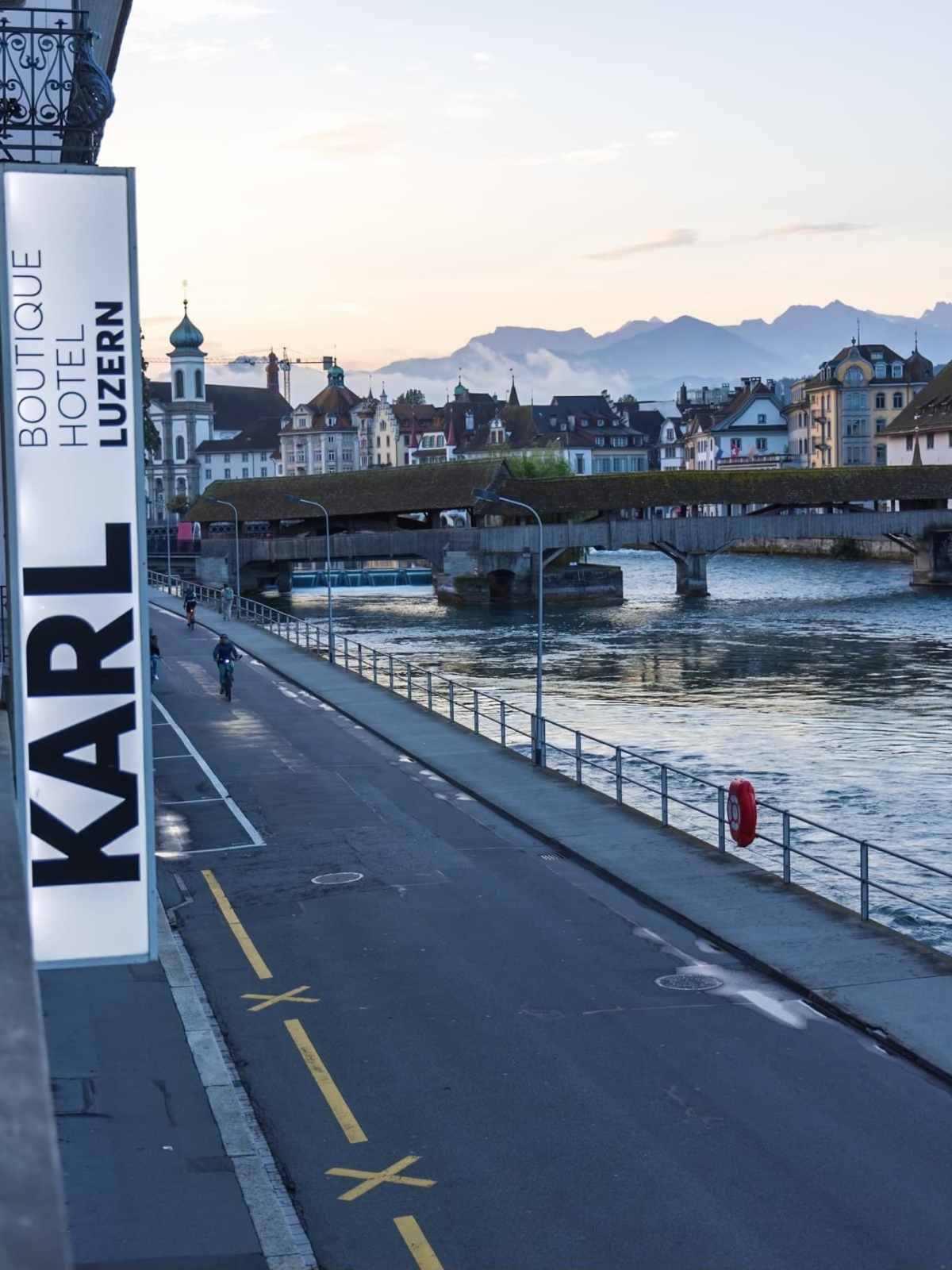
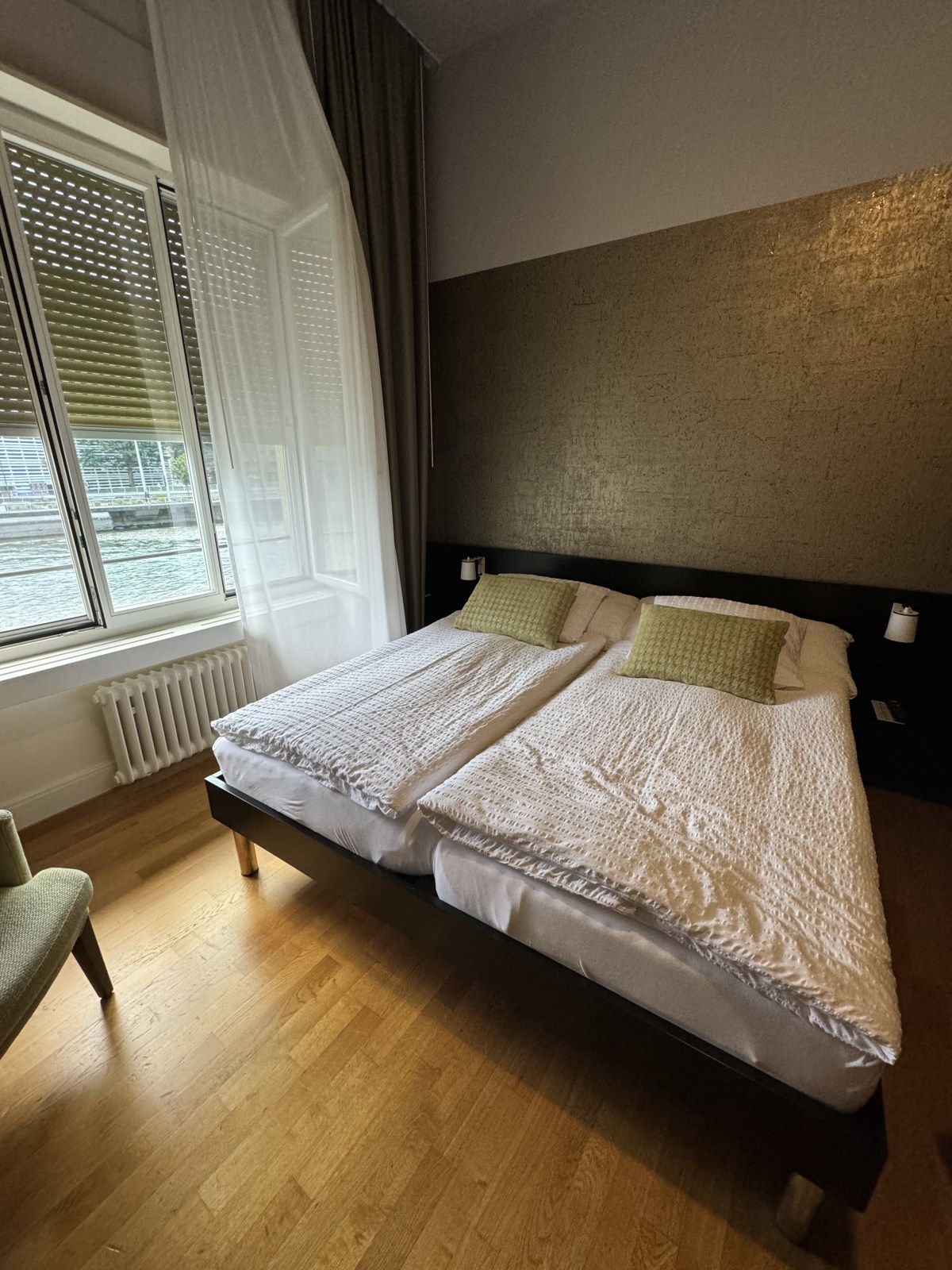
We stayed at Hotel Karl, just minutes from Old Town Lucerne and only a 5–10 minute walk from the main train station—a perfect location for exploring the city on foot.
Our room was spacious, and the hotel provided complimentary breakfast each morning, which was a great perk.
One thing to note: the hotel doesn’t have air conditioning, and we happened to visit during a heat wave. That said, they provided a floor fan upon request, and our room also had a ceiling fan and large windows that let in cool air at night.



Day 2: Mount Pilatus – Golden Round Trip from Lucerne
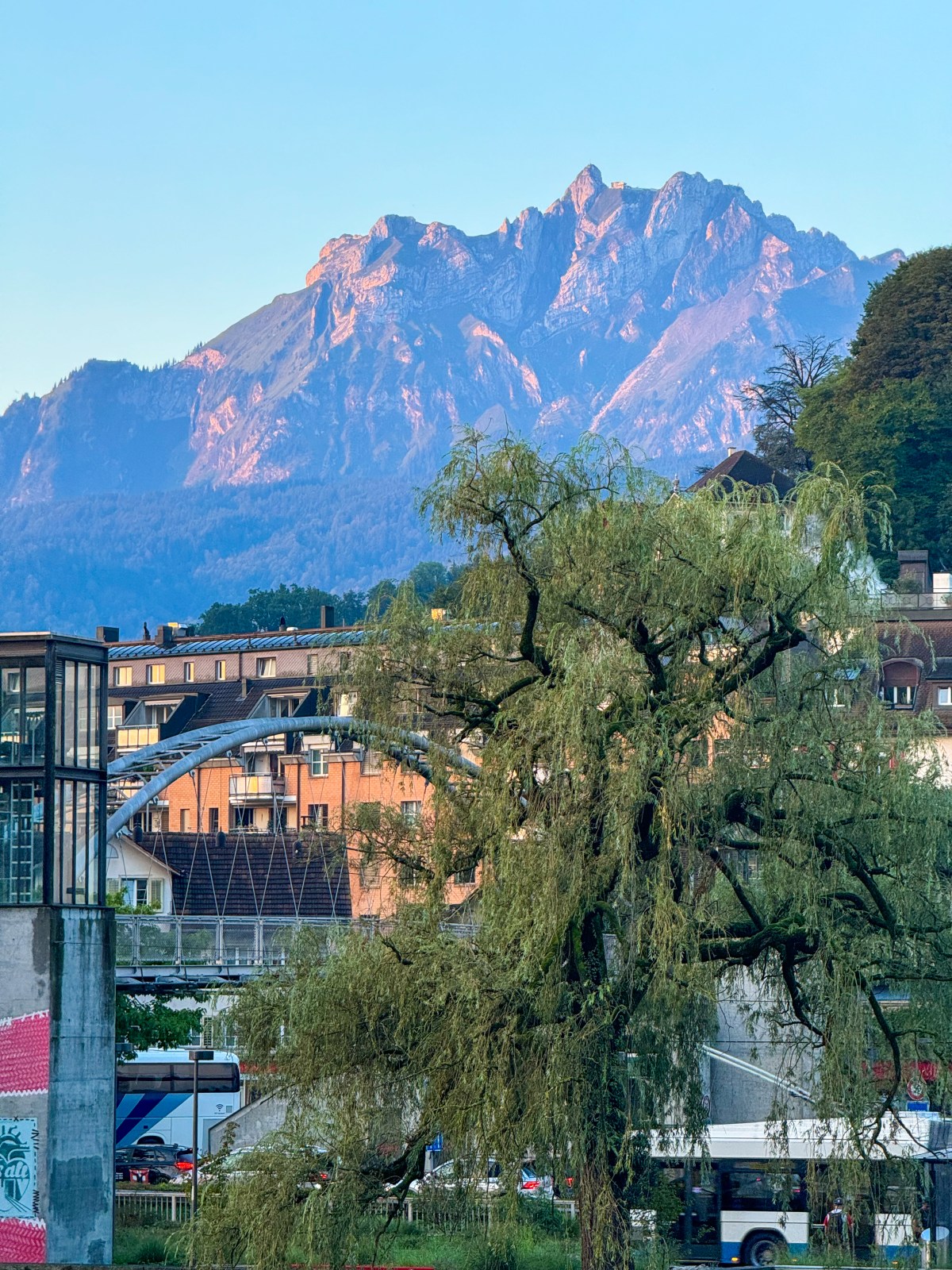
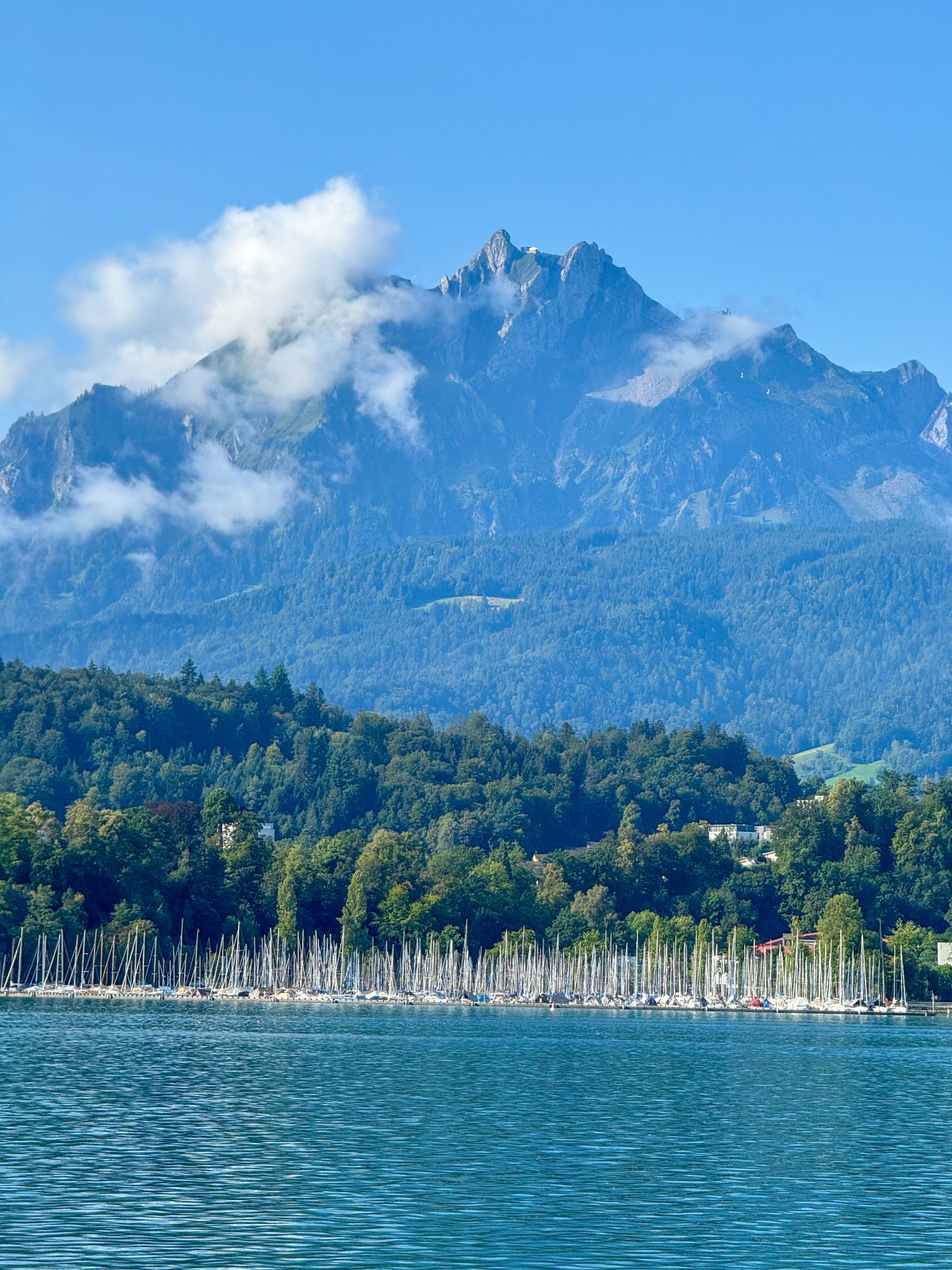
Mount Pilatus towers over Lucerne, and if you look closely from the city, you can spot the round building at the top—Pilatus Kulm.
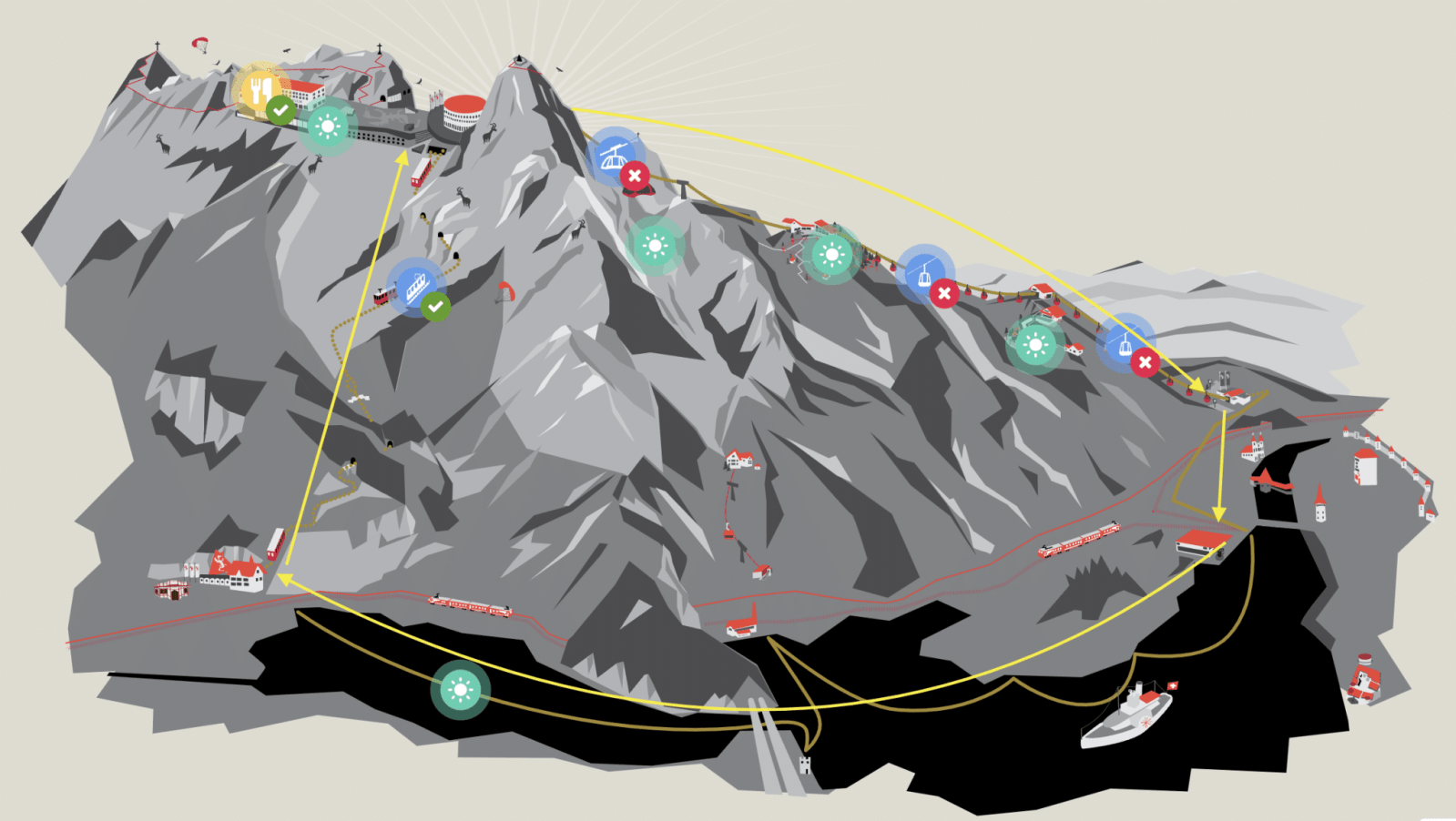
On our second day, we made the journey to the summit by doing the popular Golden Round Trip, which includes:
A scenic boat ride across Lake Lucerne
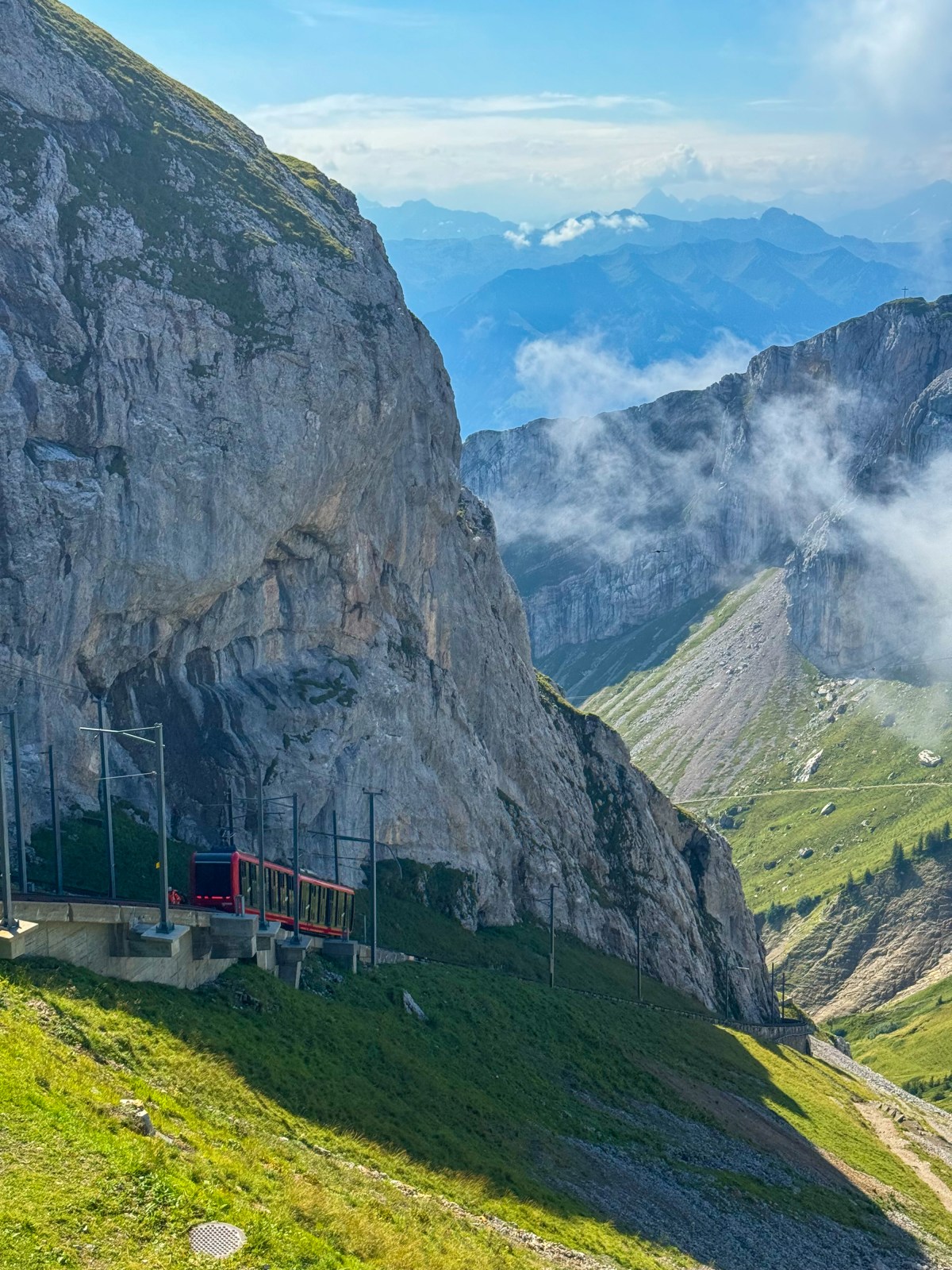
A ride on the steepest cogwheel railway in the world
A gondola and aerial cableway descent into Kriens
With the Swiss Travel Pass, the boat ride is included, and you’ll get a 50% discount on the cogwheel railway and gondola ticket.
Here’s the route we followed:
Boat from Lucerne to Alpnachstad
Cogwheel train from Alpnachstad to Pilatus Kulm
→ 💡 We highly recommend reserving cogwheel seats in advance.Gondola + aerial cable car from Pilatus to Kriens
Bus from Kriens back to Lucerne
Check the Mount Pilatus website for the latest pricing and timetables and the map of our Golden Round Trip route below.
The Scenic Boat Ride on Lake Lucerne
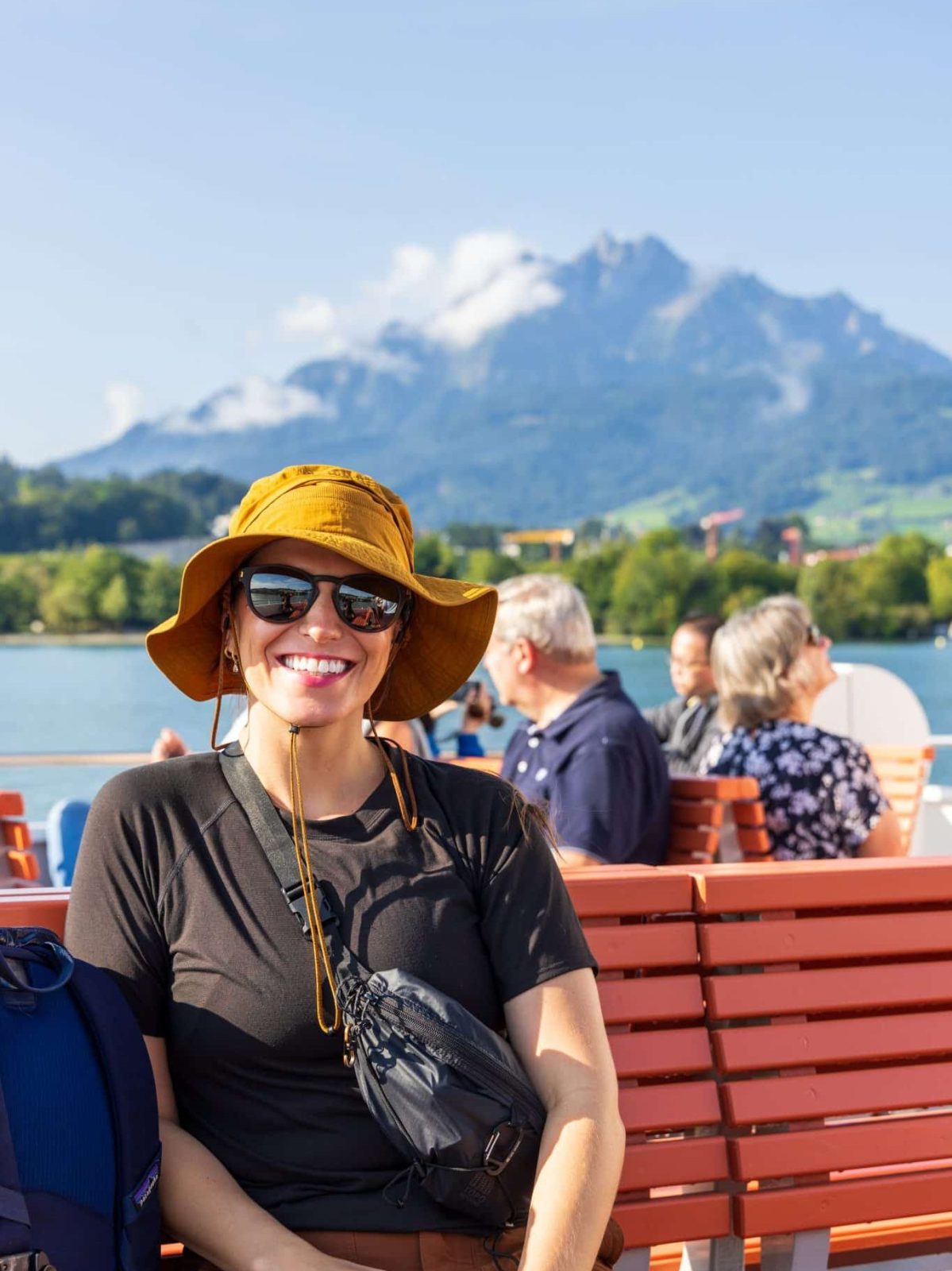
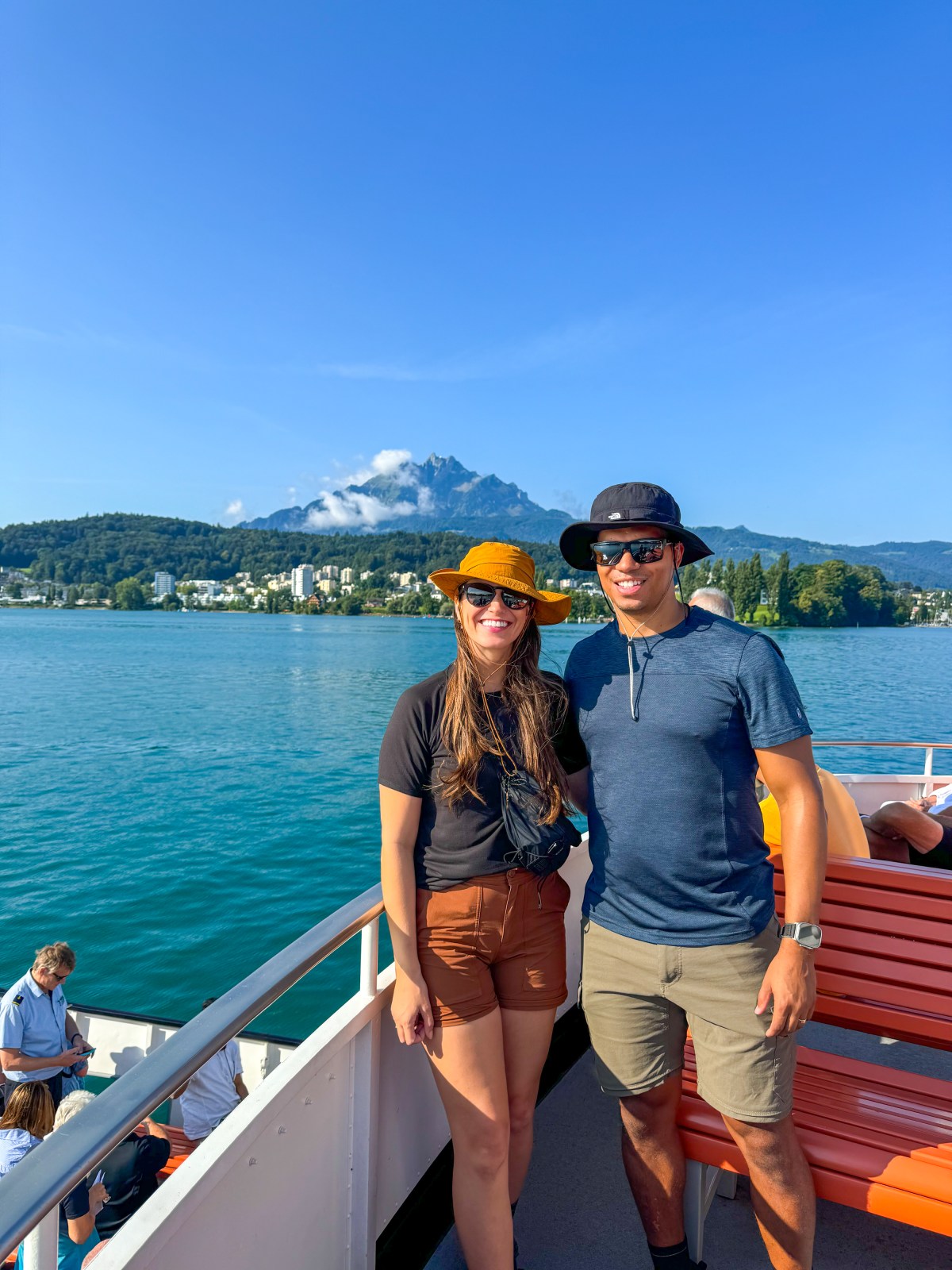
The Golden Round Trip begins at the Lucerne marina, located just across the street from the main train station. From there, we boarded a scenic boat cruise across Lake Lucerne, which included several stops along the way before arriving at Alpnachstad.
Once we got off the boat, we transferred to the cogwheel train up to Pilatus Kulm.
💡 Tip: We weren’t sure if seat reservations were necessary, but we decided to reserve—and we’re glad we did.
The transfer process at Alpnachstad was a little confusing at first. A line was forming at a kiosk where people were purchasing reserved seats, which wasn’t clearly marked. We almost walked past it before realizing what it was. After scanning our tickets, we waited in line for the next available cog train to the top.


Cog railway



Pilatus Kulm – Hiking to Tomlishorn
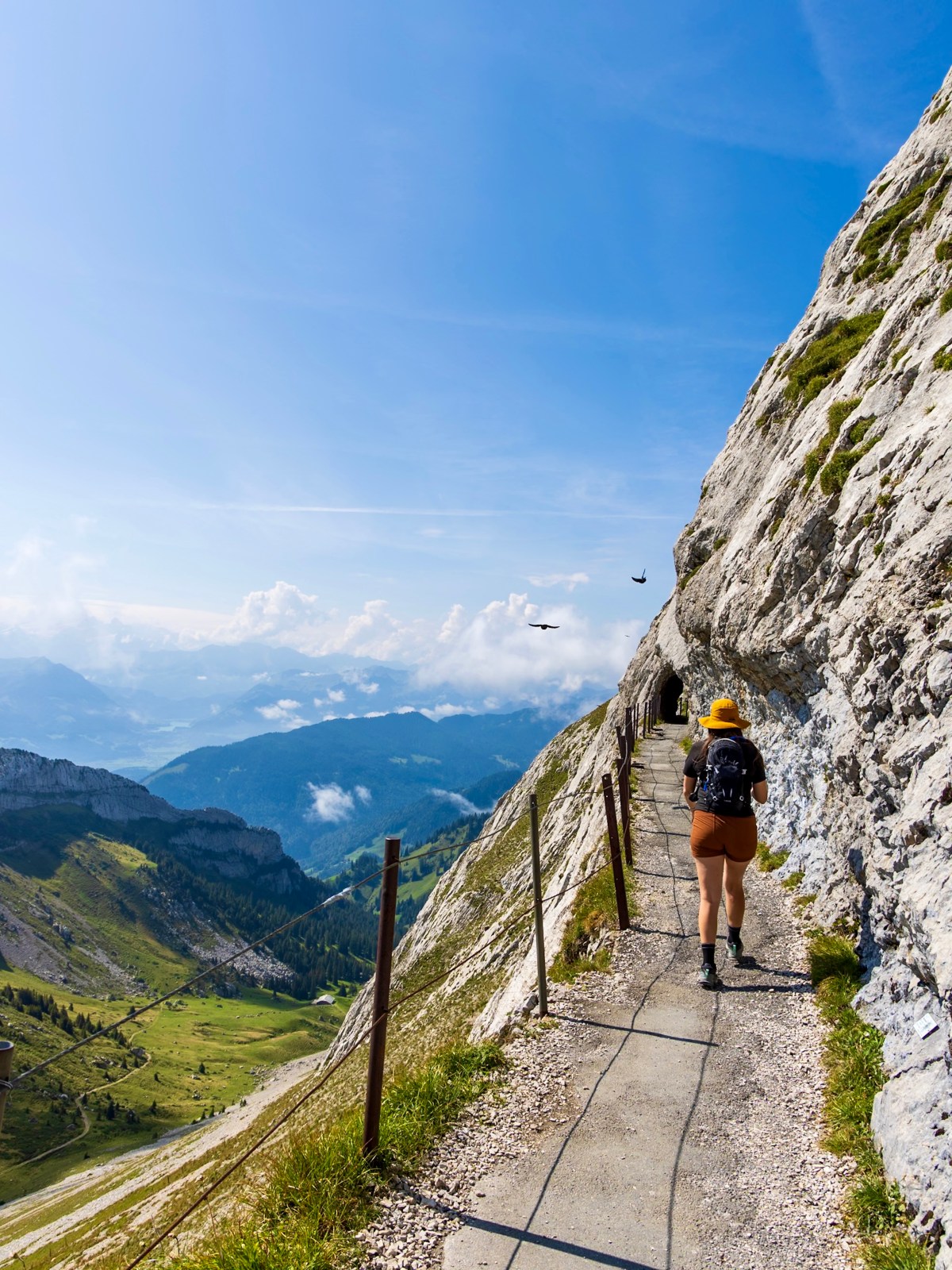
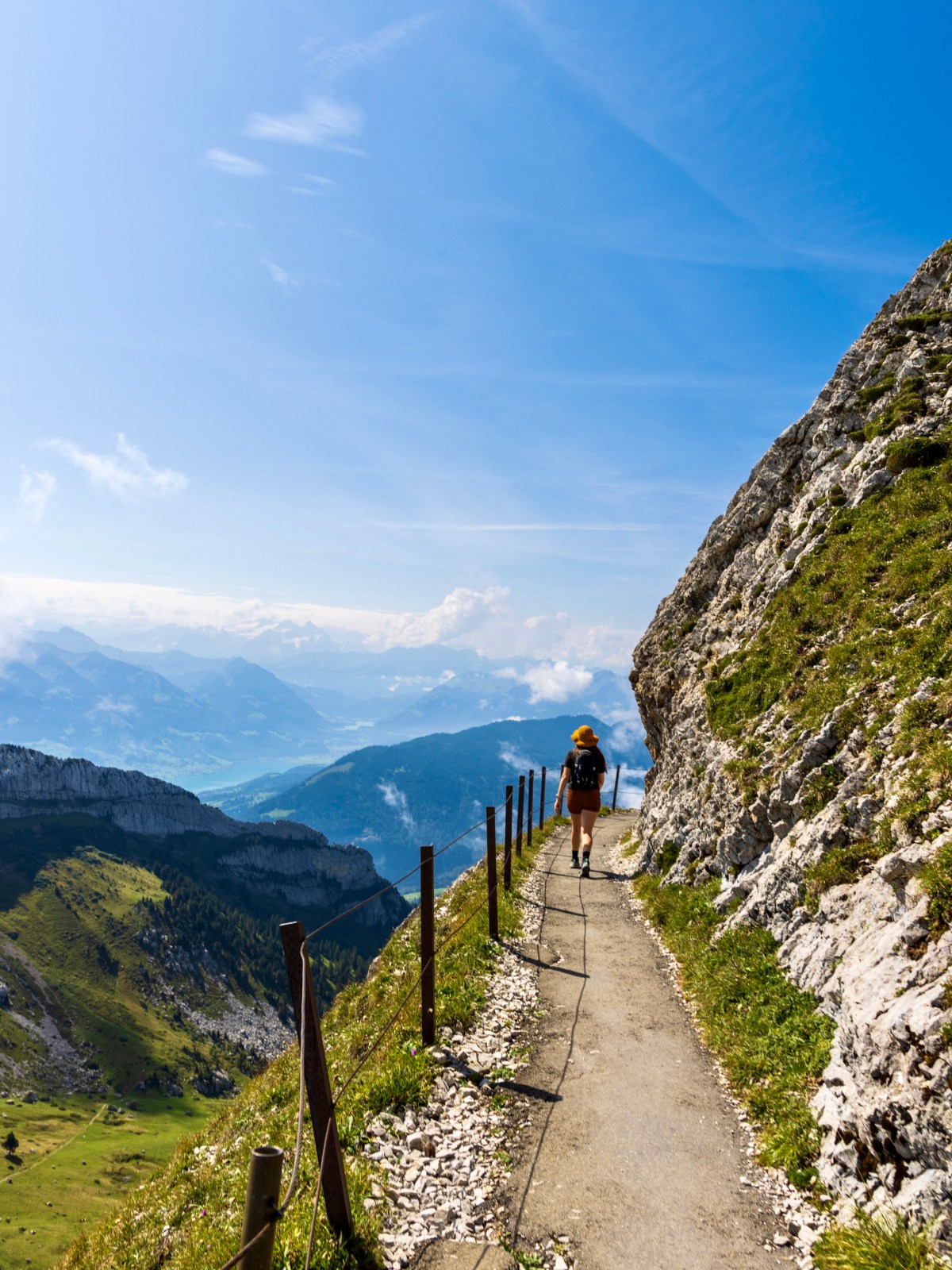
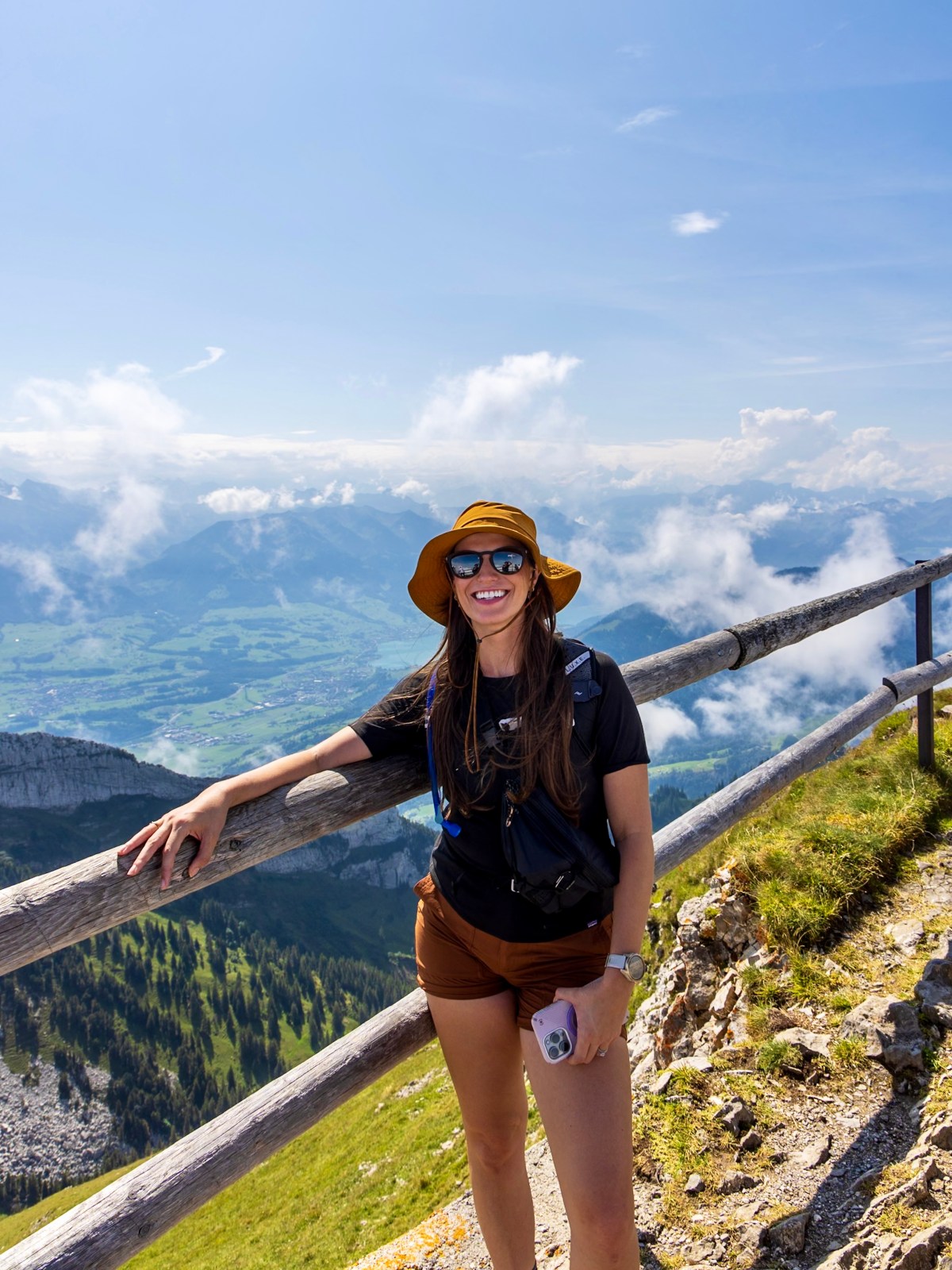
At the top of Mount Pilatus, we set out to hike to Tomlishorn, the tallest peak on the mountain. This short but rewarding trail is a 2-mile out-and-back hike with about 472 feet of elevation gain.
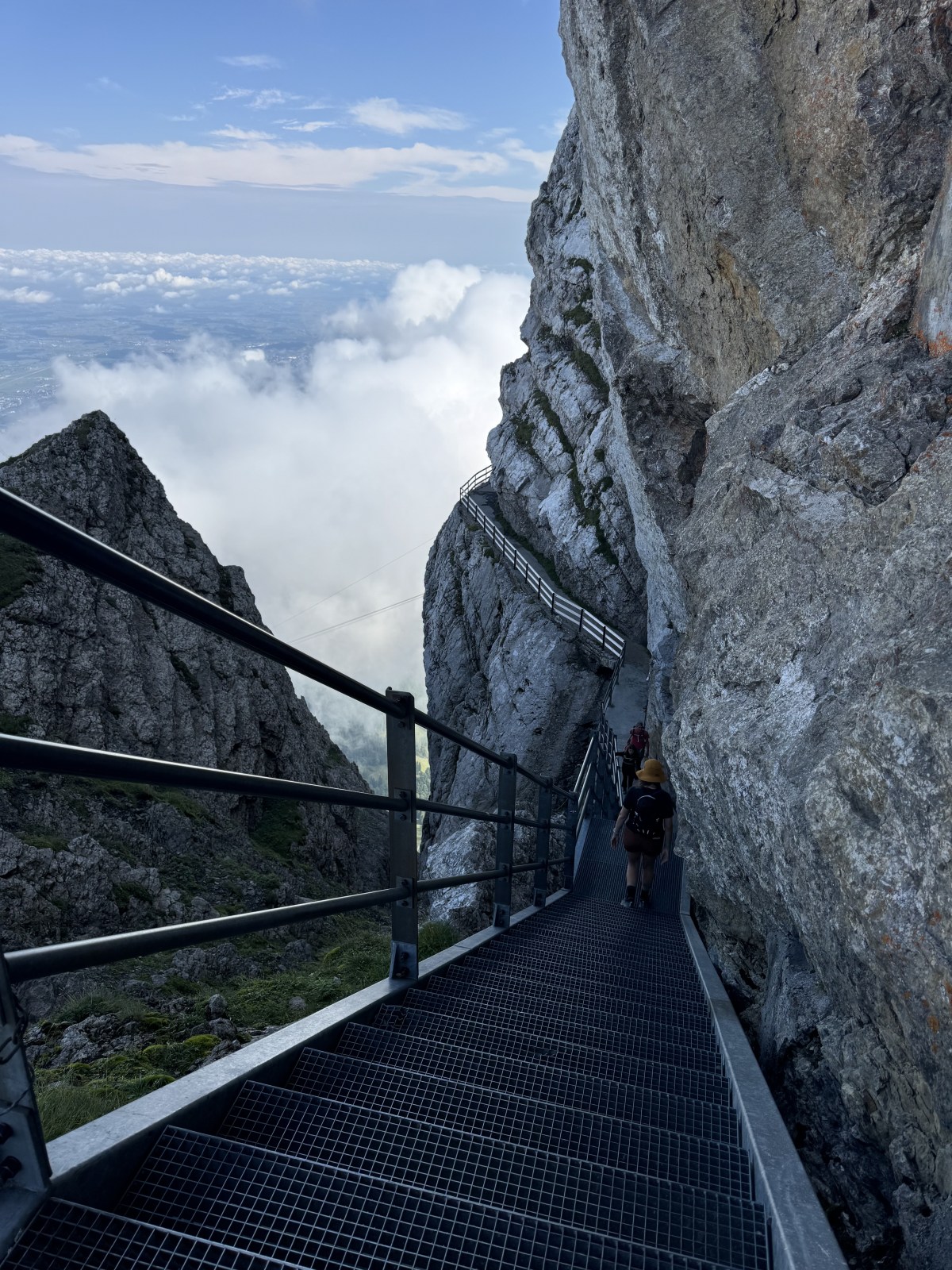
At first, we accidentally took a detour—heading down a staircase and along a different cliff walk, which gave us an amazing view of the gondola we’d later take down. Eventually, we found the right path: to reach Tomlishorn directly, head past the restaurant at the summit.
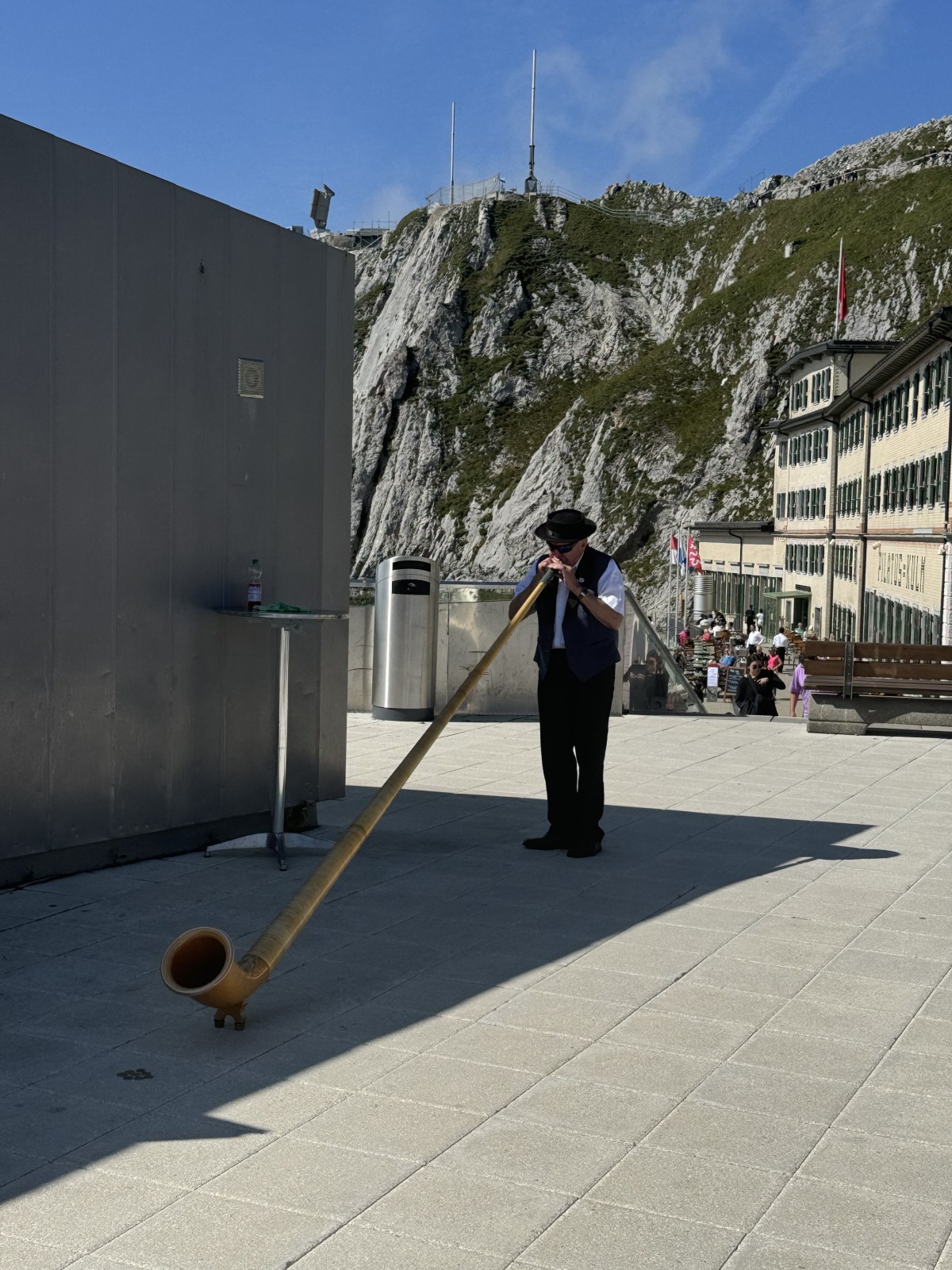
The top of Pilatus Kulm offers more than just hiking:
-
Two hotels
-
A sit-down restaurant
-
A quick food stand
-
A gift shop with souvenirs
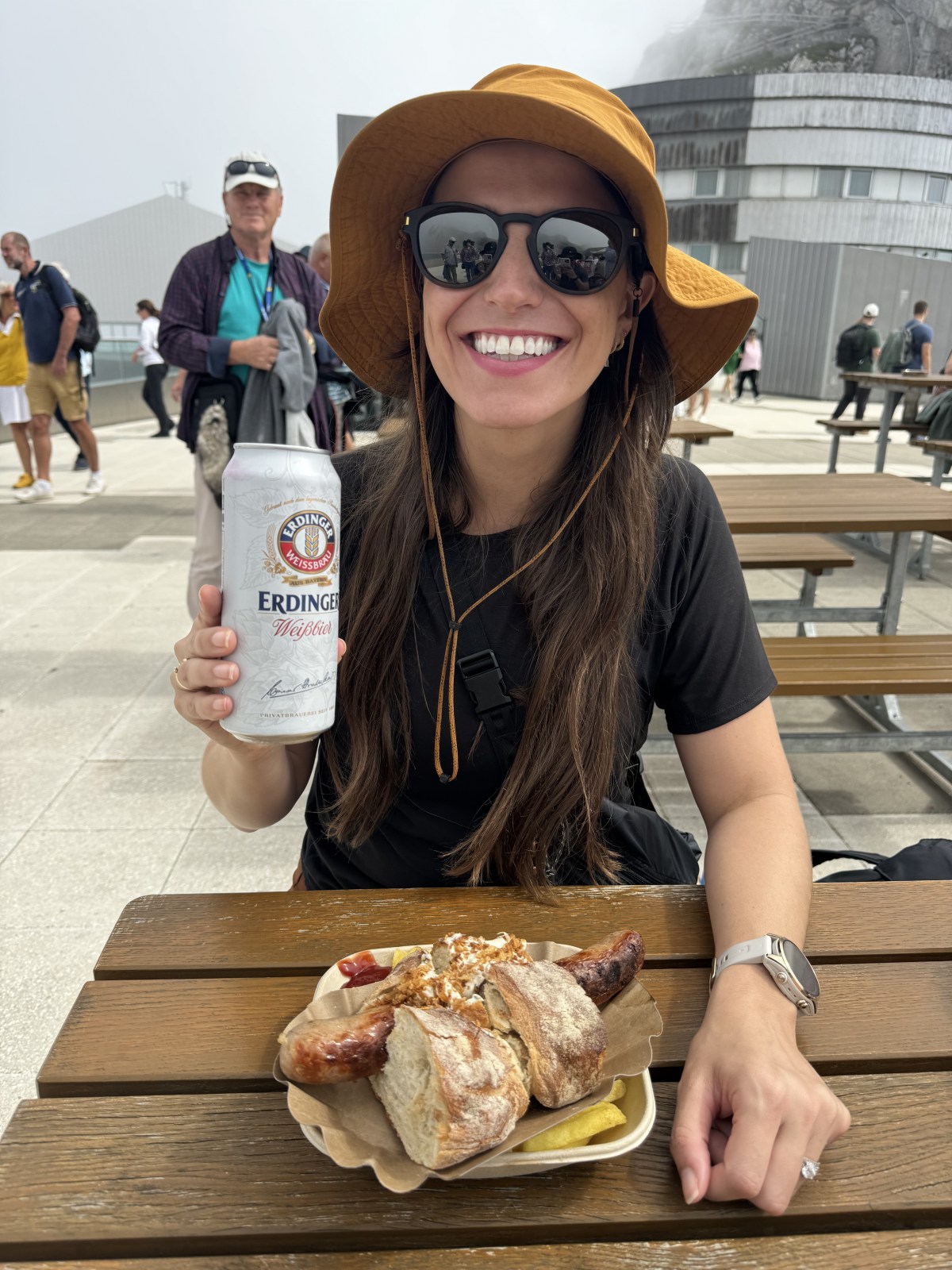
We grabbed a quick bite from the food stand and tried one of their Pilatus dogs with German beer—it totally hit the spot!
Good to Know – Mount Pilatus Weather Tips
The weather at the top of Mount Pilatus is often much cooler than in Lucerne, so it’s important to pack accordingly. During our visit, there was a heat wave, so the summit weather actually felt perfect!
We had packed convertible pants and lightweight jackets, but didn’t end up needing them. That said, it’s smart to prepare for sudden changes, especially if you’re doing this as part of your Switzerland itinerary during shoulder seasons.
✅ Tip: Check the Pilatus webcams and weather forecast before heading up. Conditions can change quickly in the Alps, even in summer.



Gondola + Bus Descent from Mount Pilatus
On the way down from Mount Pilatus, we took the gondola to Fräkmüntegg, where we transferred to a smaller gondola for the rest of the ride.
Fräkmüntegg has adventure courses and activities, but we decided to keep going. The gondola made a brief stop at Krienseregg, where we stayed onboard and continued down to the final stop in Kriens.
From there, we walked to the bus station and caught a quick ride back to the Lucerne main train station.
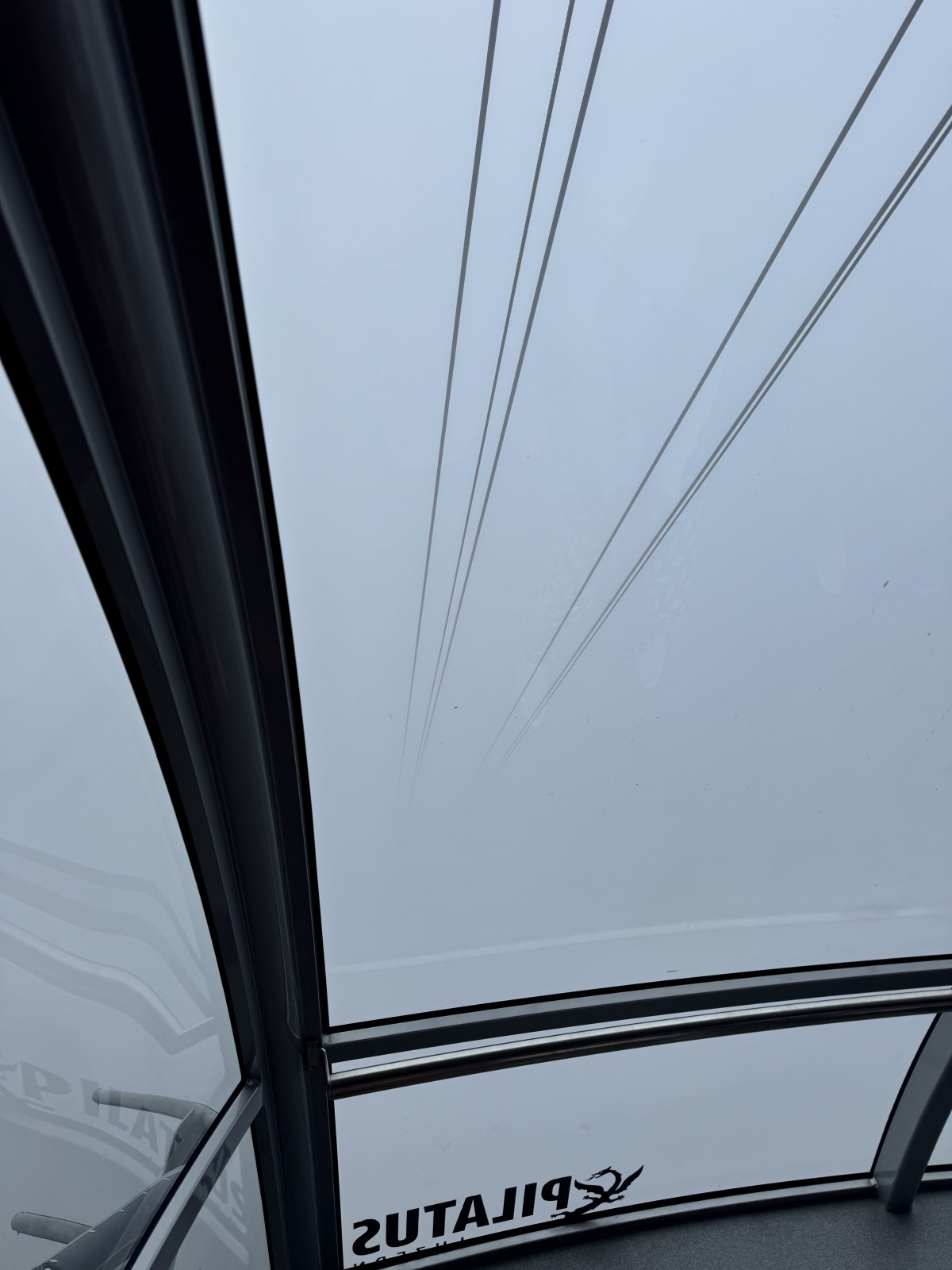
As we descended, clouds started rolling in, and much of the gondola ride down was completely surrounded by fog—a moody but memorable moment in our Switzerland itinerary.


Castle Walk + Dinner in Lucerne
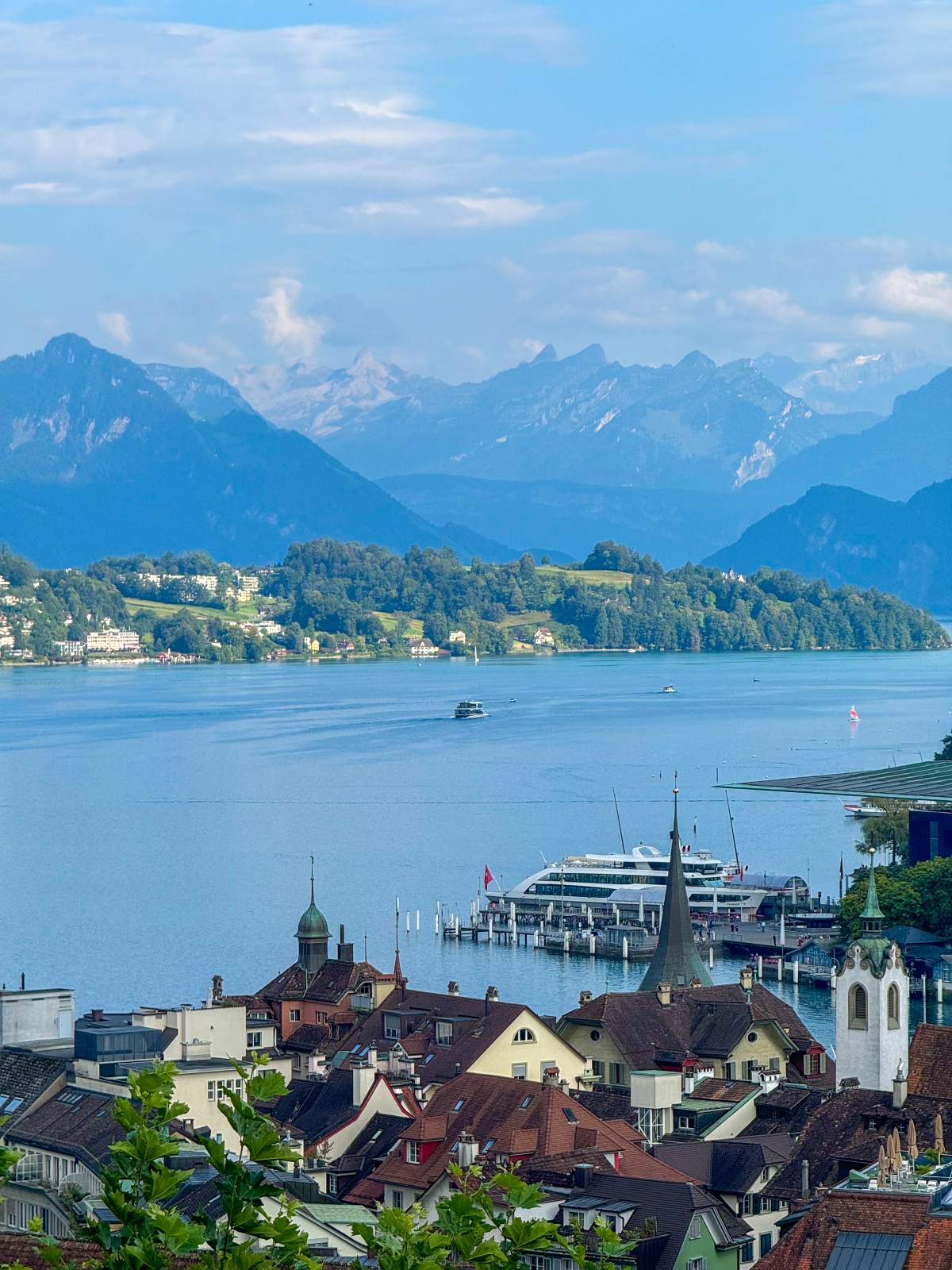
Before dinner, we took a stroll to Meggenhorn Castle, which was conveniently located near our hotel. The grounds are open to the public, and you can climb into the towers for an amazing view of Lake Lucerne and the city skyline.
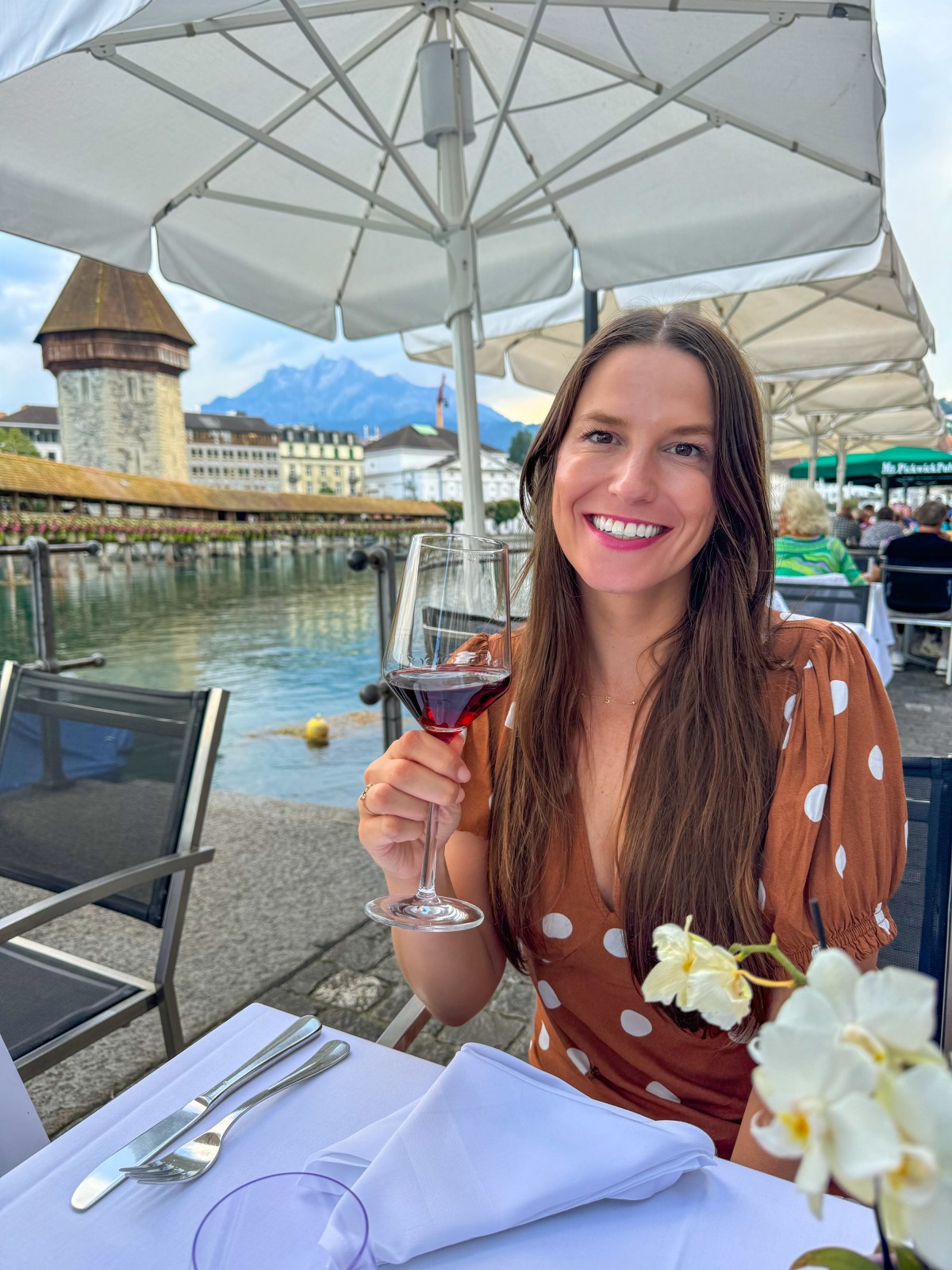
For dinner, we headed to Des Alpes, a scenic riverside restaurant with an incredible view of the famous Chapel Bridge and Mount Pilatus in the background.




Day 3: Lucerne to Interlaken – Golden Pass Route
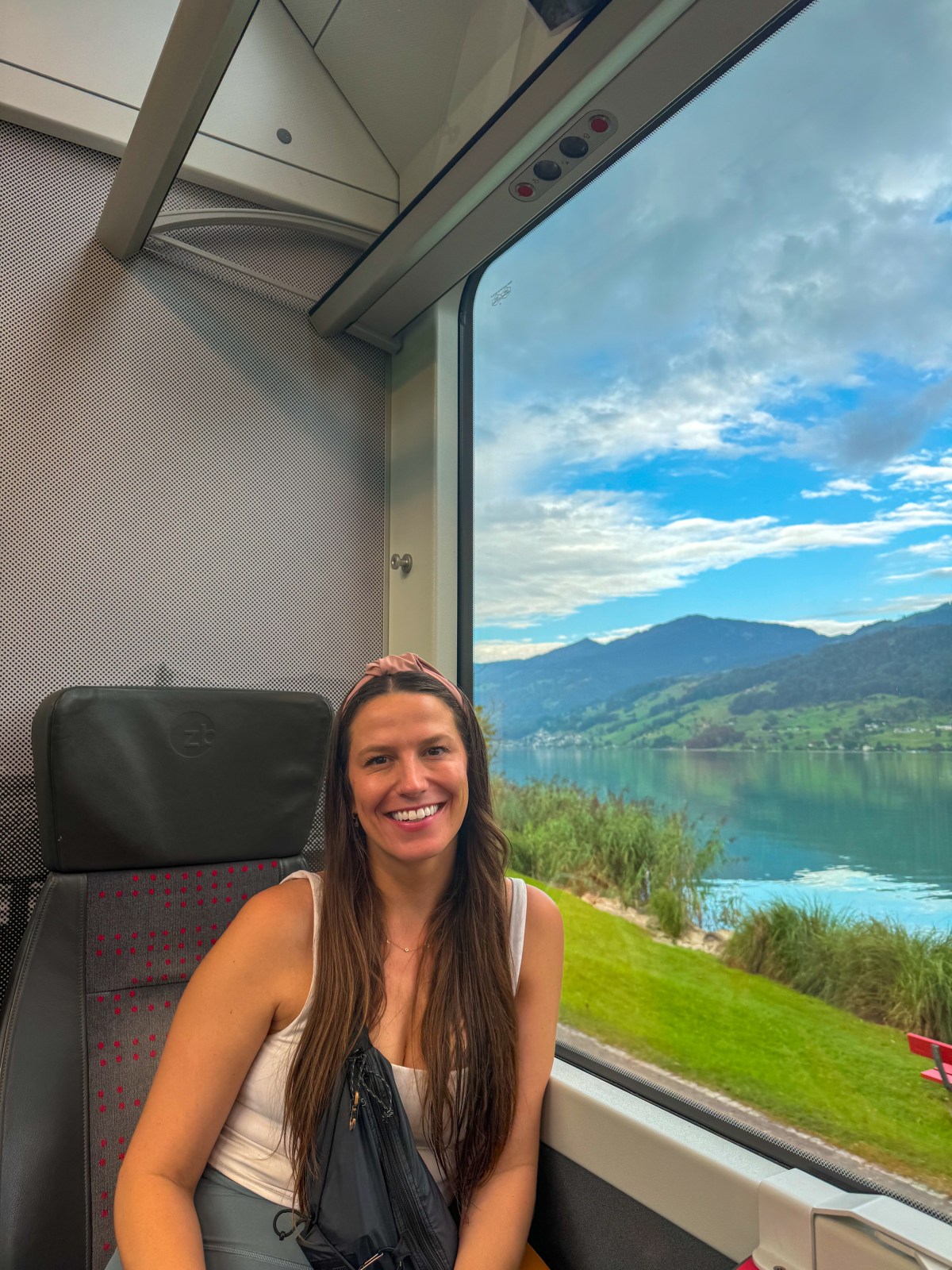
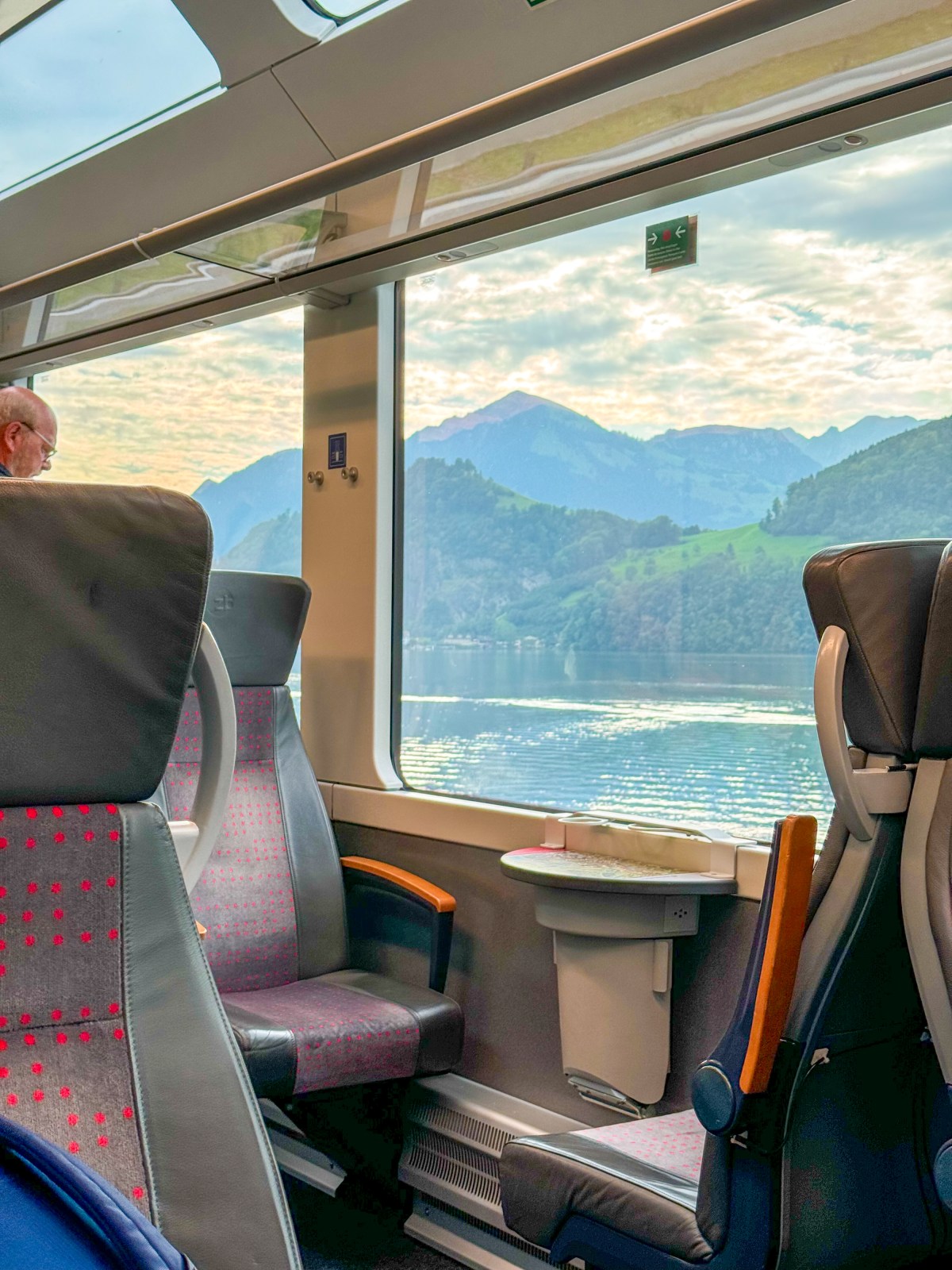
On Tuesday, we traveled from Lucerne to Interlaken as part of our Switzerland 7 day itinerary. We chose to take the scenic Golden Pass Express route, even though part of it was temporarily disrupted—we had to switch from train to bus for the final stretch.
Despite the detour, the journey was beautiful. We passed by crystal-clear lakes, lush green valleys, and saw waterfalls cascading down the mountains.
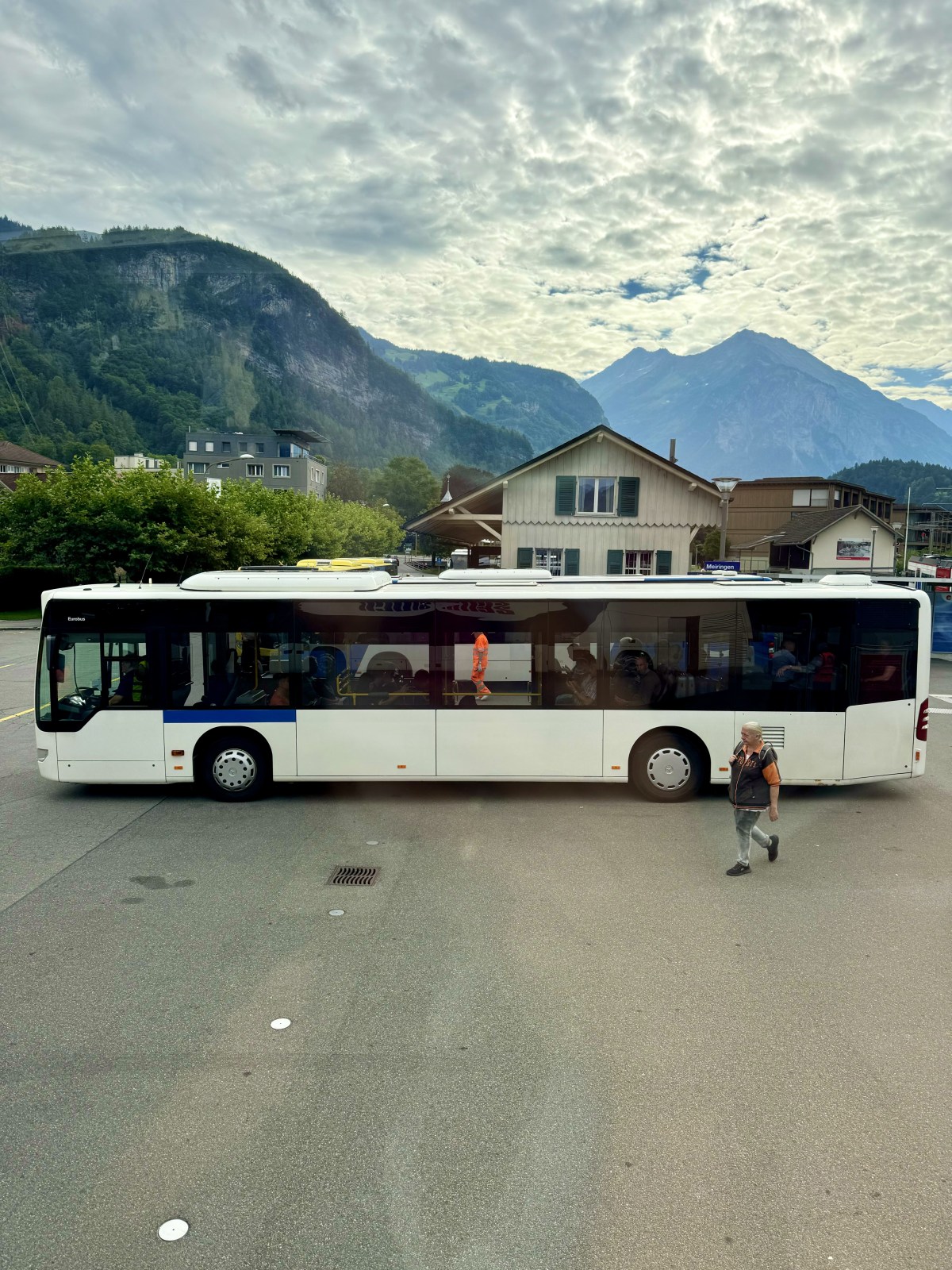
When we arrived at Interlaken Ost, we walked about 10 minutes to our hotel to drop off our bags. This day was intentionally left flexible, with no strict plans besides reaching Interlaken and settling in.



Interlaken, Switzerland
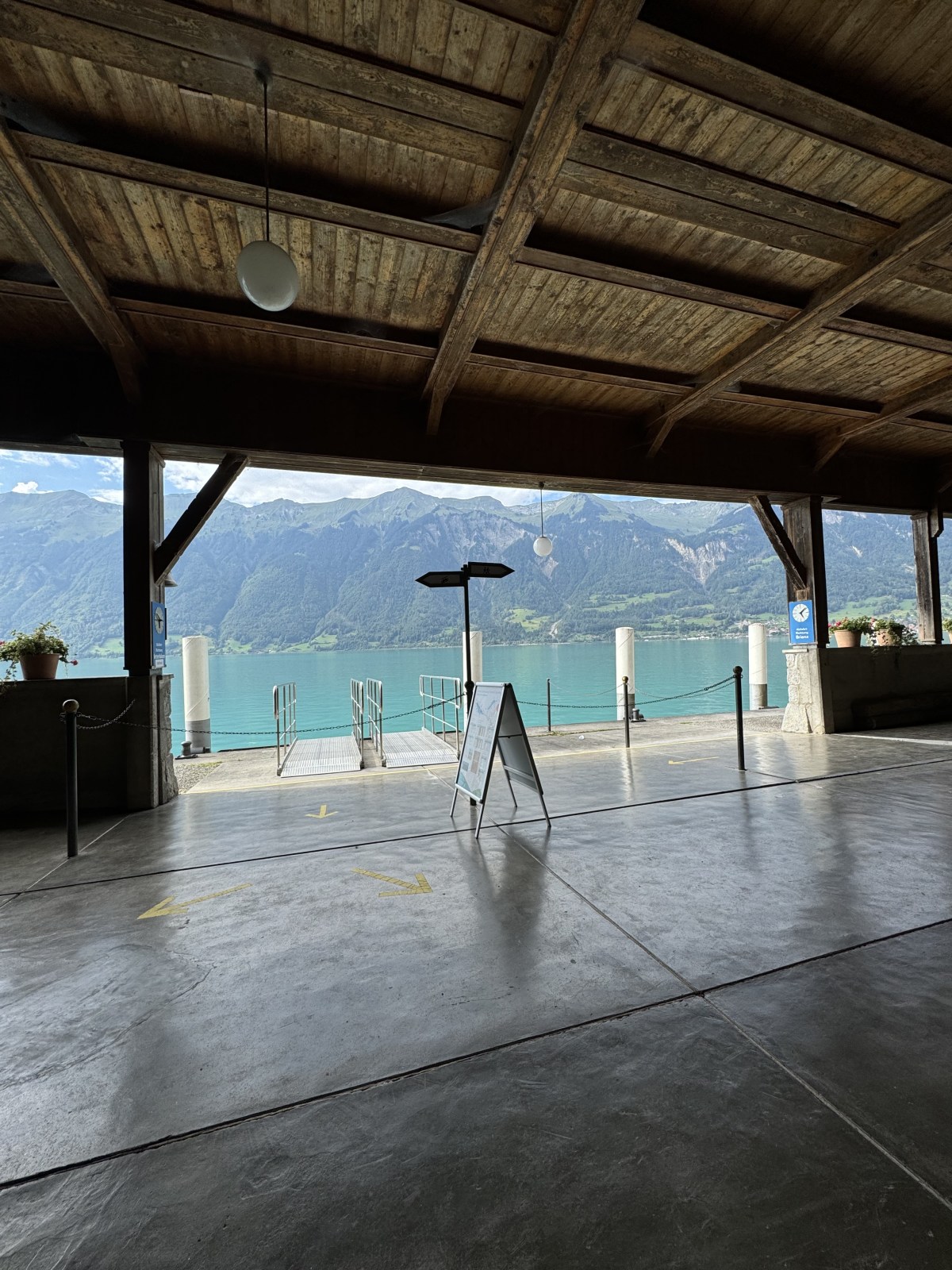
Lake Brienz Scenic Boat Ride
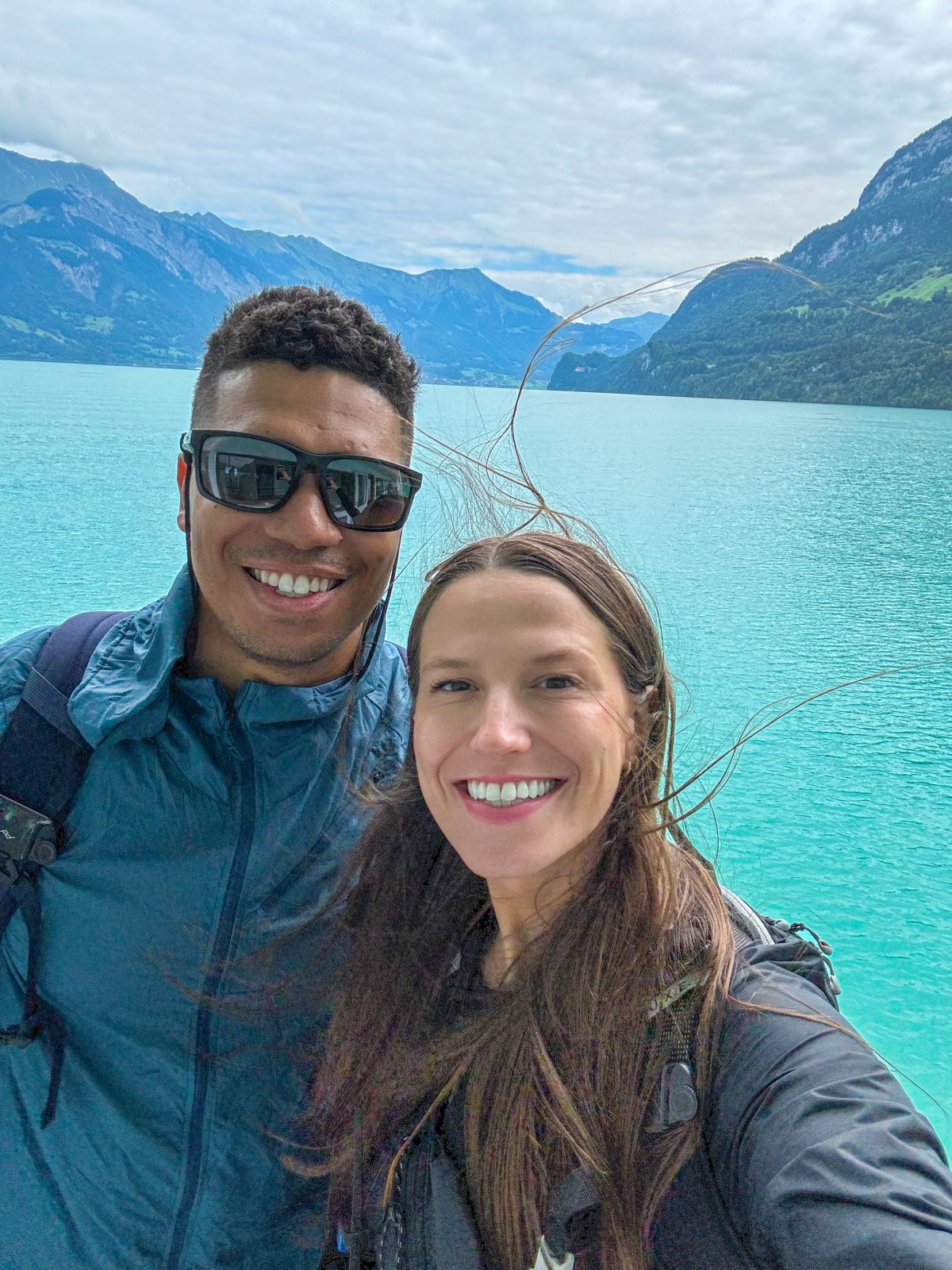
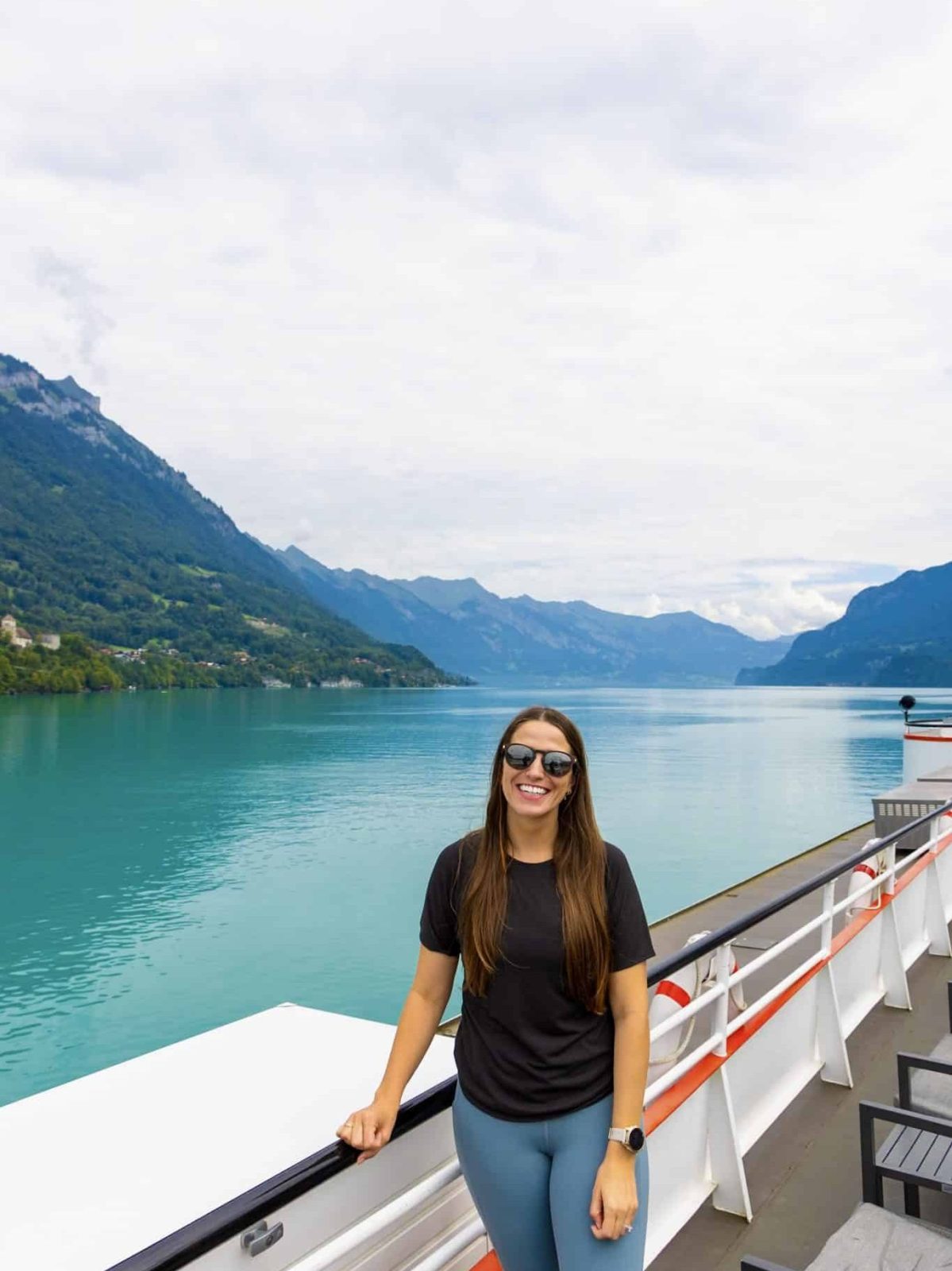
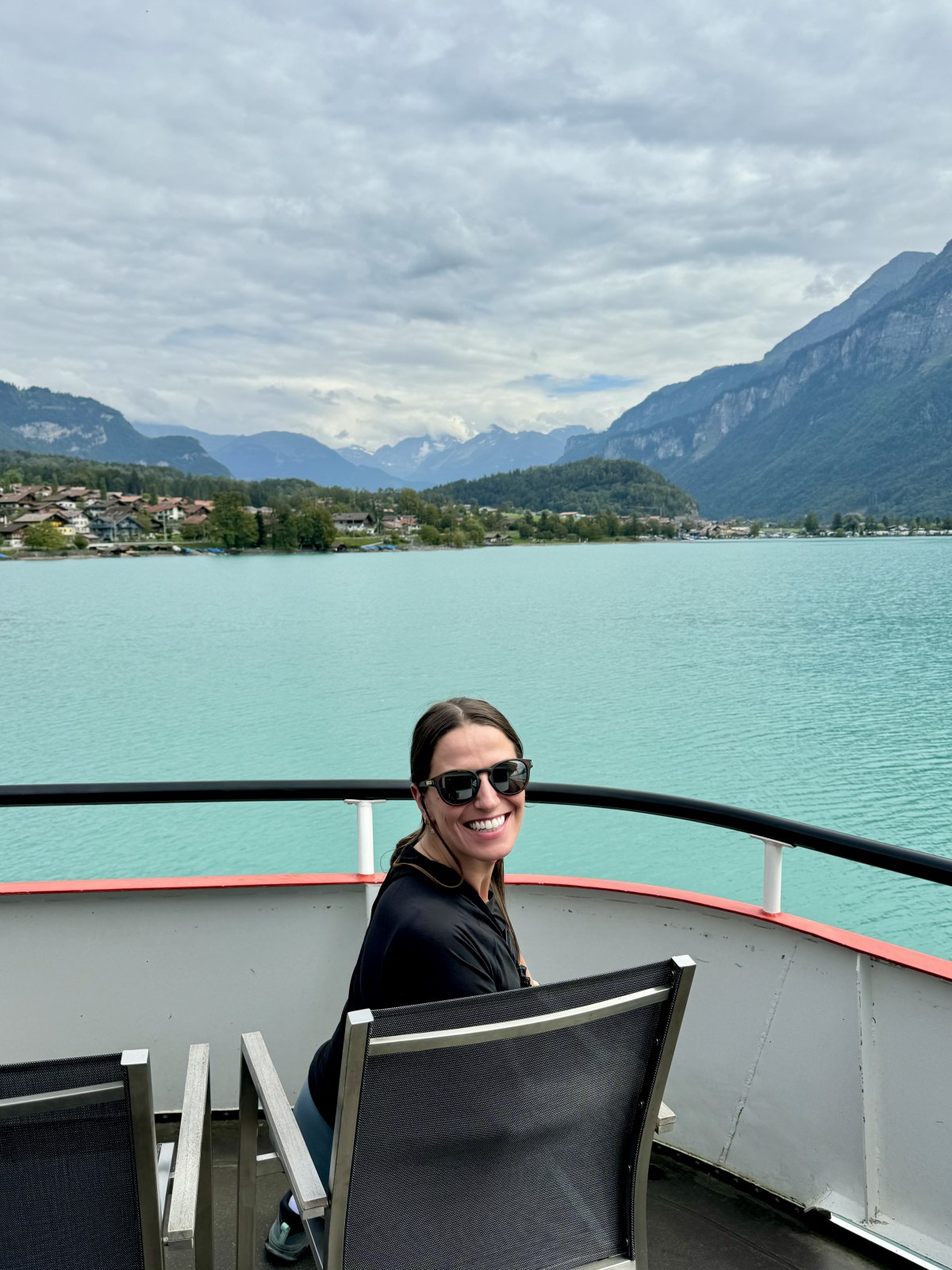
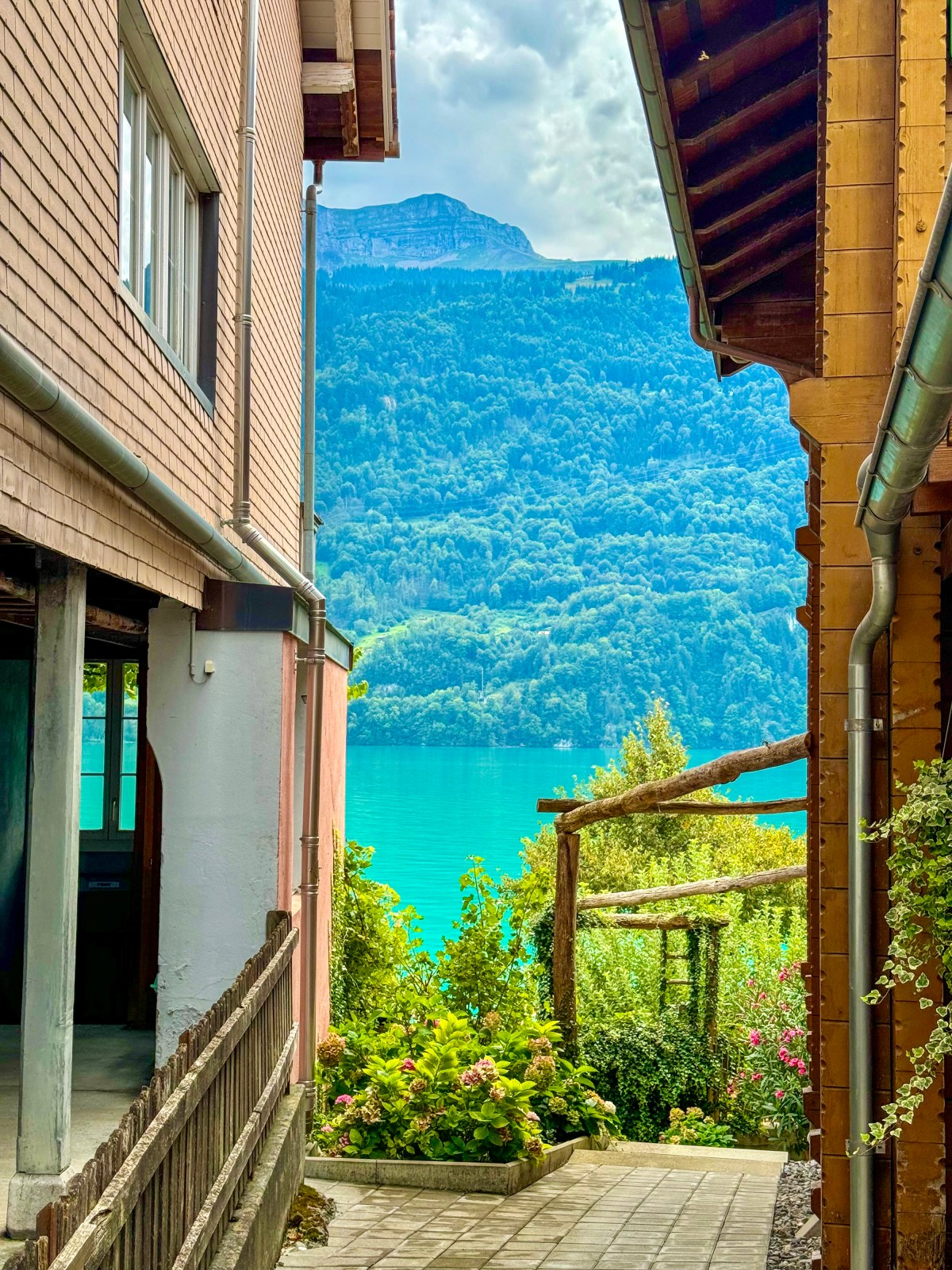
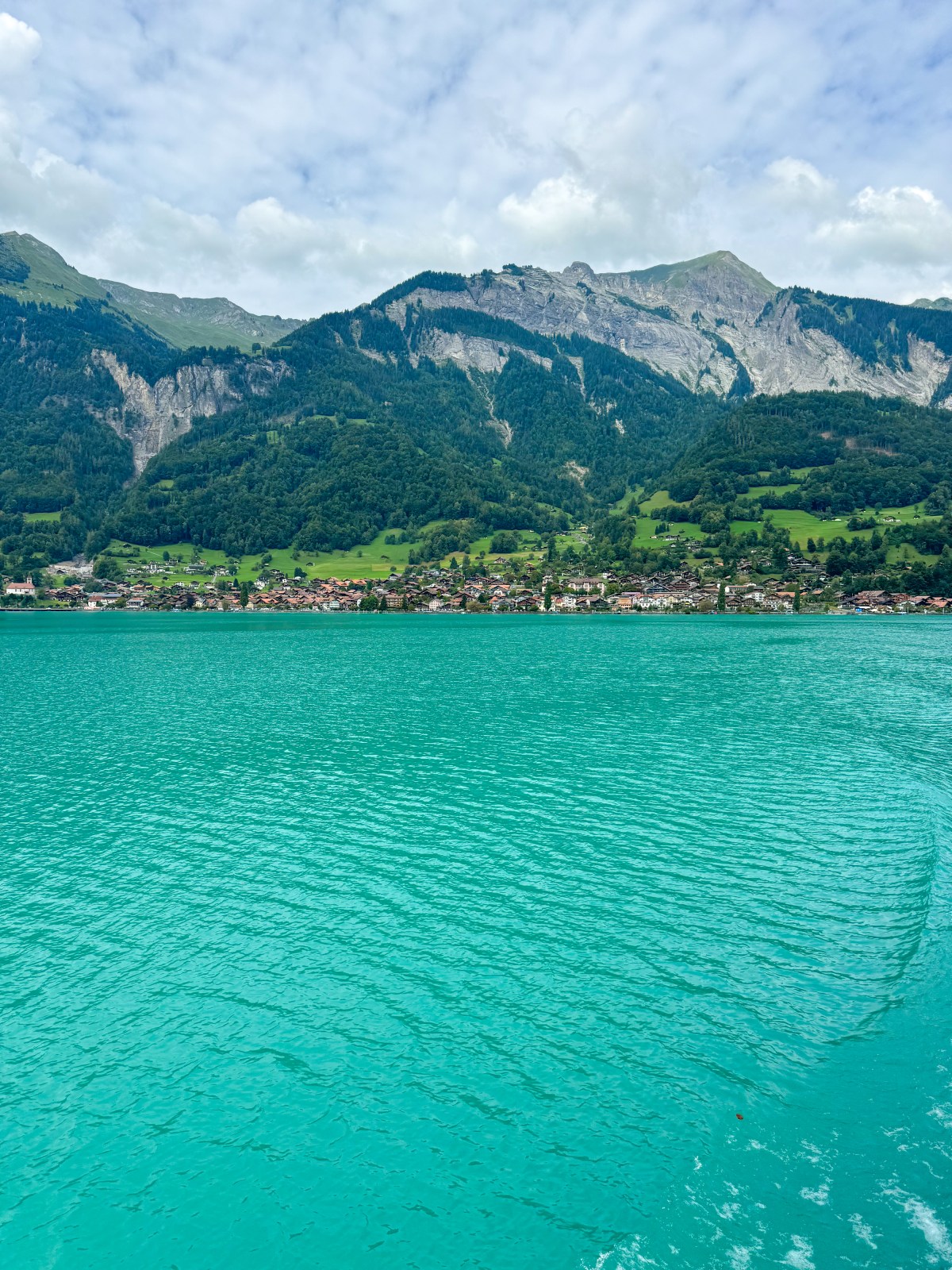
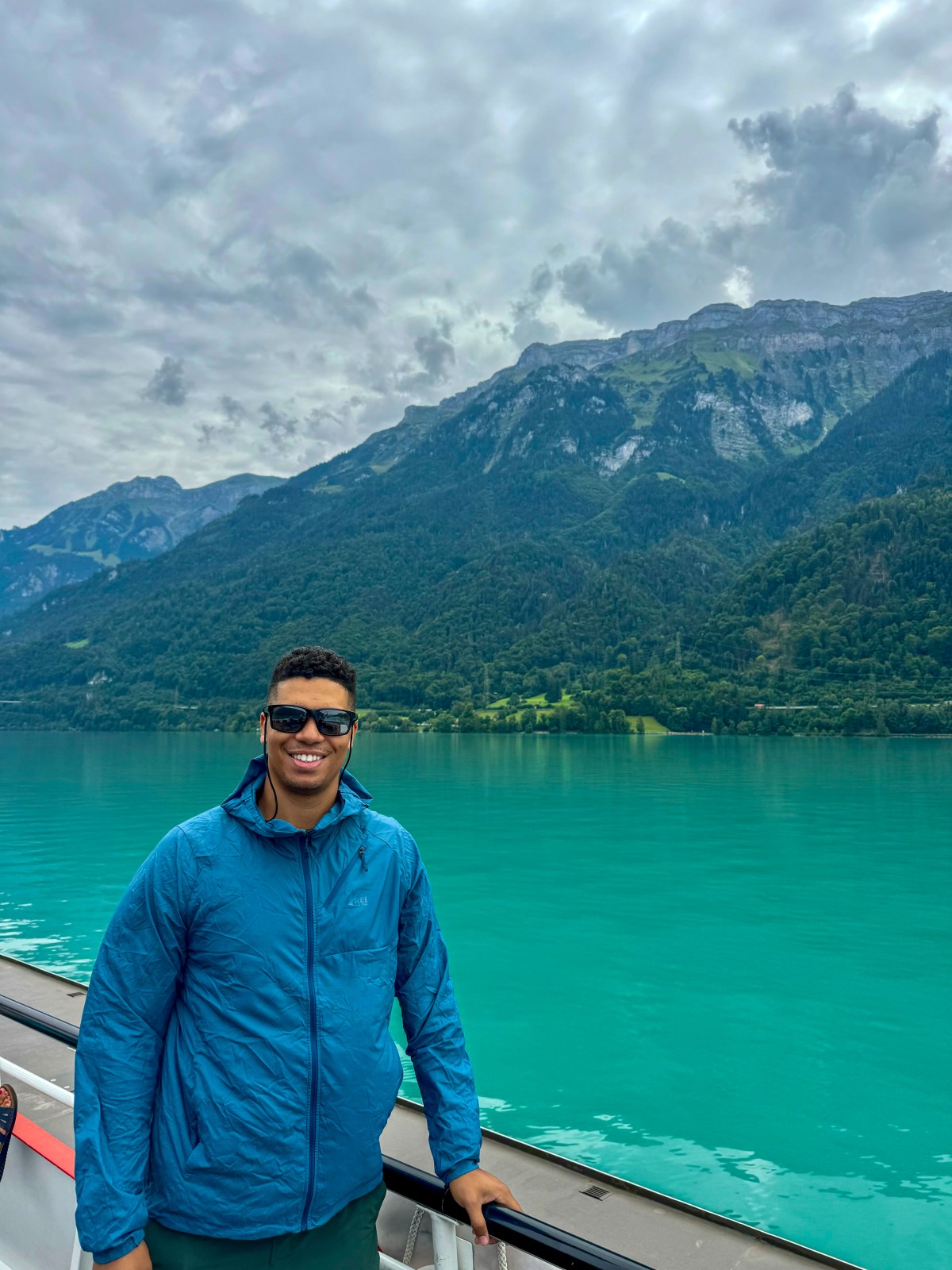
Since the weather was cloudy, we skipped the mountains and instead opted for a relaxing scenic boat ride across Lake Brienz—a decision we didn’t regret!
This boat ride is included with the Swiss Travel Pass and features several stops along the way. As part of our Switzerland 7 day itinerary, it turned out to be a peaceful and flexible way to explore without worrying about visibility.
We took the boat all the way to Brienz, where we had about an hour to explore before the next departure. We grabbed lunch and stocked up on water at a nearby grocery store, then hopped back on to visit Böningen and Bissetbach Falls later in the afternoon.
Map of the boat route below.






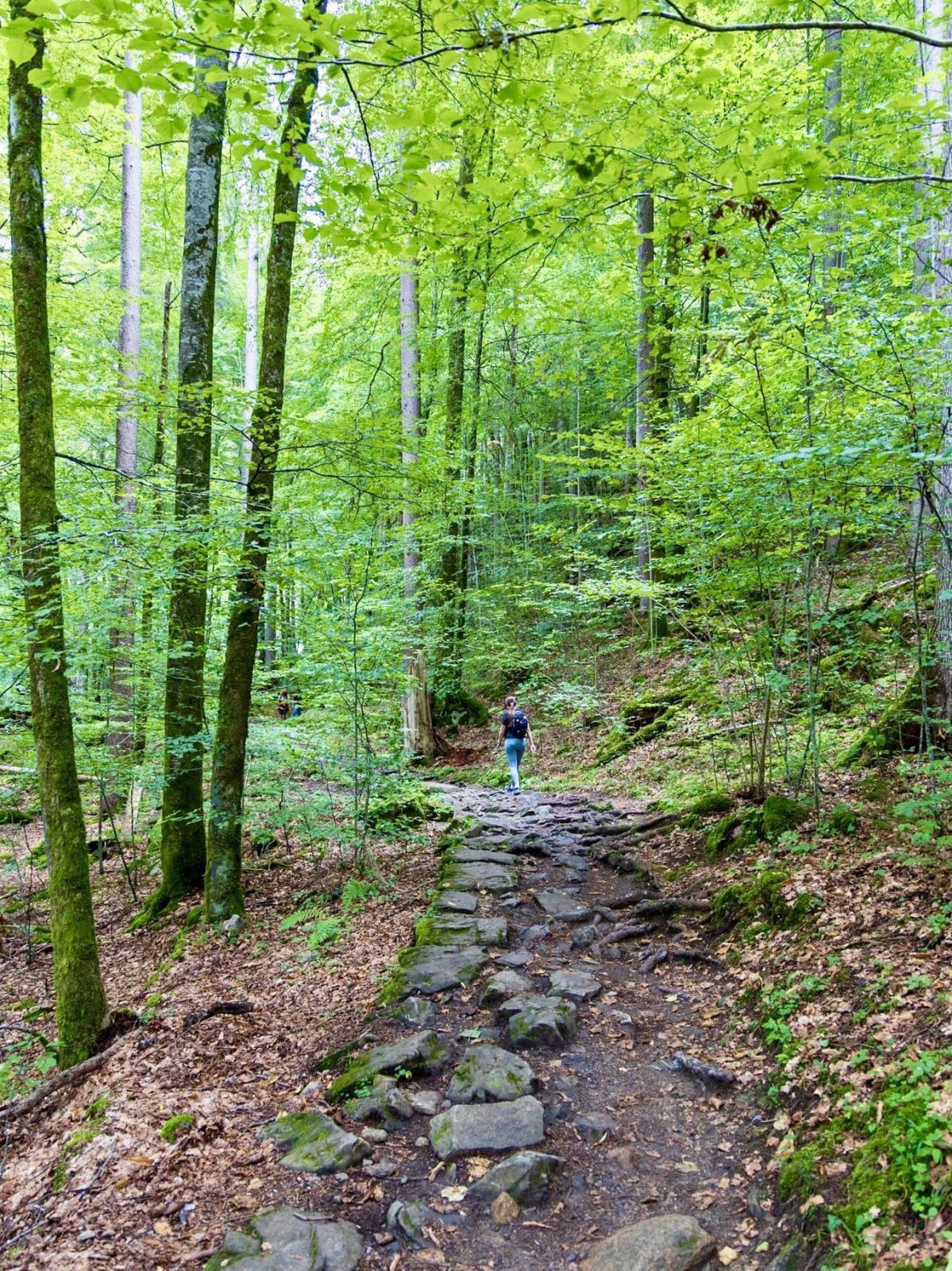
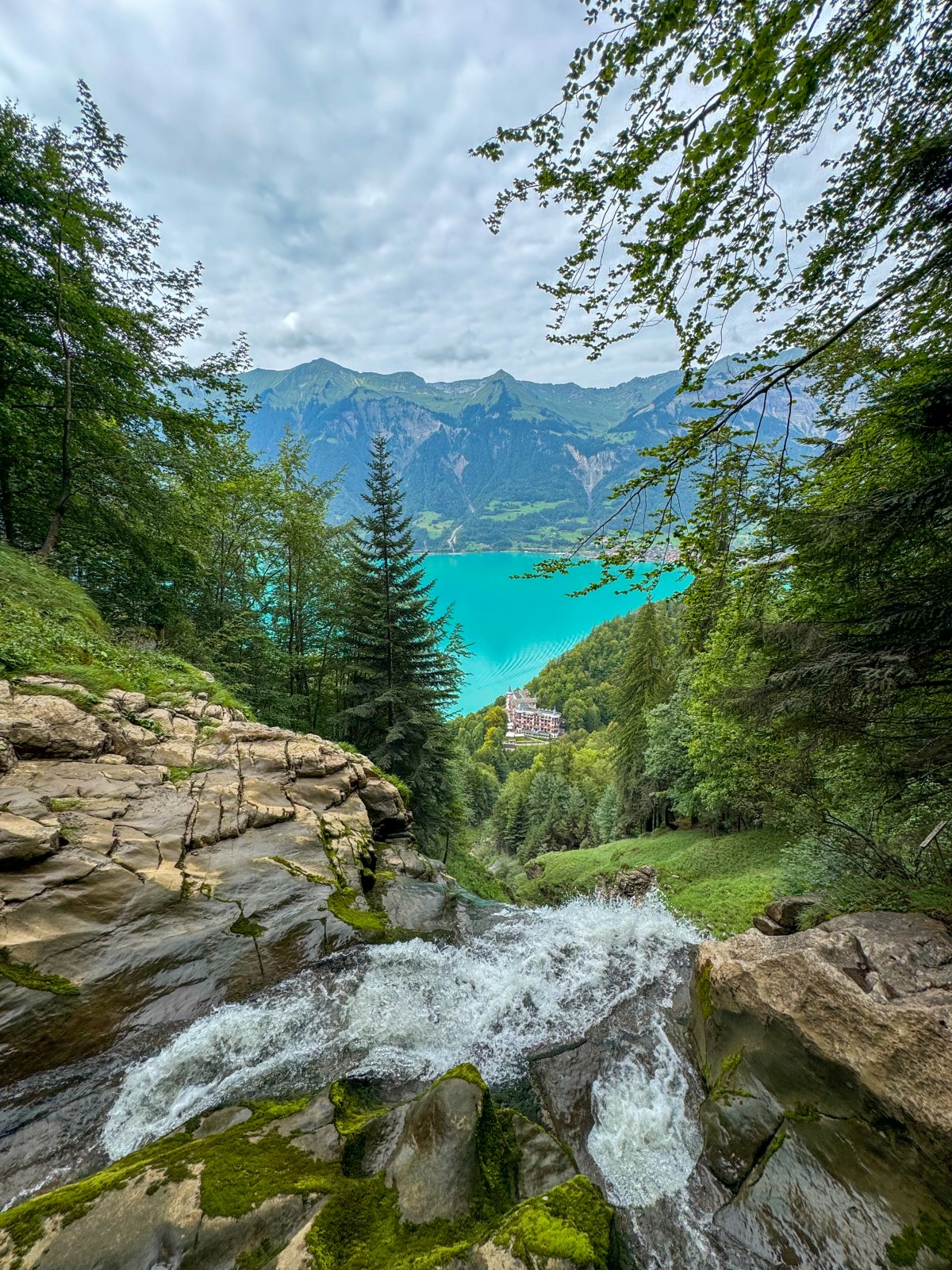
Giessbach Falls Hike
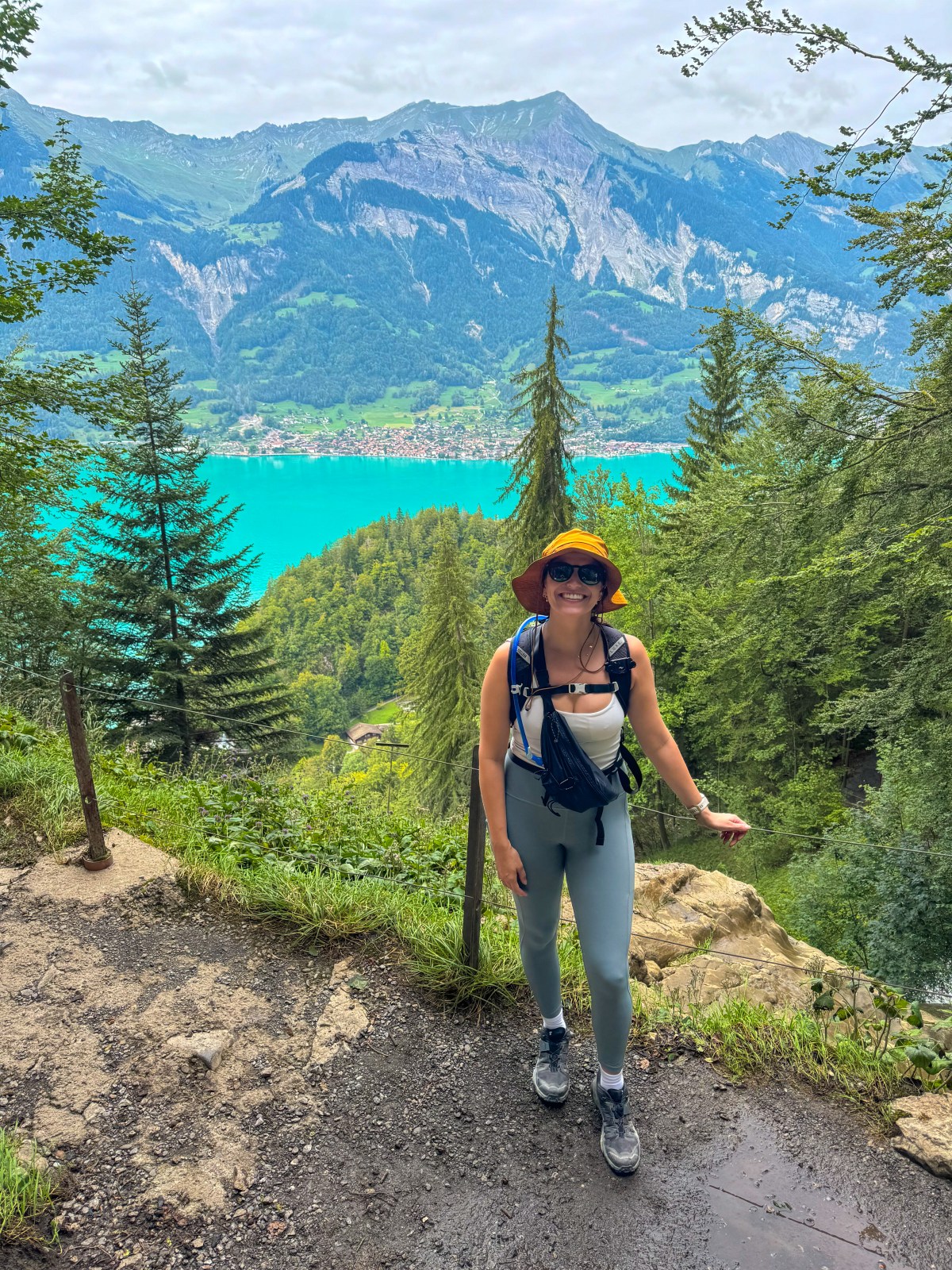
After we ate lunch we hopped back on the boat where it stopped at the same stops as before, but in reverse order. This time we decided to get off at Giessbach Falls to hike. You can see some of the falls from the boat, but we highly recommend getting out to hike. The hike takes you to 14 series of waterfalls. Overall, we hiked about 2.5 miles and gained over 1,000 ft in elevation. Near the top, the hike does get steep! Based on timing, after we were done hiking we decided to take the next boat back to Brienz and then take a bus from Brienz back to Interlaken Ost because the train was not running.




Stay + Dinner in Interlaken
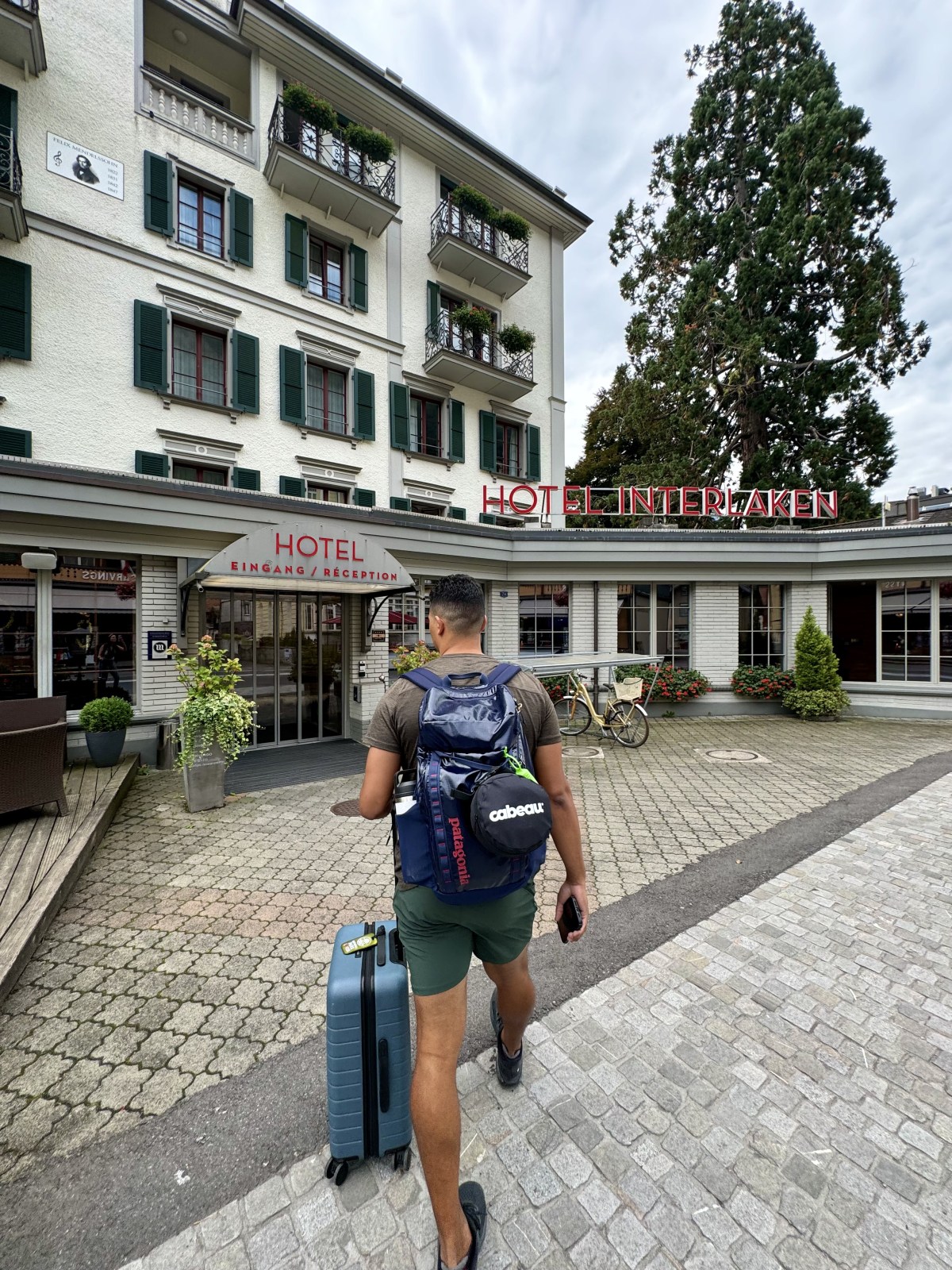
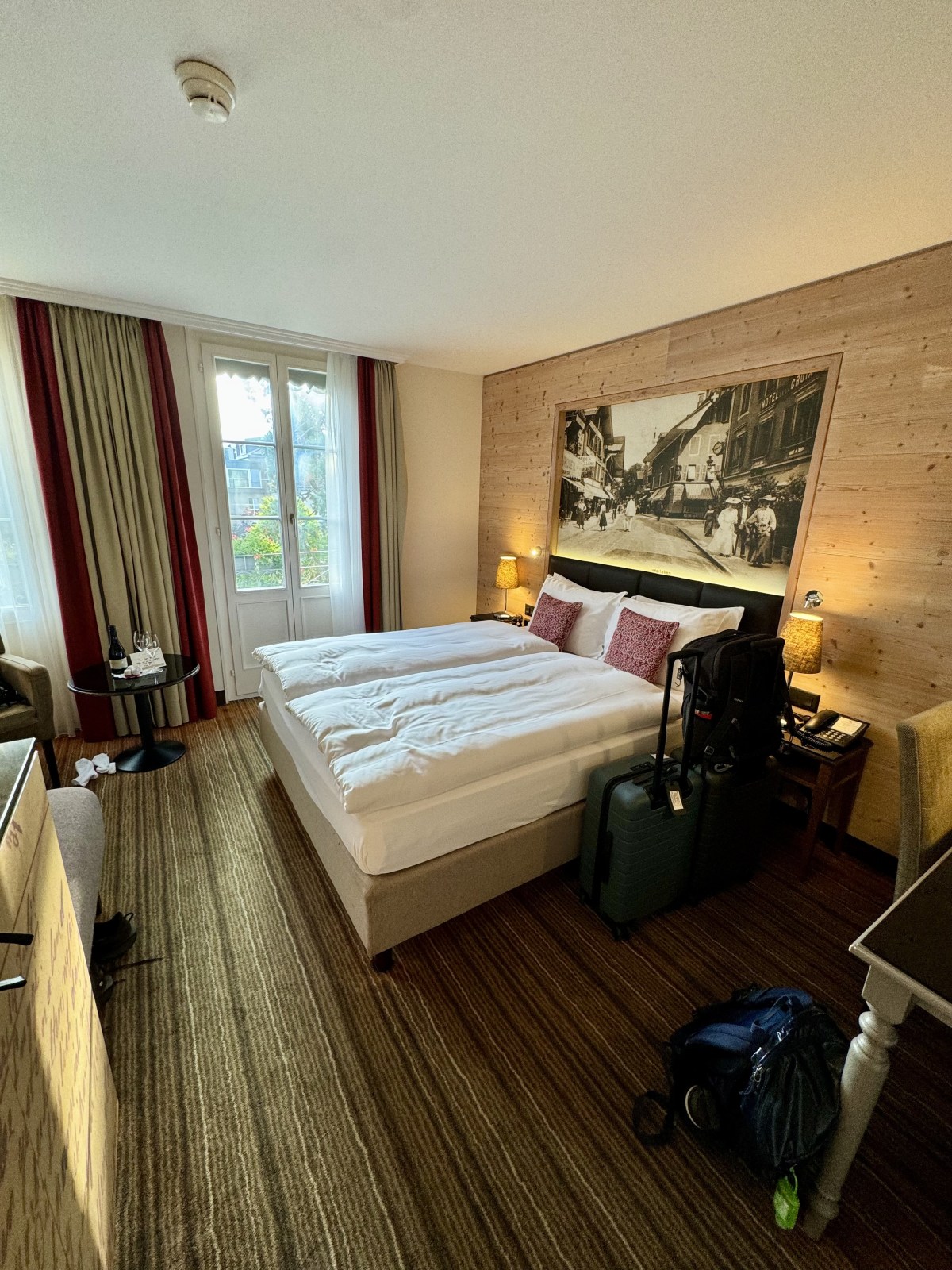
We stayed at Hotel Interlaken, which was conveniently located just a 10-minute walk from Interlaken Ost Train Station. By European standards, the room was spacious, and we really enjoyed our stay.
To help offset the cost, we redeemed credit card points for cash, which covered most of the hotel stay—a great travel hack to keep in mind!
For dinner, we ate at Restaurant Taverne, located inside the hotel, and tried traditional Swiss fondue for the first time. It was delicious and made for a cozy, memorable evening.
Hotel Interlaken also includes daily breakfast, which was a nice bonus and made mornings easier during our trip.



Day 4: Interlaken to Zermatt – 5 Lakes Hike + Matterhorn Views
On Wednesday, we took multiple trains from Interlaken Ost to Zermatt as part of our Switzerland 7 day itinerary. The weather during our trip had been unpredictable, and the forecast for Zermatt looked rainy but we got lucky! It stayed mostly cloudy, but dry.
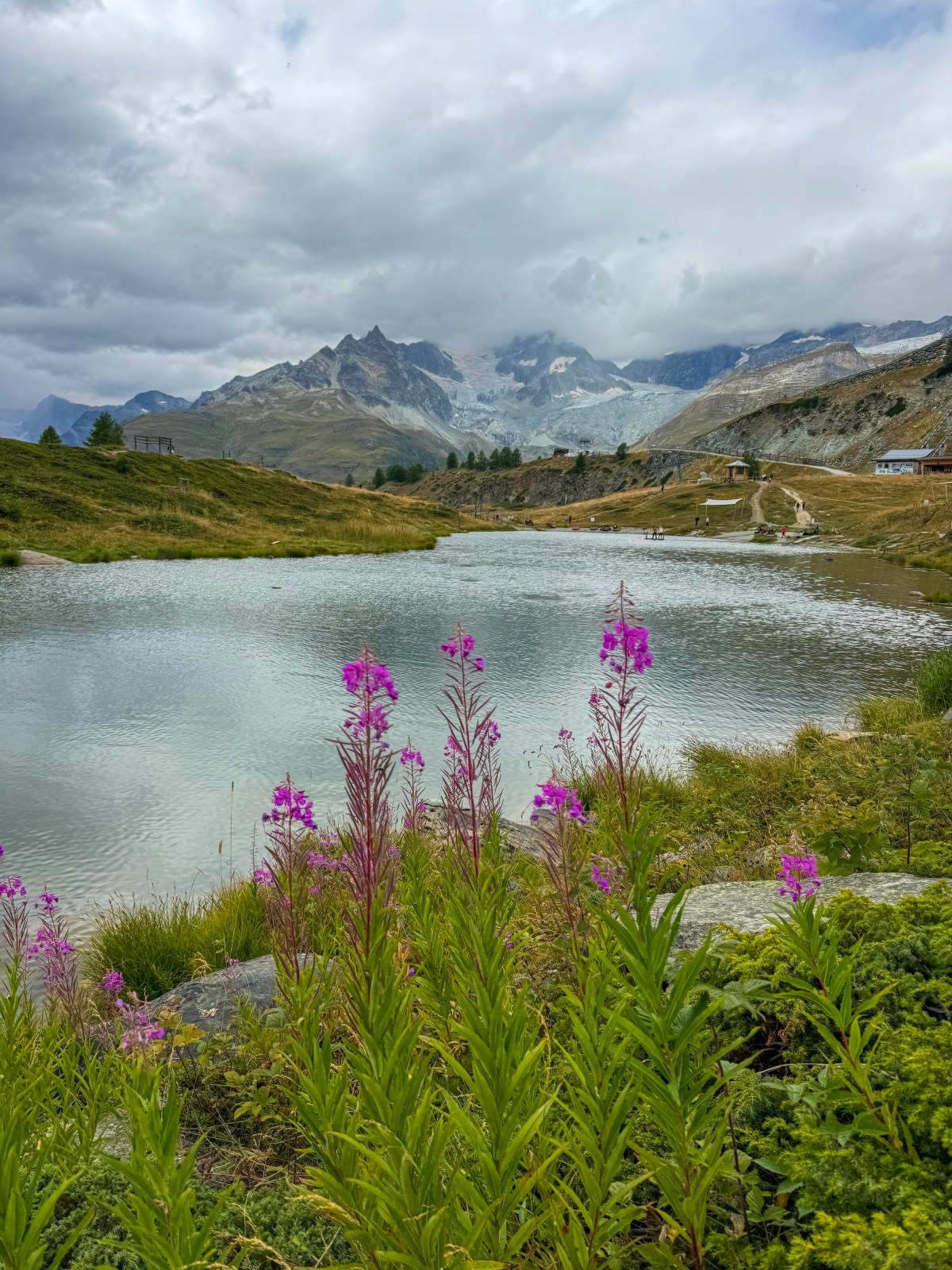
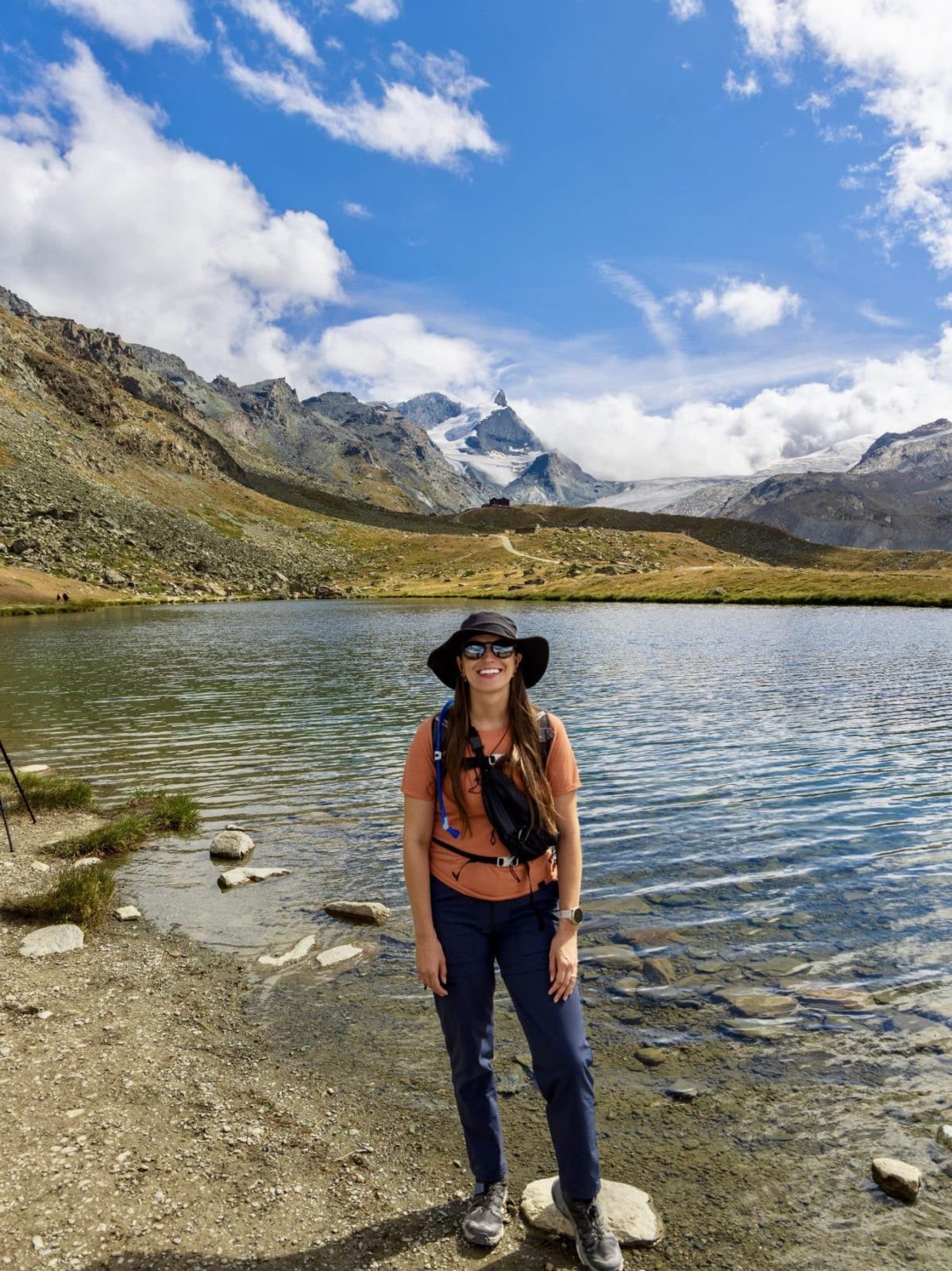
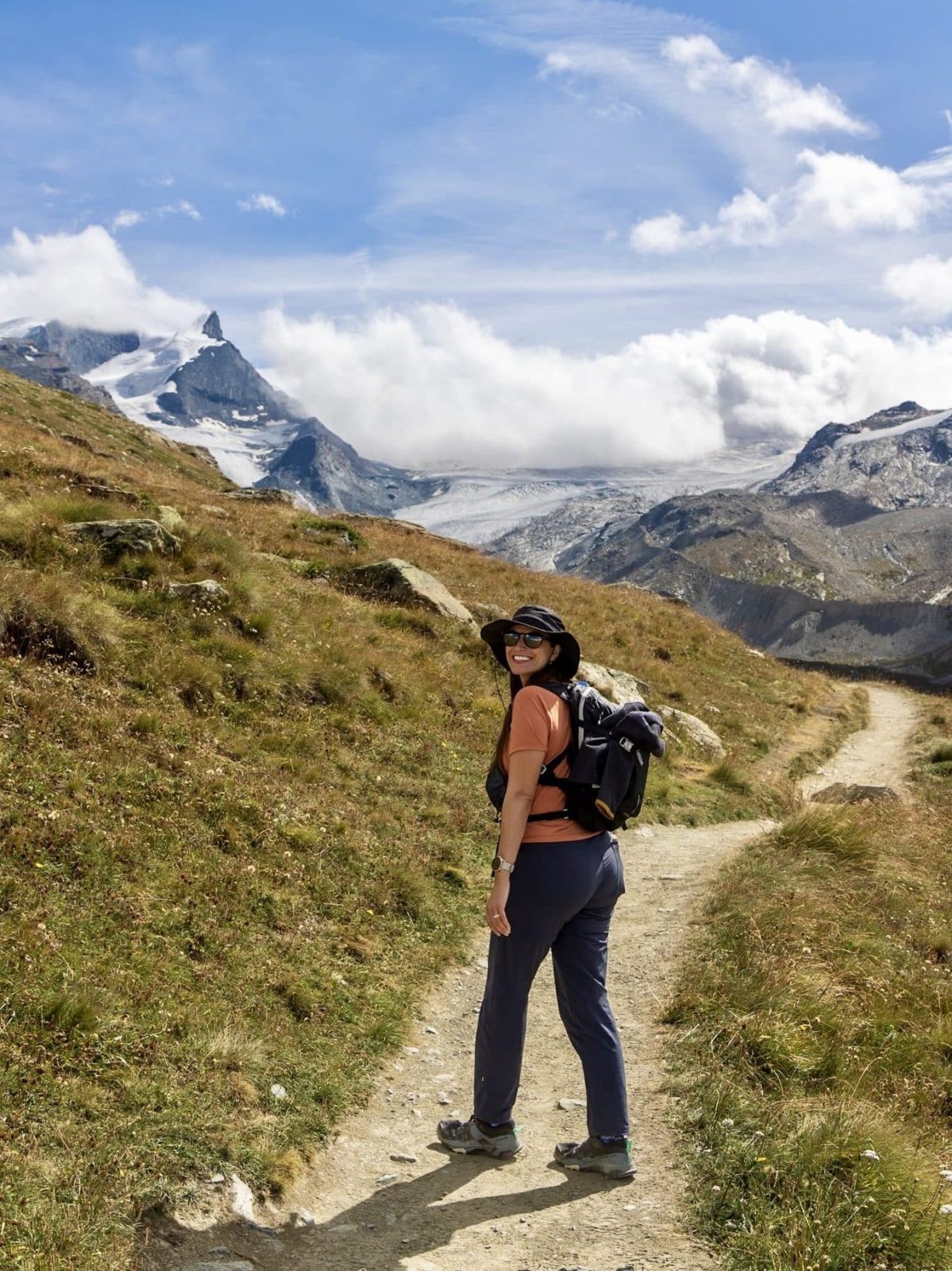
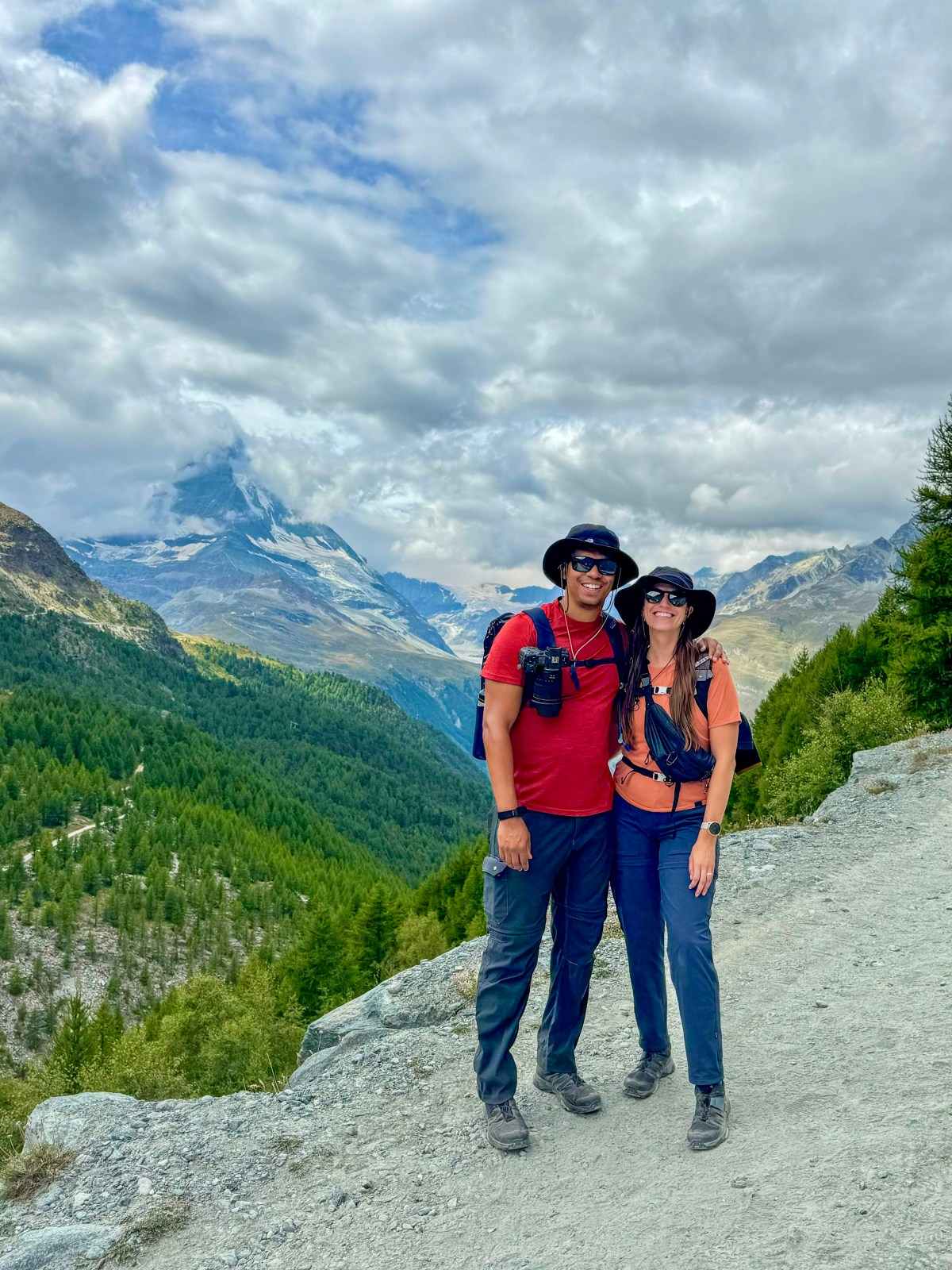
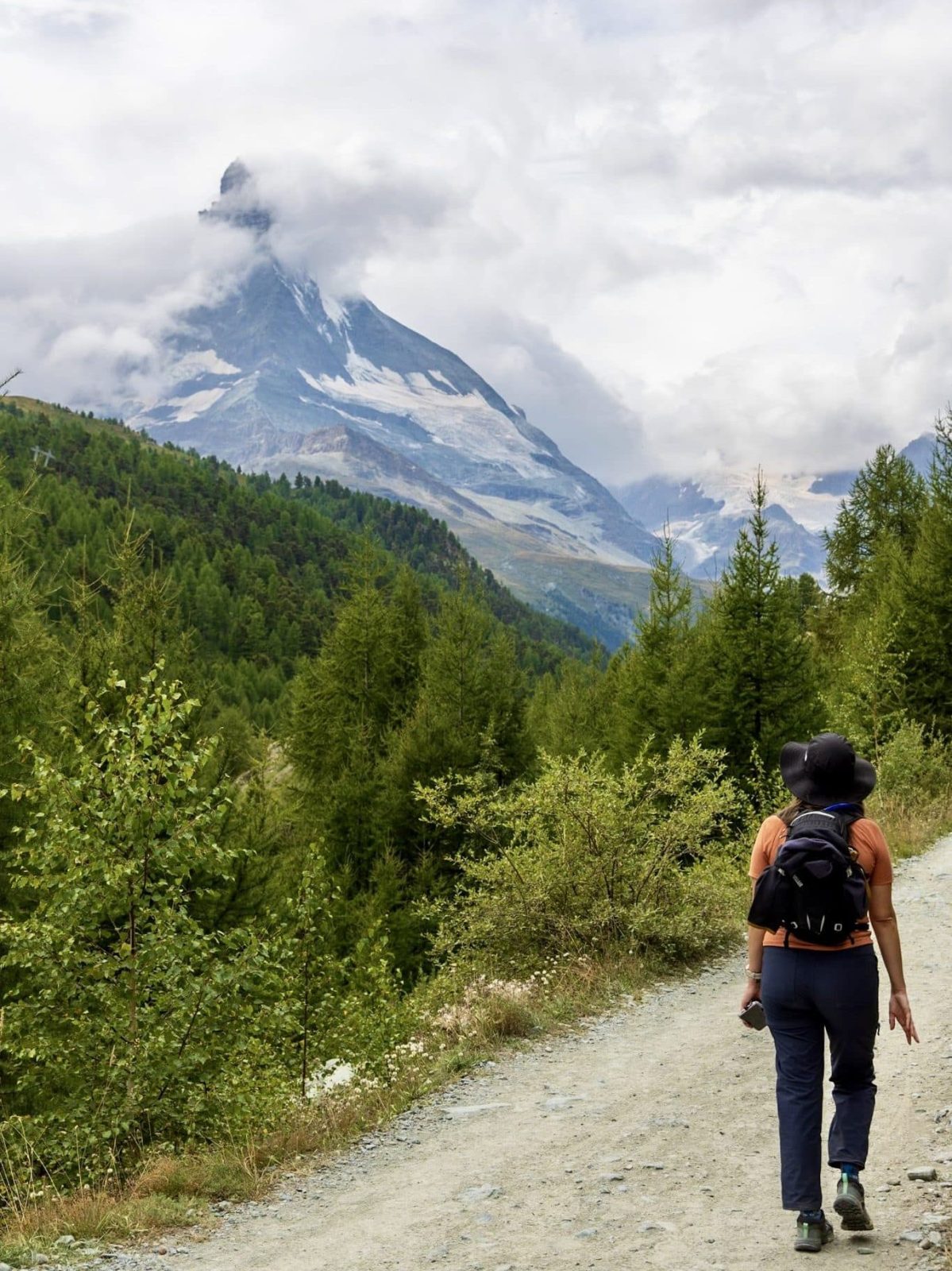
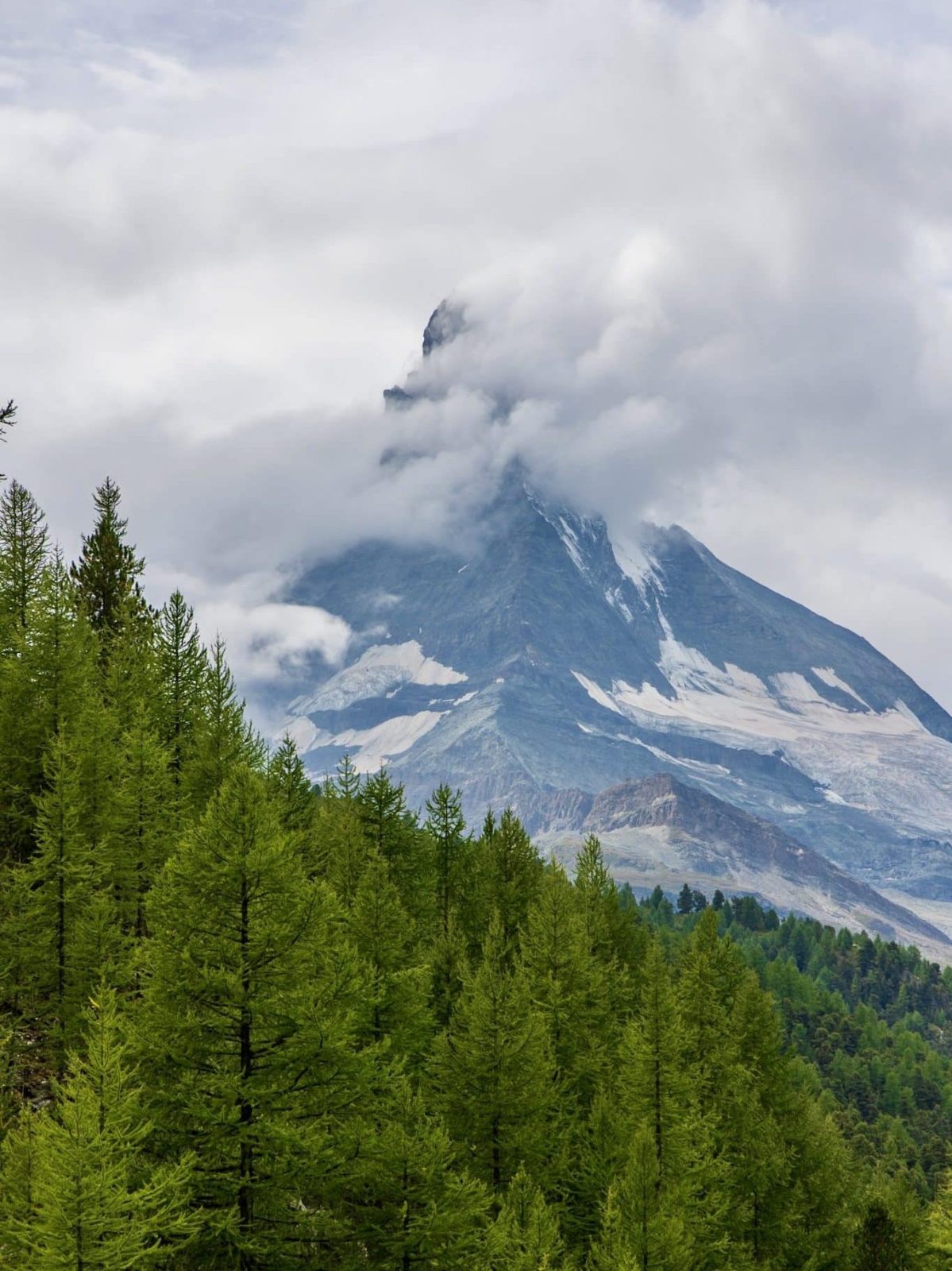
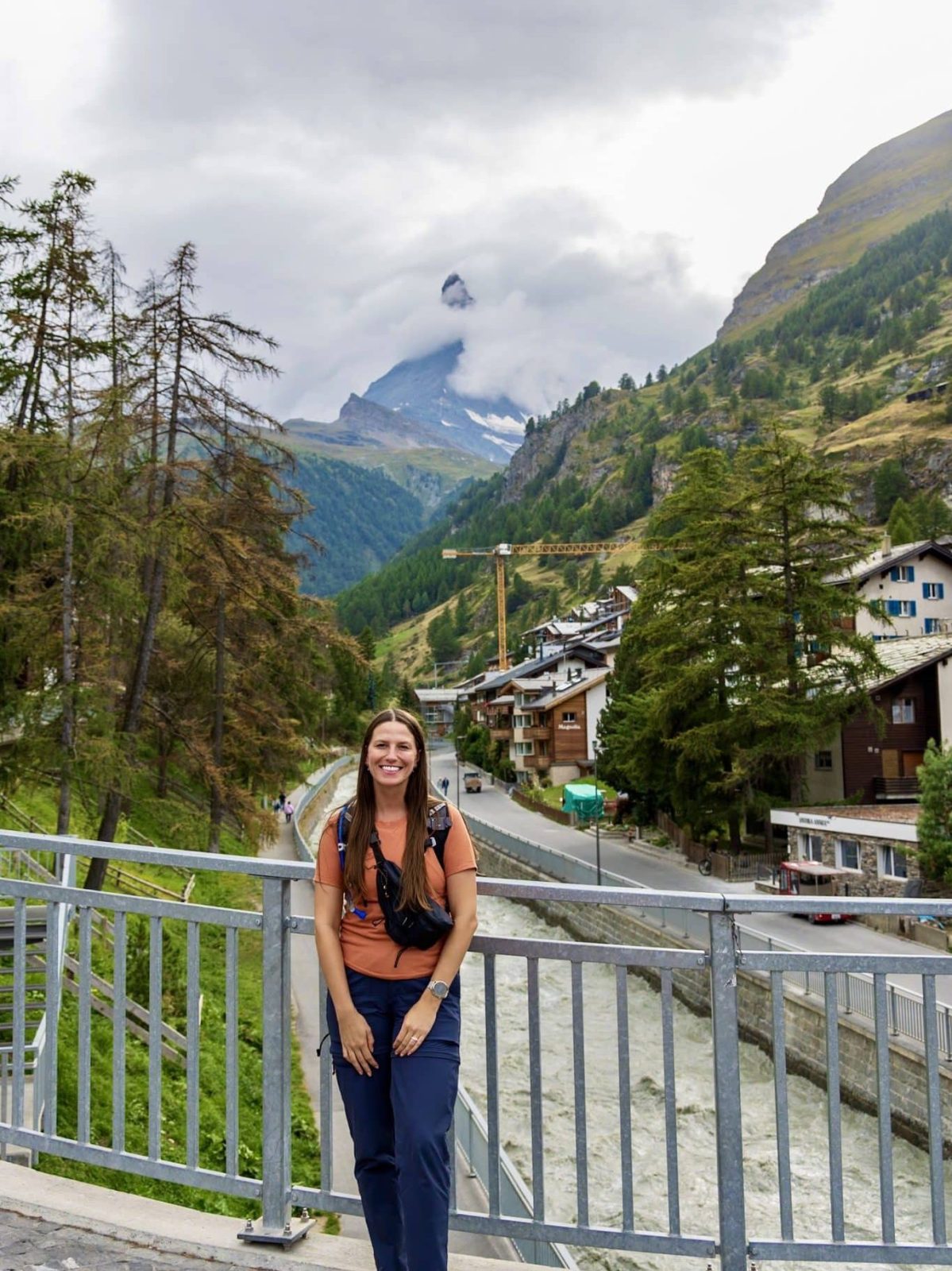
When we arrived in Zermatt, we debated whether to hike since the Matterhorn and surrounding peaks were covered in clouds. We decided to stick with our original plan and we’re so glad we did. The views were still incredible, and the Matterhorn even peeked out a few times!
We hiked the 5 Lakes Trail, a point-to-point route that passes five scenic alpine lakes:
Stellisee
Grindjisee
Grünsee
Moosjisee
Leisee
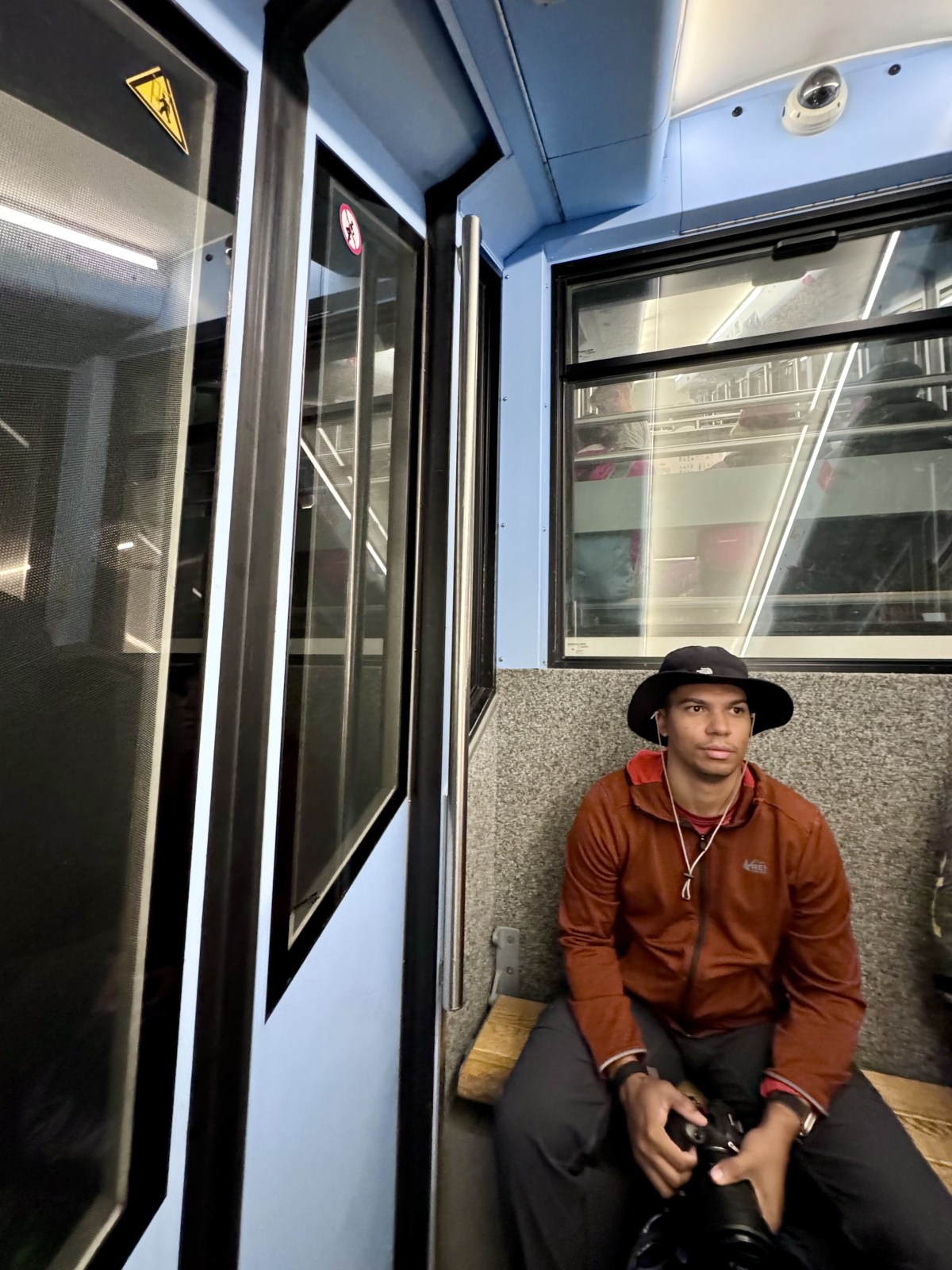
To reach the trailhead, we took the funicular from Zermatt to Sunnegga, then transferred to a gondola up to Blauherd. The hike itself was just over 6.5 miles, ending back at Sunnegga, where we rode the funicular down to Zermatt.
After the hike, we explored the car-free village of Zermatt, grabbed dinner, and caught occasional glimpses of the Matterhorn as the clouds shifted.
We returned to Interlaken that evening via train which is just over an hour ride.







Day 5: Thun Castle + St. Beatus-Hohlen Caves
Thursday brought rain and overcast skies, so we made a last-minute change to our itinerary. We had originally planned to visit Jungfraujoch – Top of Europe, but snowfall and full cloud cover made it not worth the trip.
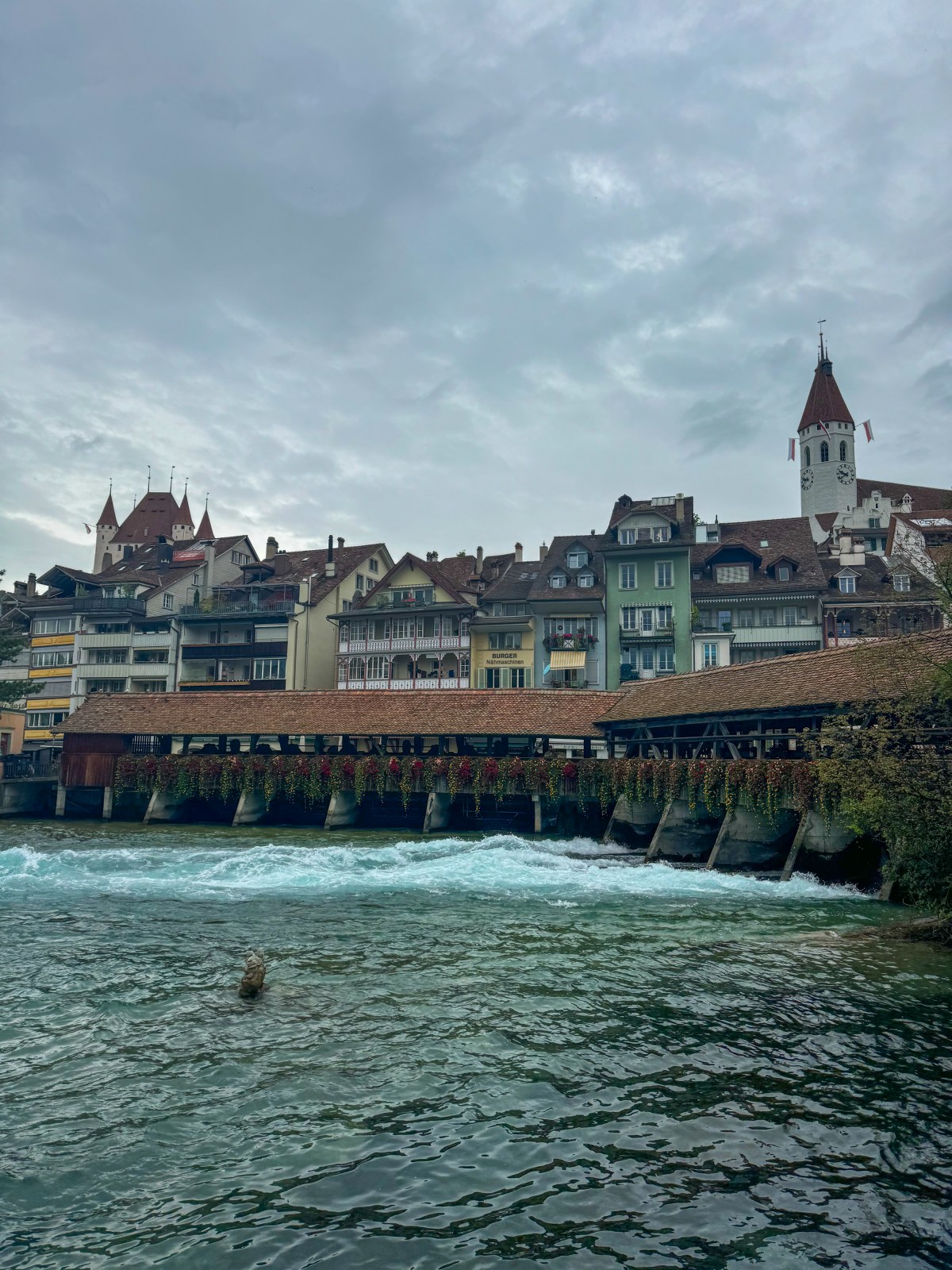
Instead, we took a scenic train ride from Interlaken Ost to Thun to explore the historic Thun Castle. Entry to the museum was included with our Swiss Travel Pass—another great perk.
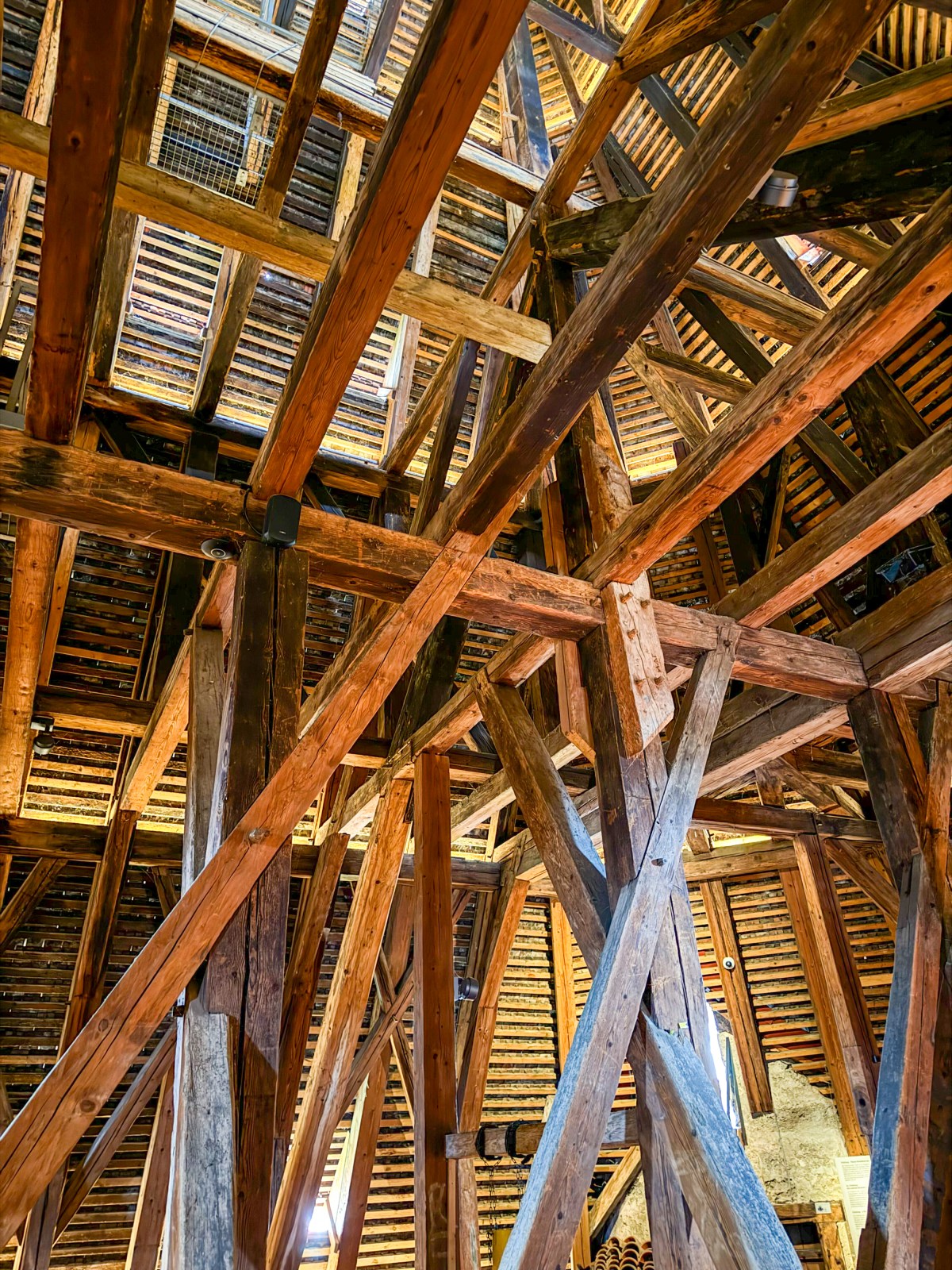
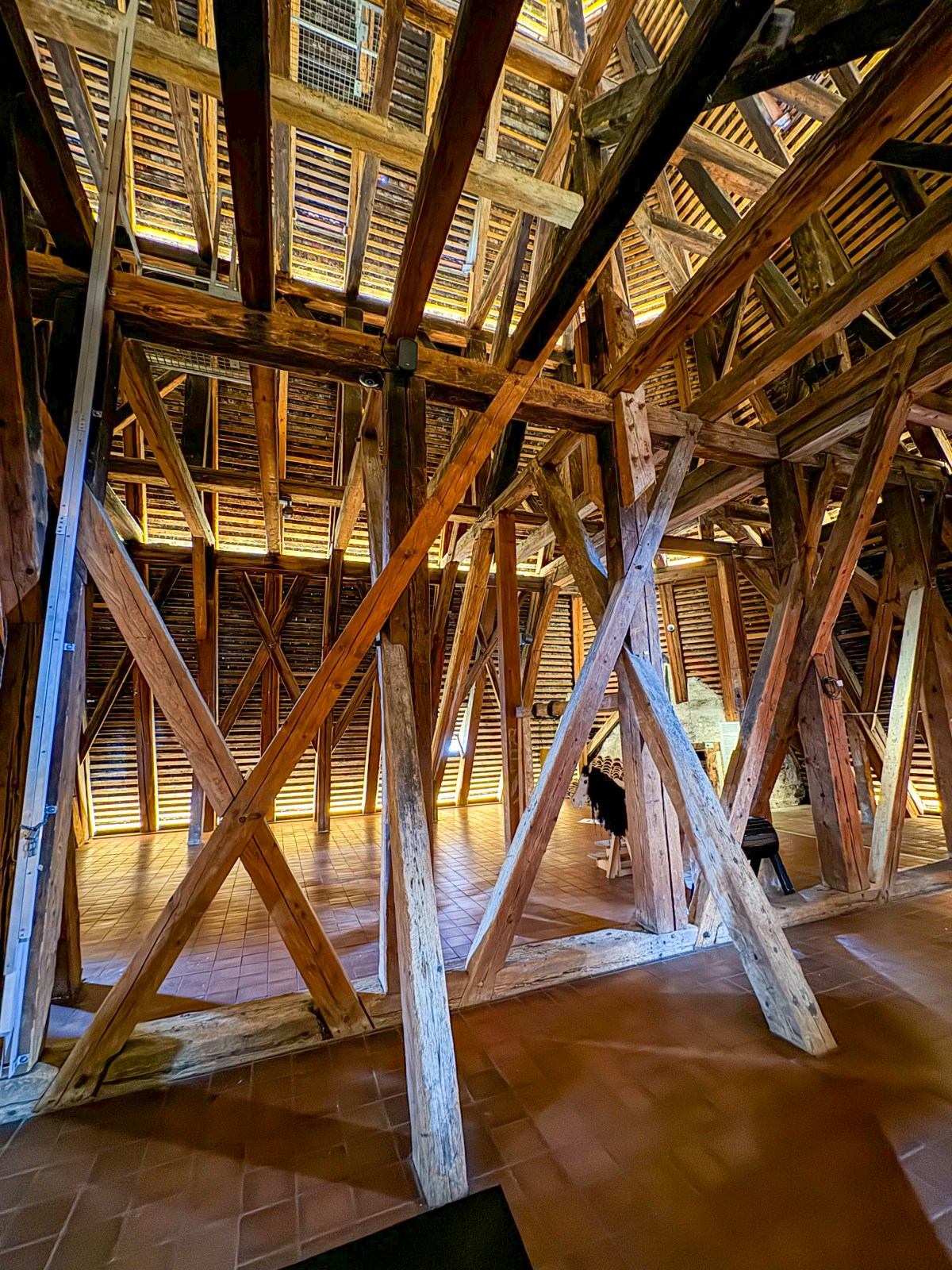
Built in the 12th century, Thun Castle played a key role in Swiss history. Inside, you’ll find exhibits on medieval life, and you can climb to the top of the tower for panoramic views of Lake Thun and the city below. Even with cloudy weather, the view was impressive.





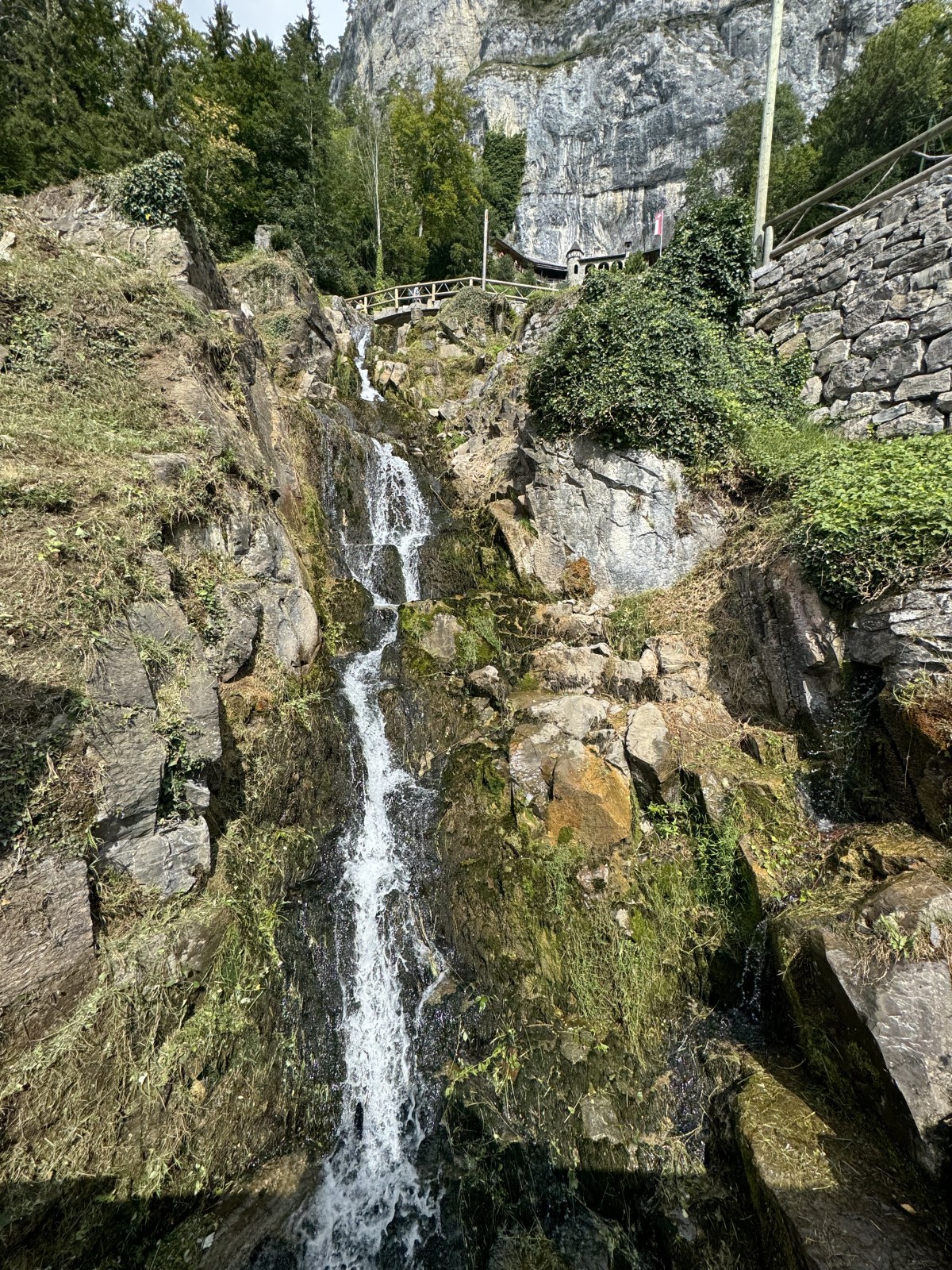
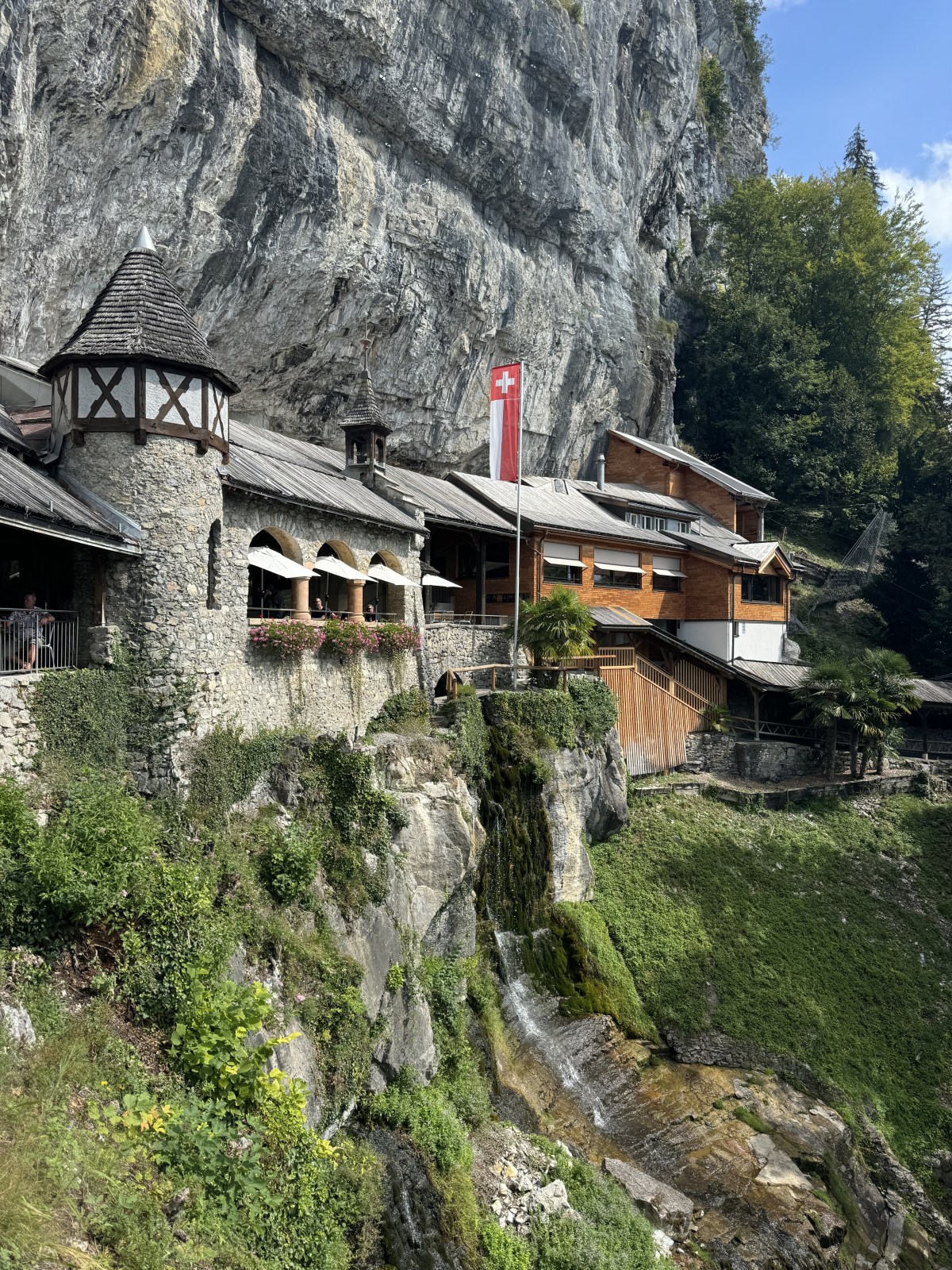
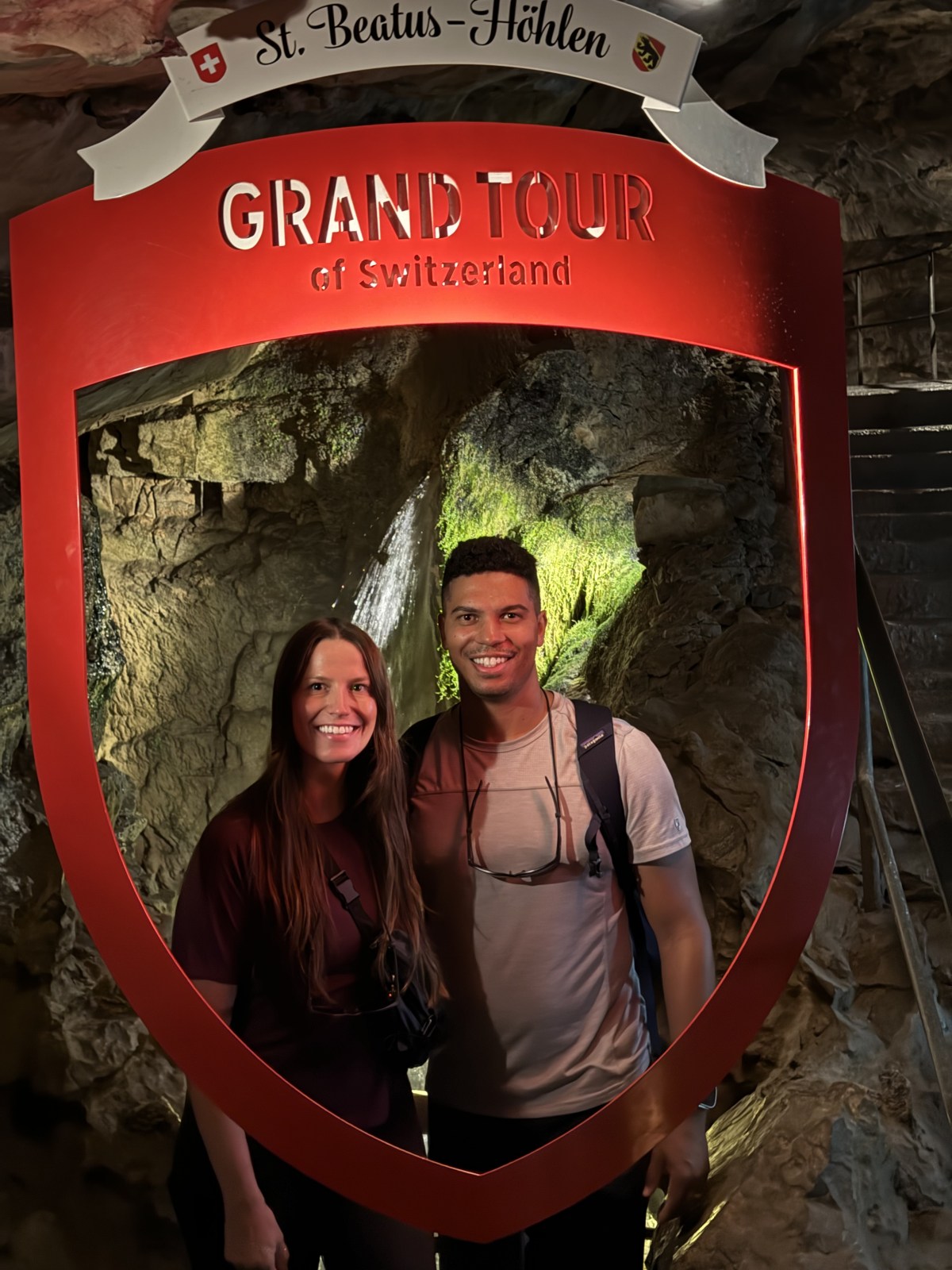
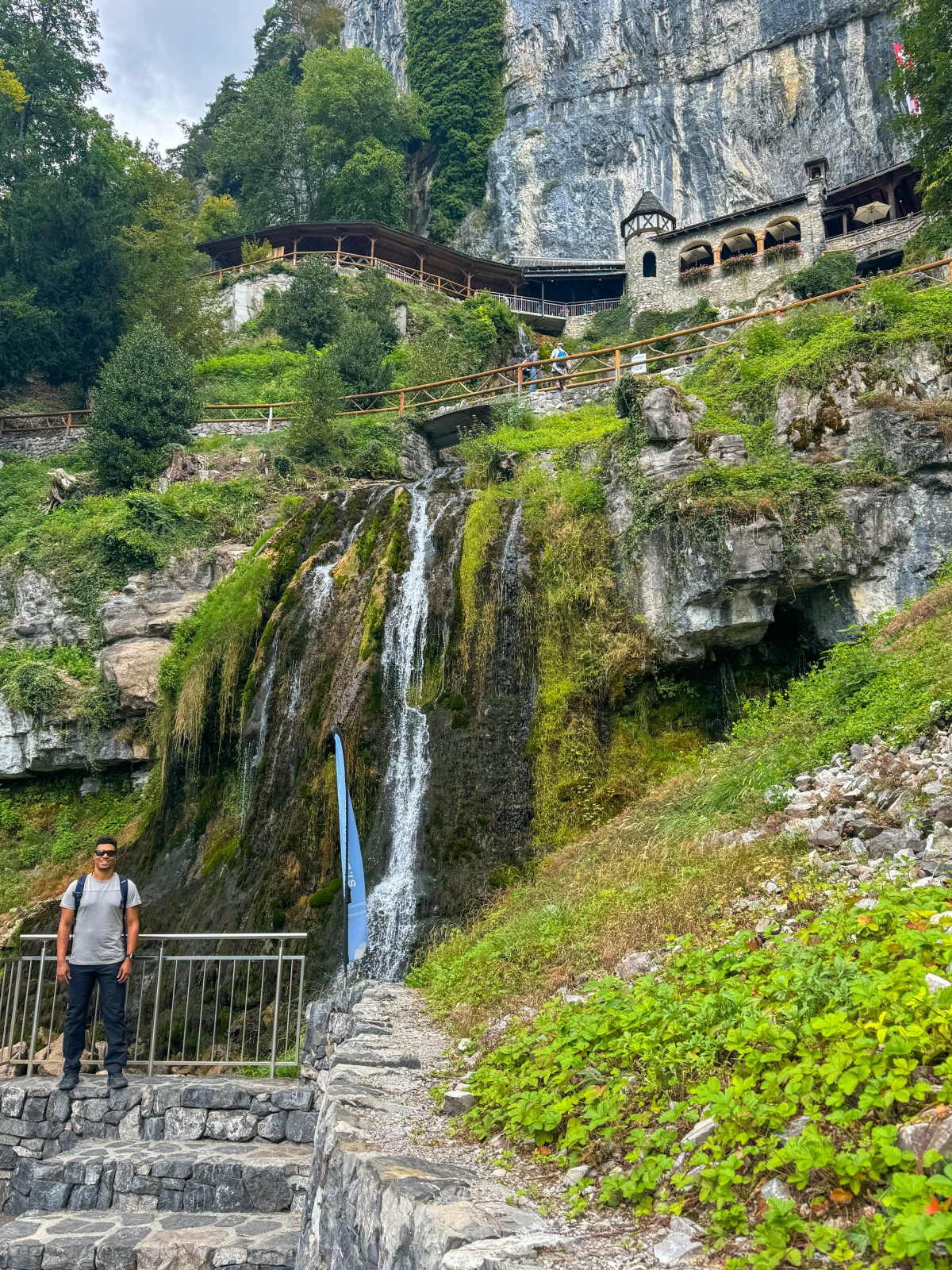
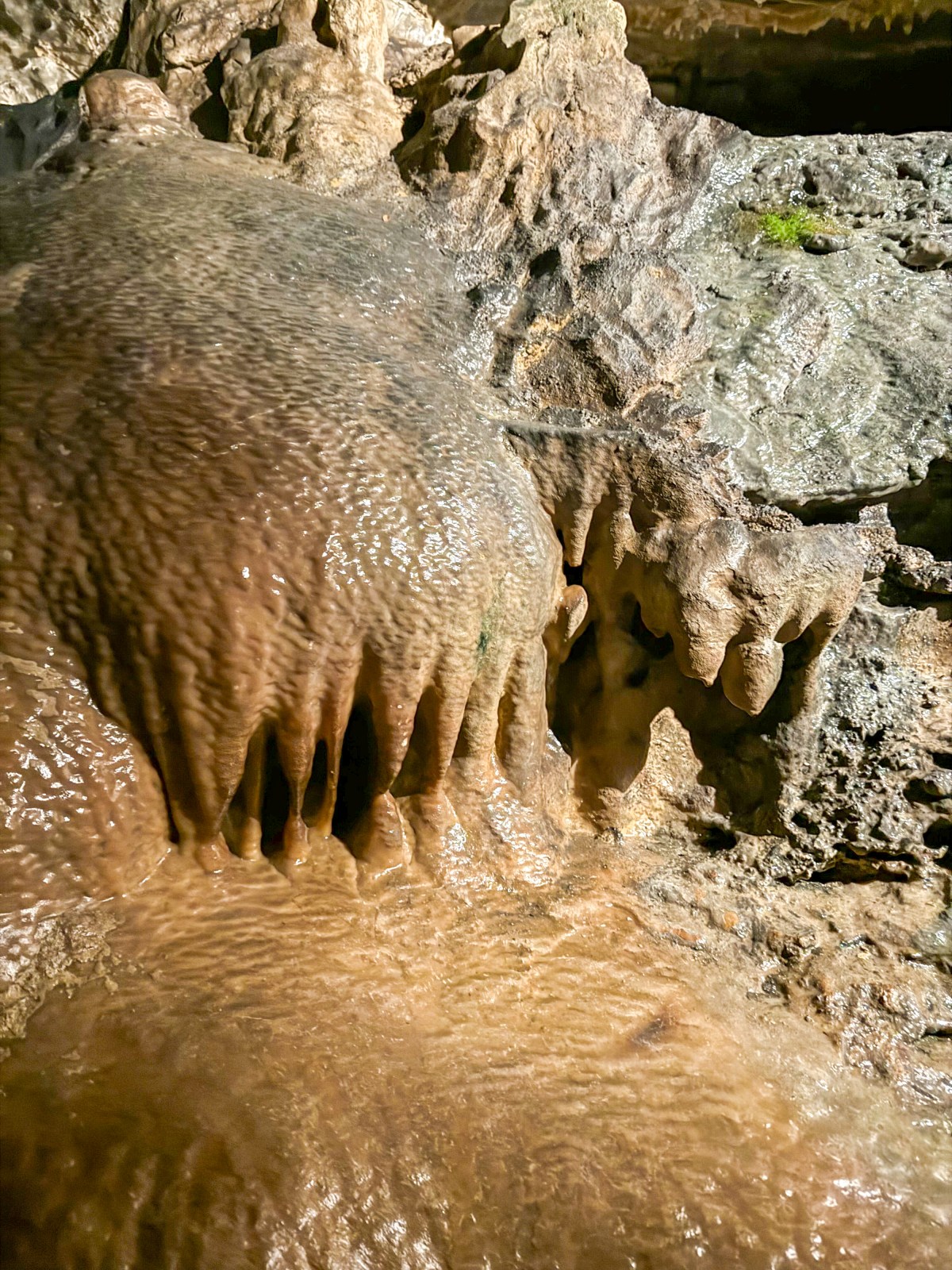
After visiting Thun Castle, we took a bus from Thun to St. Beatus-Höhlen Caves, located along the northern shore of Lake Thun. We had hoped this would be a good indoor activity for a rainy day—and apparently, so did a lot of other people! It was pretty crowded when we arrived.
The caves were interesting and worth seeing, but since there’s no timed entry, the experience inside felt a little cramped. Admission was 19 CHF per person, and the tour is self-guided.
To be honest, we found caves in the United States, like Kartchner Caverns and Carlsbad Caverns, to be more expansive and better preserved. Many U.S. State and National Parks seem to have more protective measures in place for cave systems.
Still, it was a unique stop and offered something different from mountains and lakes.


Day 6: Top of Europe & Zurich
On our final full day in Switzerland, we finally made it to Jungfraujoch – the Top of Europe. We had originally planned to visit on Thursday, but due to poor weather, we shifted it to Friday and we were rewarded with clear skies and stunning views!
Since we were flying out of Zurich early Saturday morning, we booked a hotel near the airport for that night. To make the most of the day, we left our luggage at our Interlaken hotel.
Getting to the Top of Europe
Here’s the route we took:
Train from Interlaken Ost to Grindelwald Terminal – Covered by our Swiss Travel Pass
Gondola from Grindelwald Terminal to Eigergletscher
Train from Eigergletscher to Jungfraujoch
A separate ticket is required beyond Grindelwald Terminal. With the Swiss Travel Pass, the roundtrip cost was 147.80 CHF per person. Without the pass, it’s 223.80 CHF.
We also paid 10 CHF per person to reserve seats on the final train to Jungfraujoch. While not strictly necessary, it allowed us to skip the line at Eigergletscher—which was definitely worth it during a busy morning. On weekends or later in the day, seat reservations are highly recommended.
Lauterbrunnen Stop + Return to Zurich
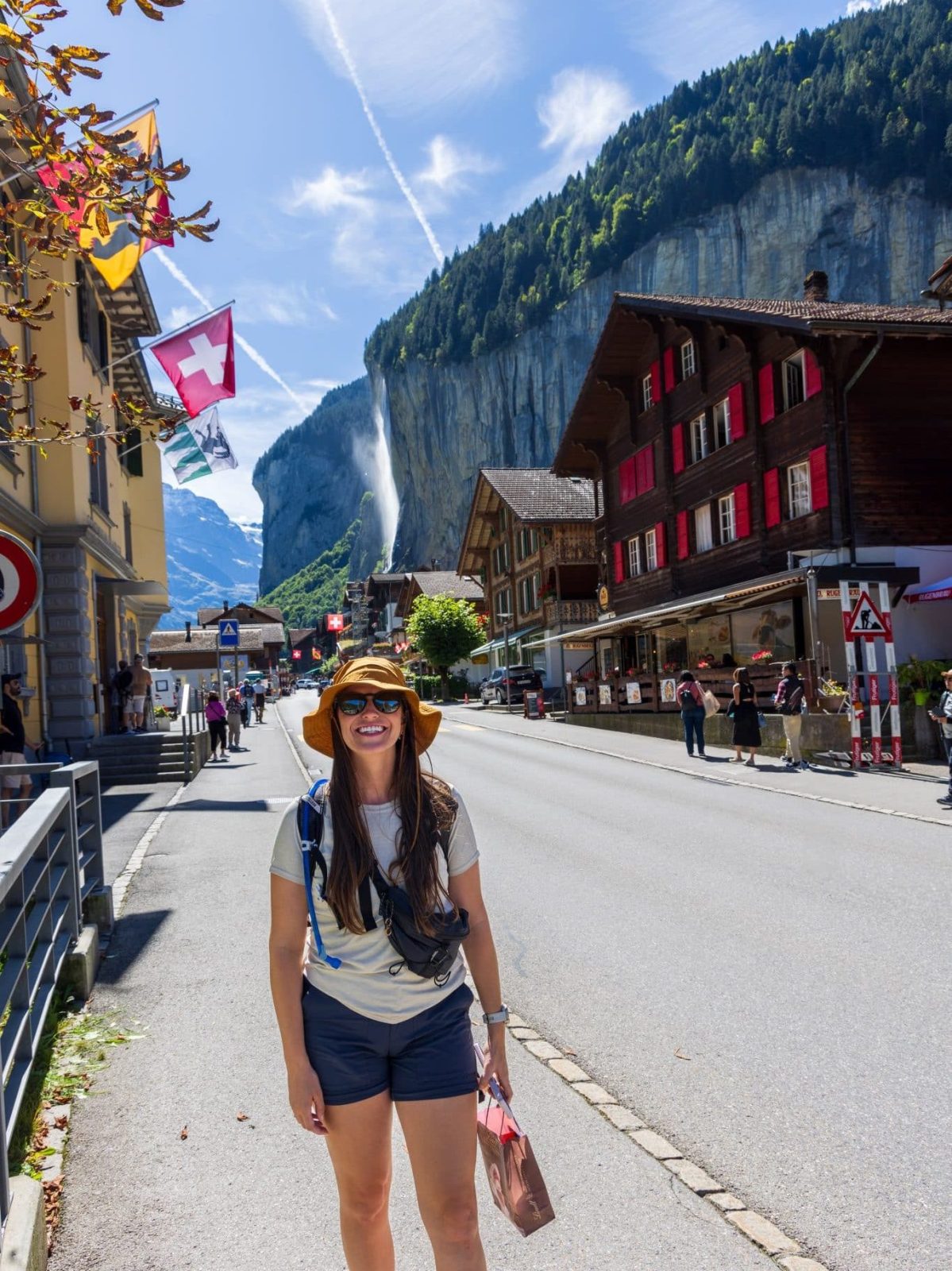
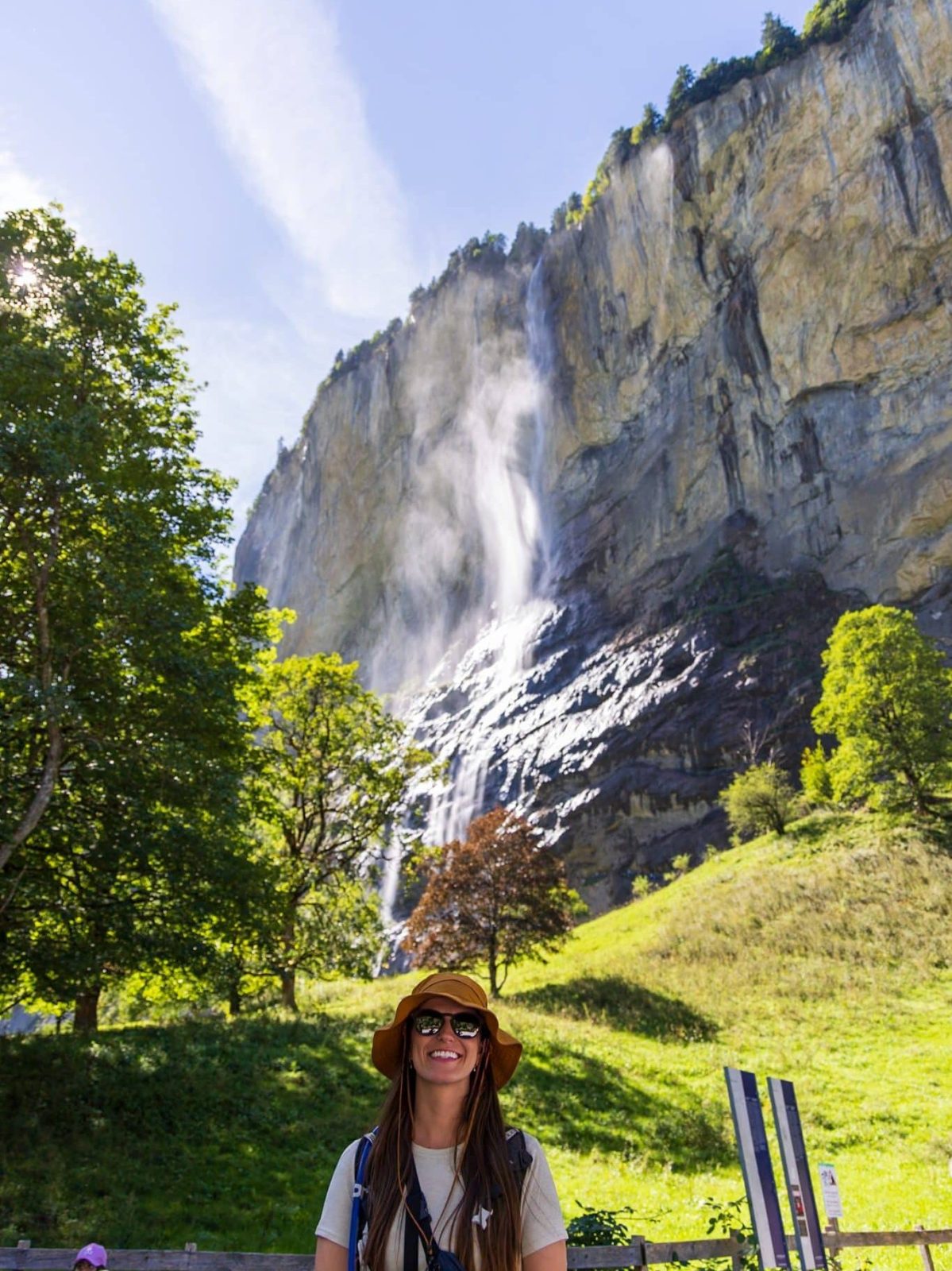
For the return, we took a slightly longer route—about 45 minutes more—so we could stop in Lauterbrunnen and quickly explore the iconic Staubbach Falls.
From Lauterbrunnen, we returned to Interlaken, picked up our bags, and caught an afternoon train to Zurich, where we checked into our airport hotel to prepare for our early flight the next morning. To book your tickets visit this website.

Grindelwald Terminal to Eigergletscher



Jungfraujoch – Top of Europe: What to Expect
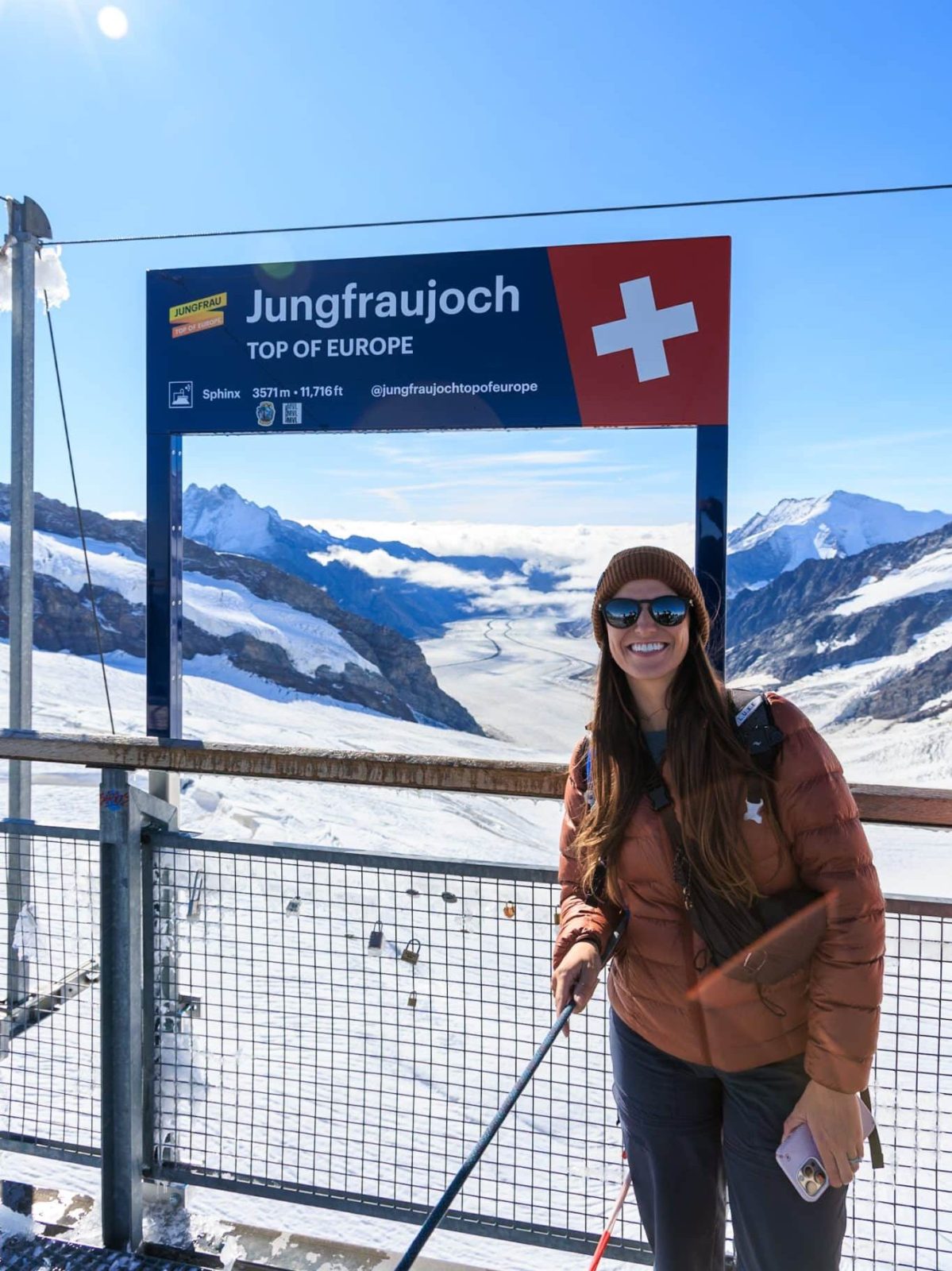
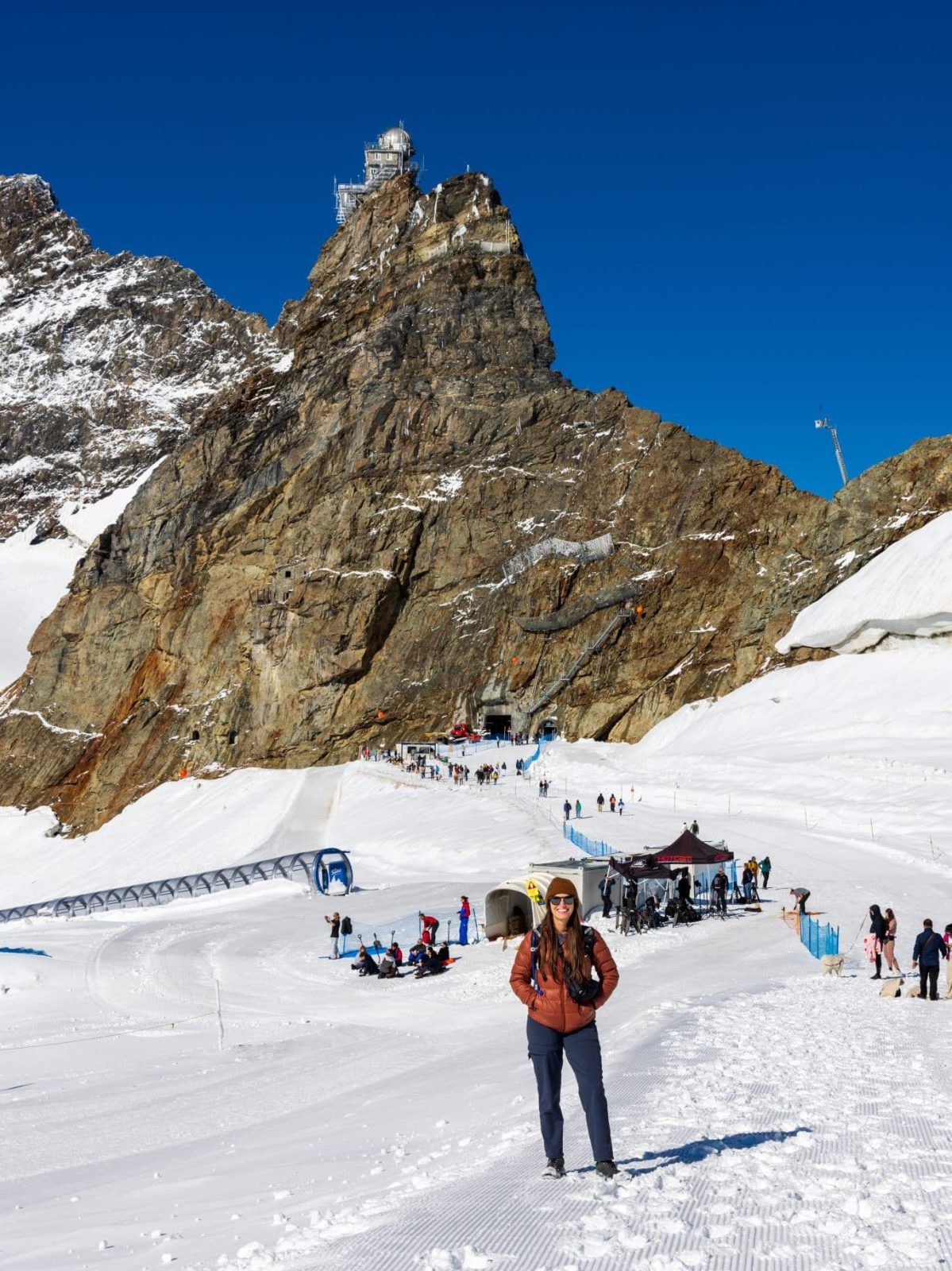
Once you arrive at Jungfraujoch – Top of Europe, you’re standing at Europe’s highest train station (3,454 meters/11,332 feet)!
Sphinx Observation Deck
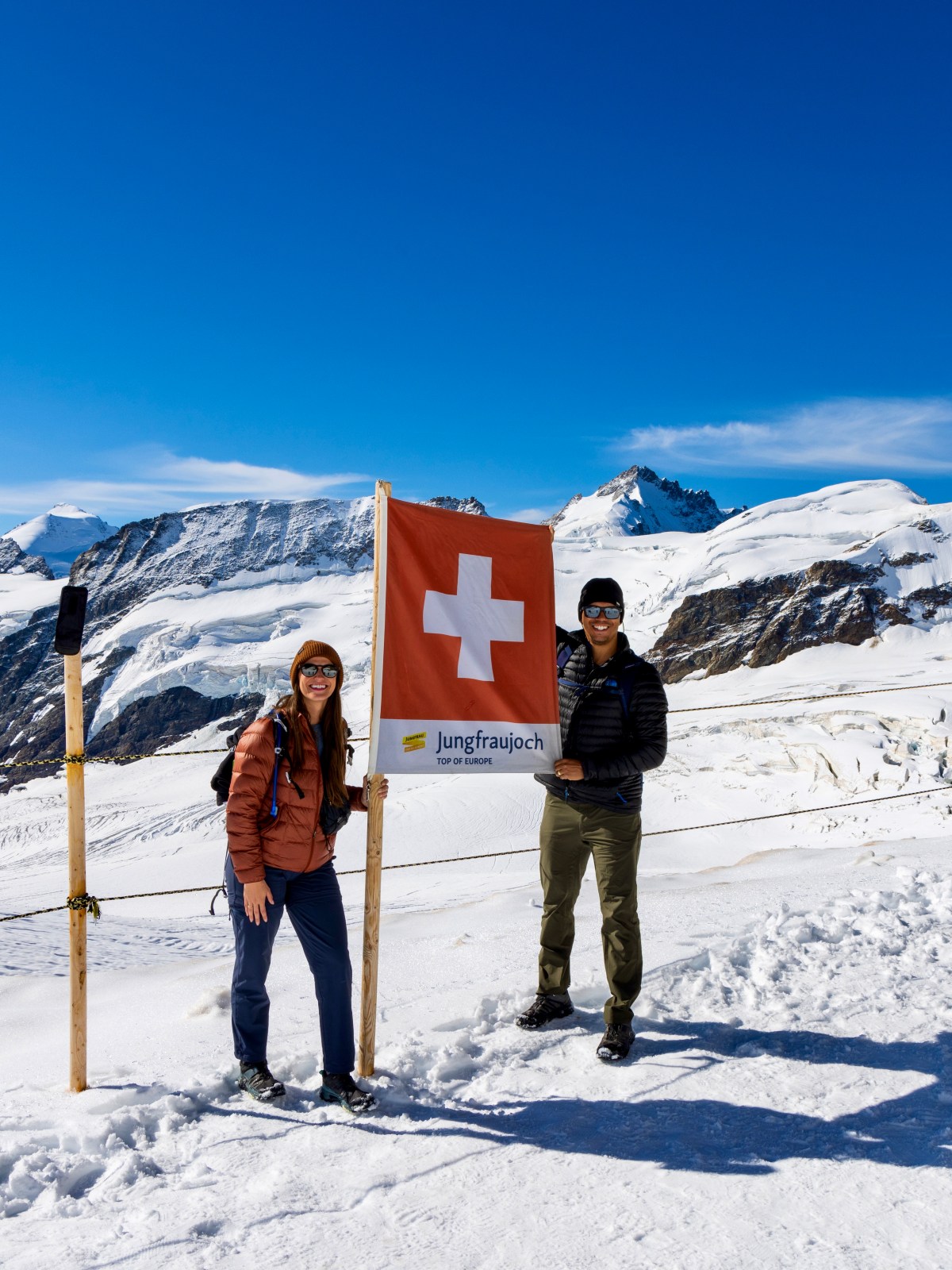
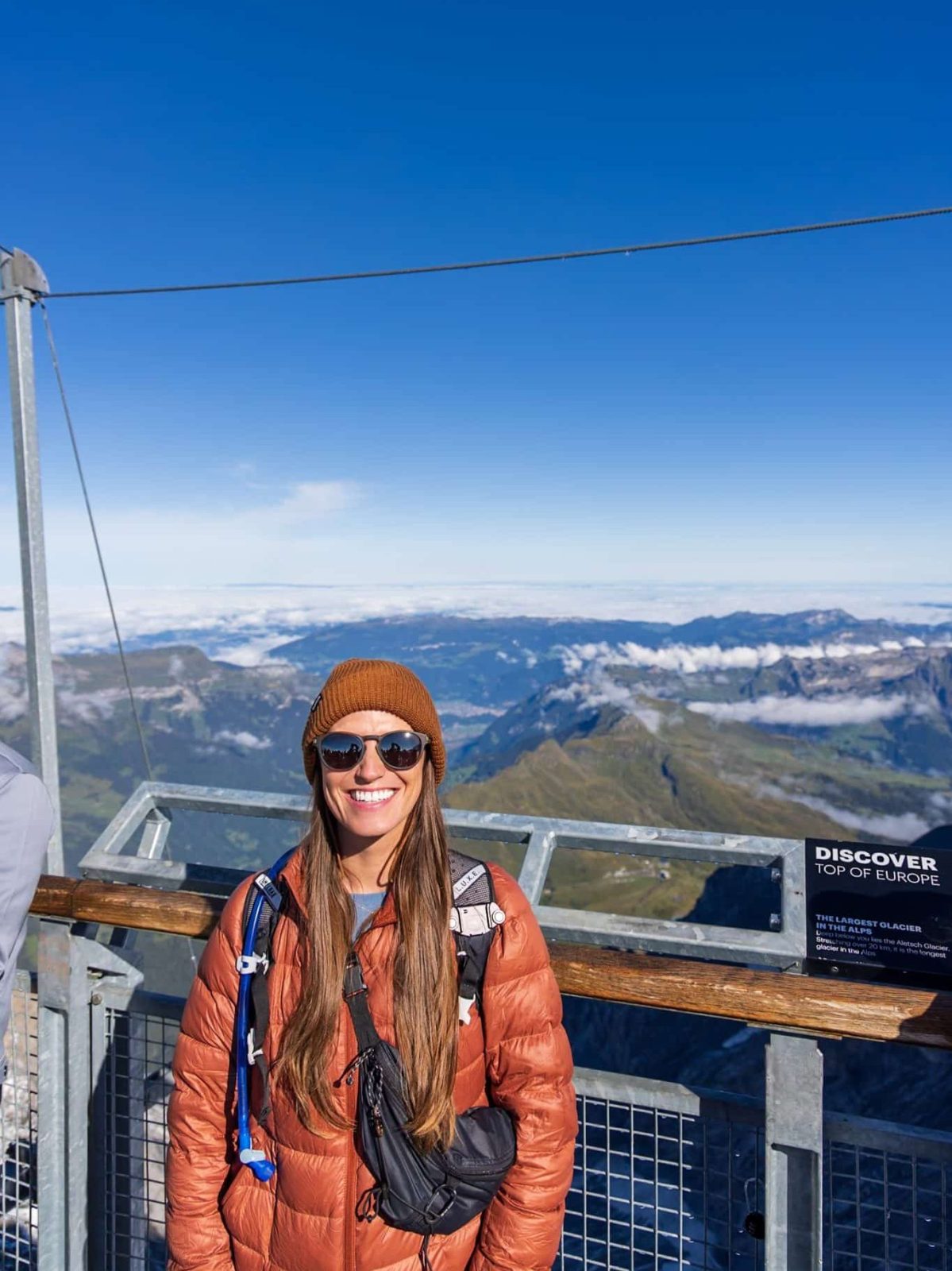
Our first stop was the Sphinx Observation Deck, where we had an incredible panoramic view of the Aletsch Glacier, the longest glacier in Europe. There’s also an option to walk out to the warming hut, but due to time, we skipped it. Still, we had a perfect photo opportunity with the Swiss flag and glacier backdrop.
Ice Palace
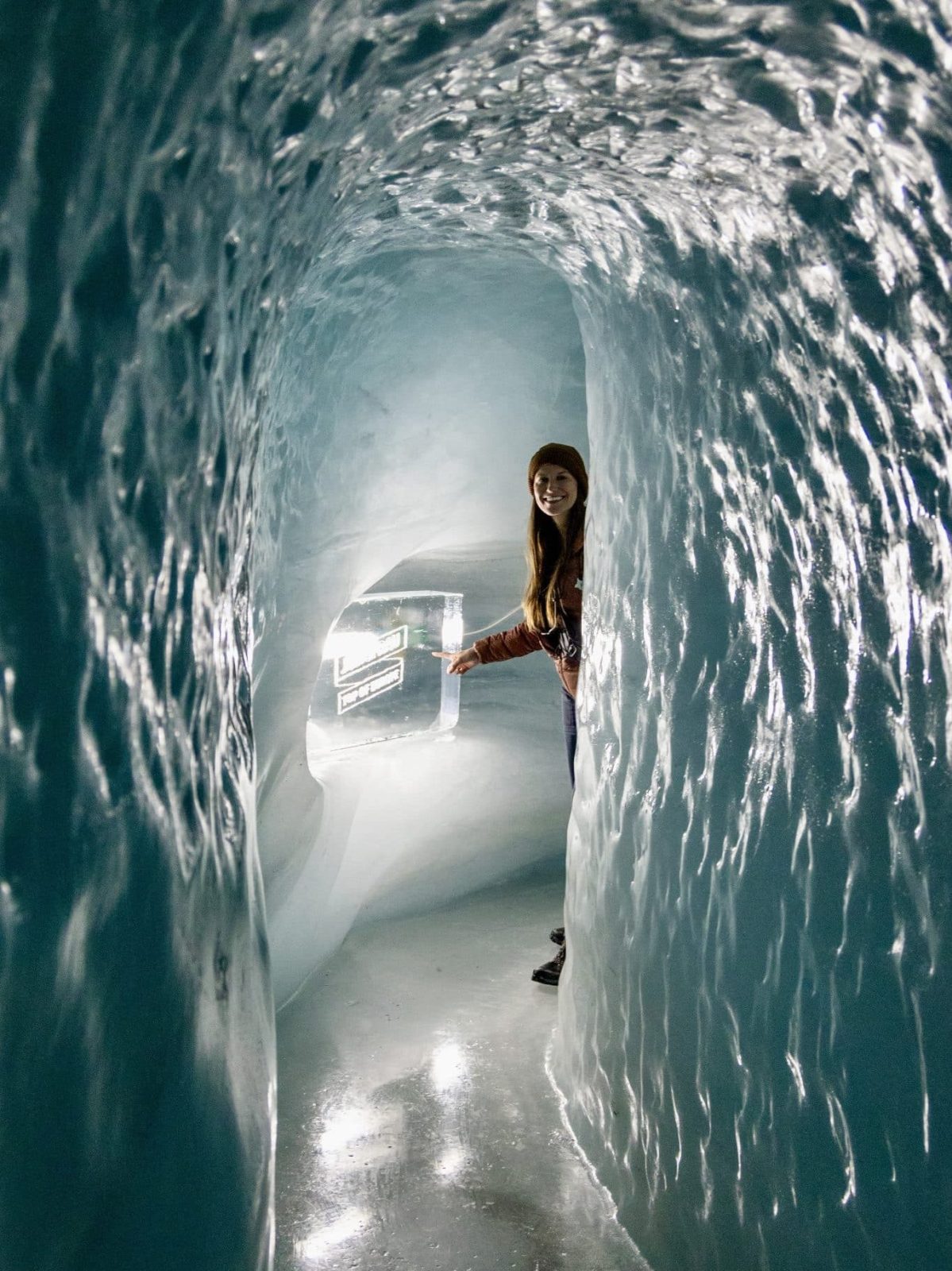
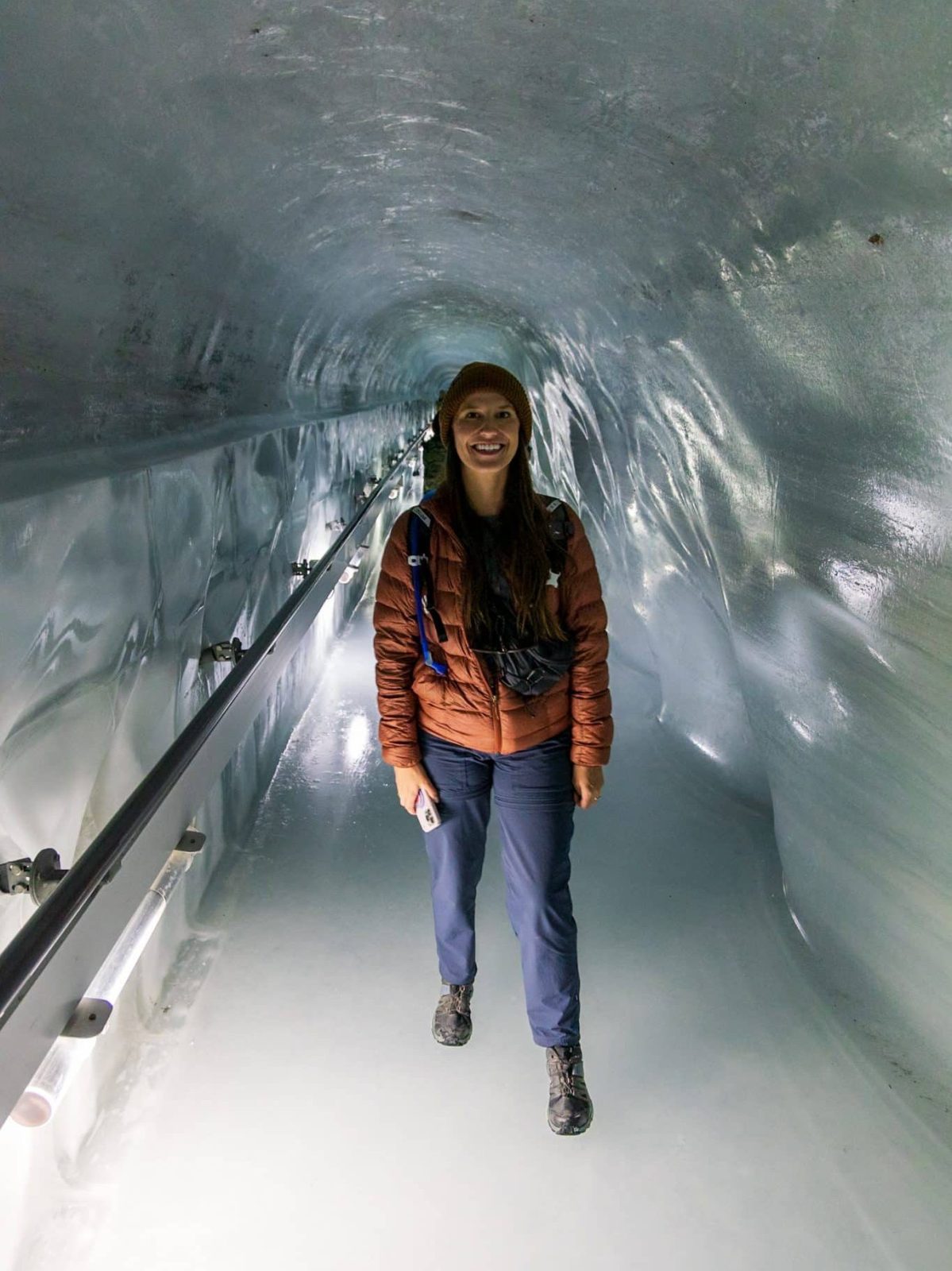
Next, we explored the Ice Palace, a series of tunnels carved directly into the glacier. Inside are ice sculptures, including our favorite the squirrel from Ice Age! It’s a unique experience walking underneath the glacier, but it’s very slippery!
Glacier Plateau
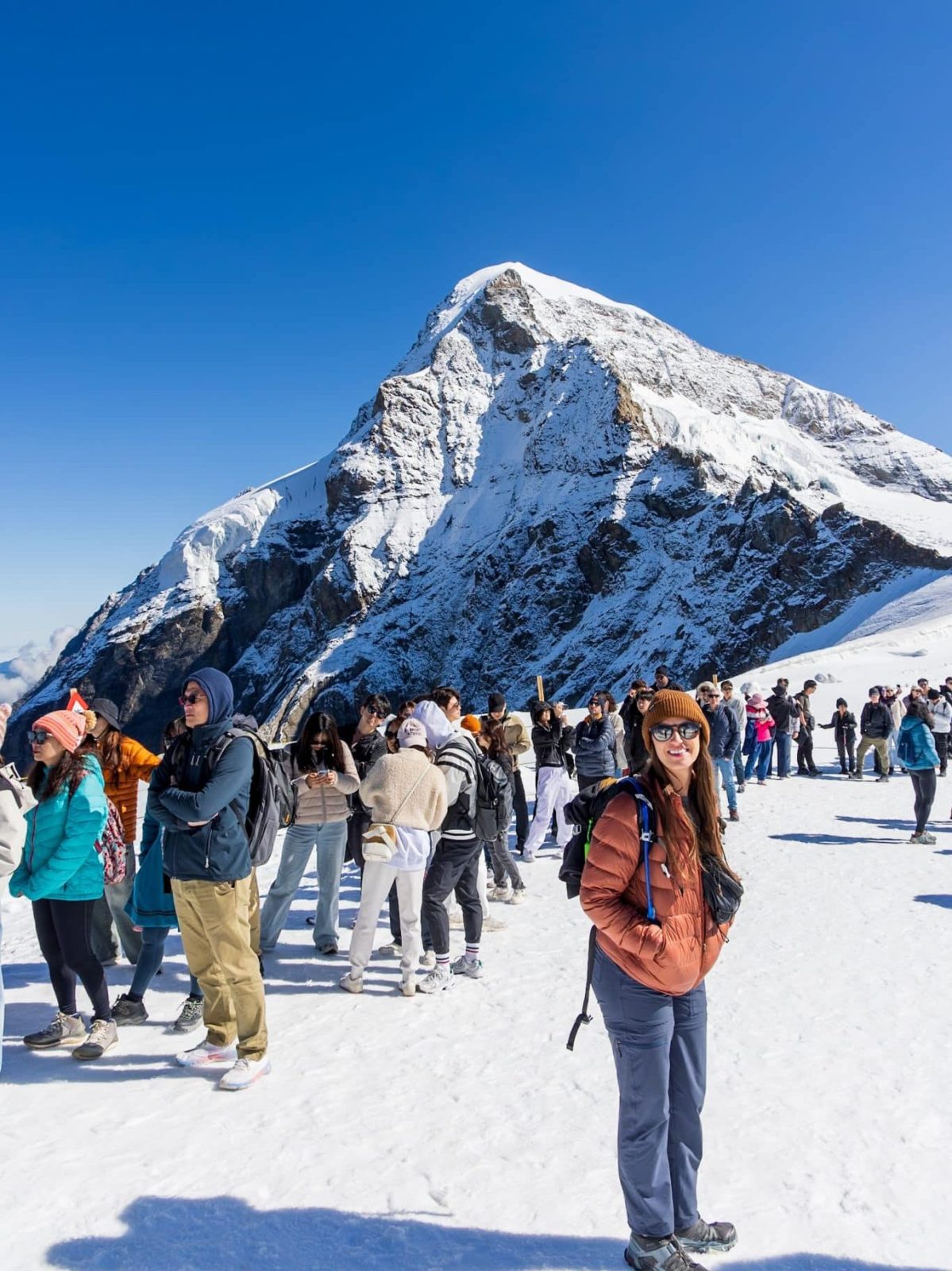
We also visited the Glacier Plateau, which offers another incredible viewpoint of the Jungfrau and surrounding Alps. There are two photo spots with Swiss flags. One of them had a longer line, but honestly, the first flag spot had the better view!
Souvenirs, Snacks & Postcards
Inside the main building, you’ll find:
Souvenir shops
A coffee stand
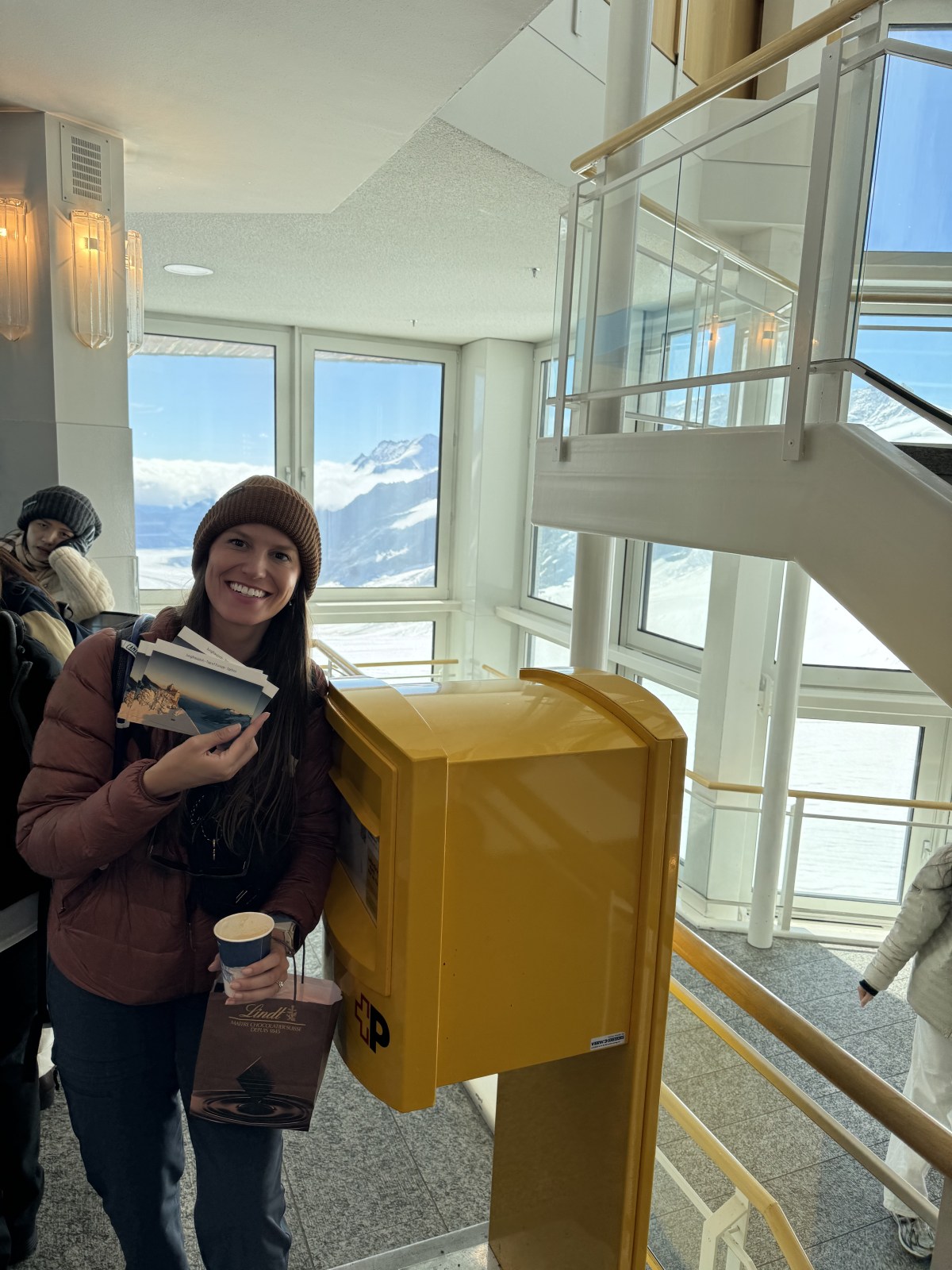
And even a post office where you can mail postcards from the top of Europe—we did!
After grabbing coffee and a few gifts, we headed back to begin the train journey down to Zurich.
Tip: Always check the live webcams before visiting—clouds can roll in quickly and block the entire view.
Is it Jungfraujoch worth it?
In our opinion, yes. Especially considering how far we traveled and where we live, the Top of Europe was so different and the reason we like to travel. It was unique, a modern engineering marvel, and on a glacier that was melting at a faster and faster rate. It’s definitely expensive, but it’s also a once or twice-in-a-lifetime trip. We aren’t sure when we’ll be back in Switzerland and if our next trip will have Top of Europe on the itinerary. With that in mind, we decided to go!
How much time do you need?
We were at the Top of Europe for about 2 hours because we had a lot of travel ahead of us that day. If we had a full day like originally planned, we probably would have stayed 3 or 4 hours and would have most likely hiked out to the warming hut. However, in just a couple of hours we were able to see quite a bit!
What did you wear to Jungfraujoch?
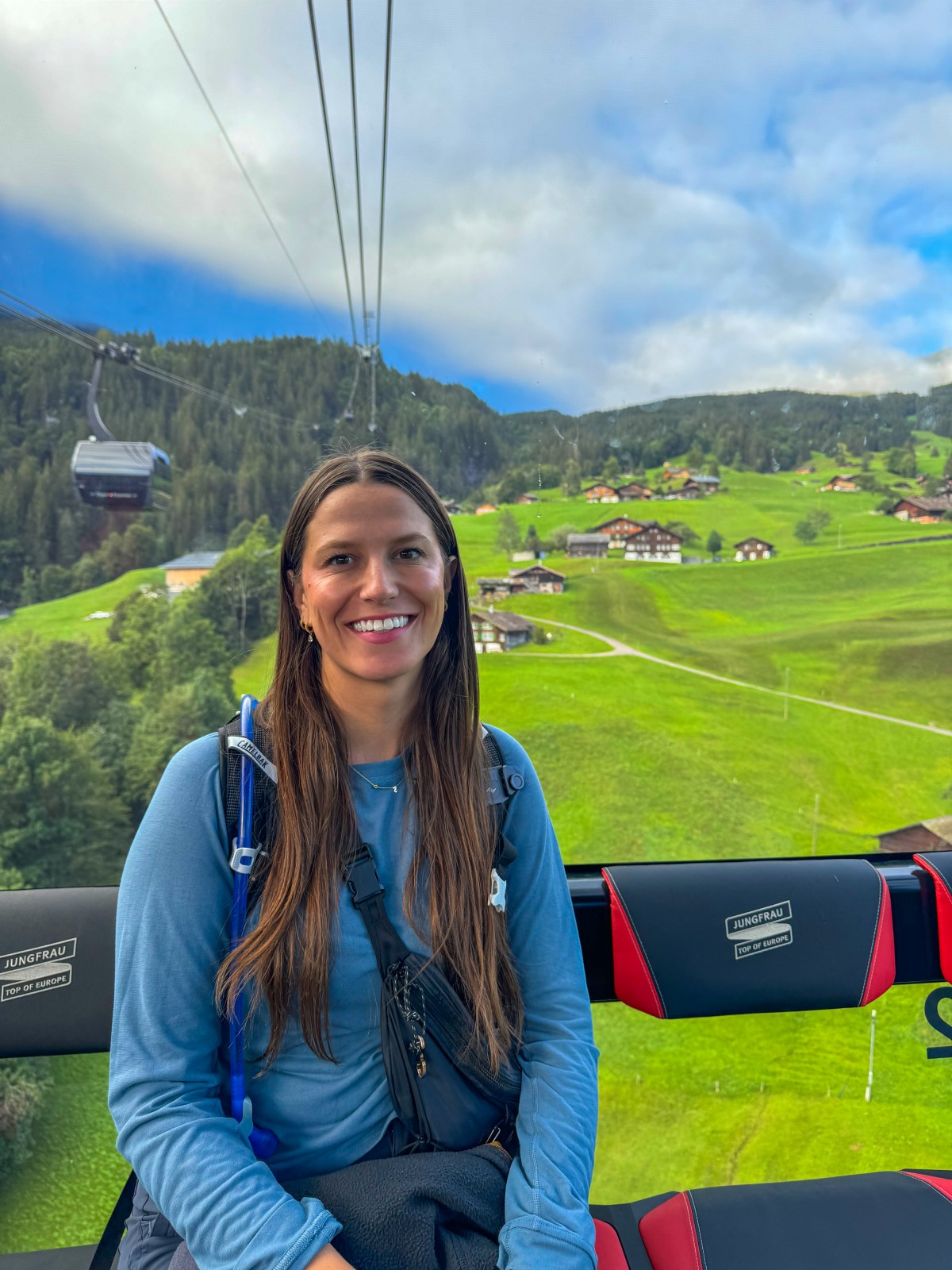
We were prepared for the cold! It was quite warm in Switzerland during our trip, but we knew at the glacier it would be cold, so we wore pants with a long-sleeved shirt and our down jackets. In the sun it was nice out and we didn’t need more. In addition, we wore our beanies and waterproof hiking boots. And with the sun shining, sunglasses were critical! We highly suggest checking the forecast and webcams before heading up on the trains.






Lauterbrunnen - A Scenic Stop on the Way Down
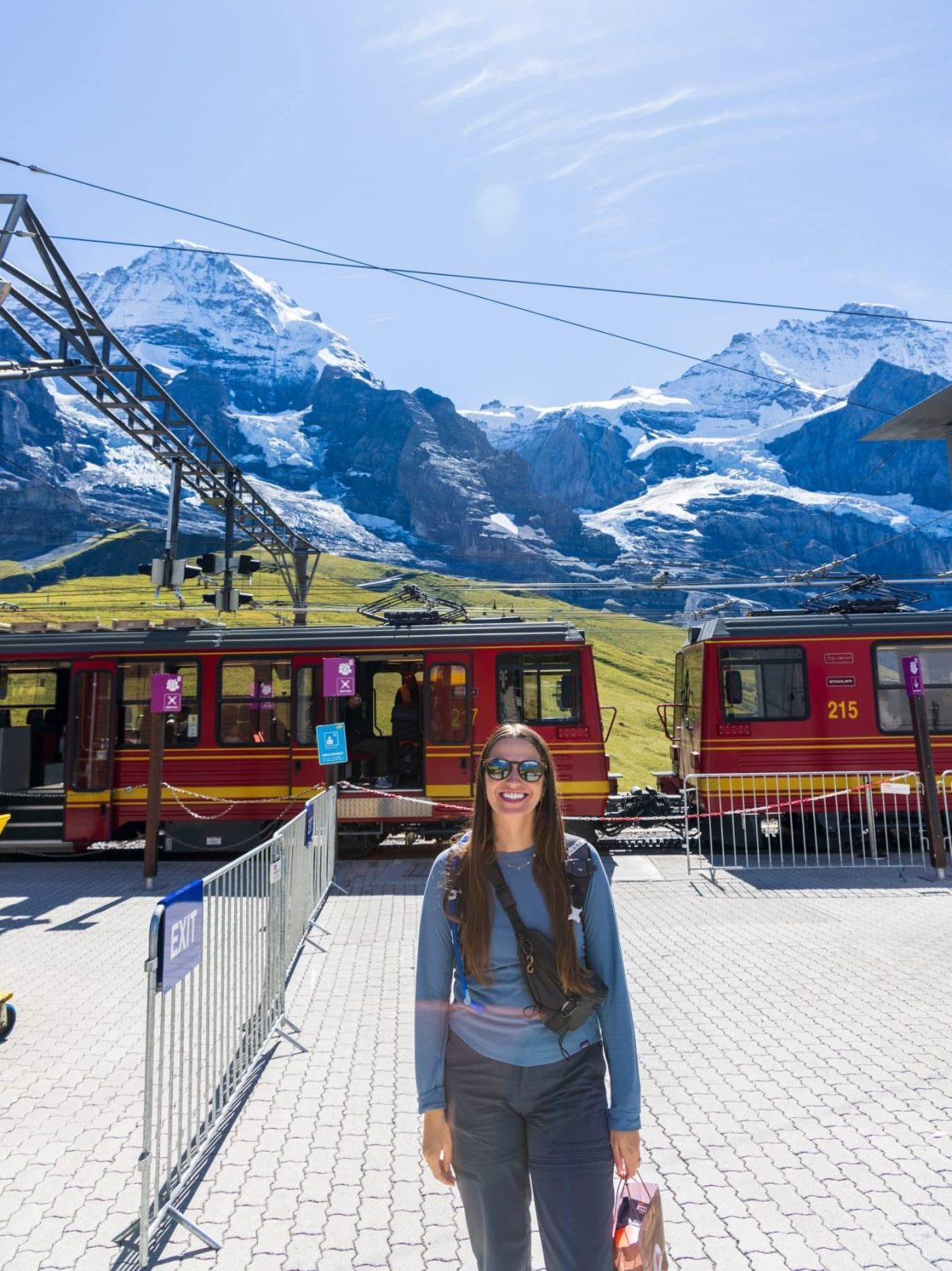
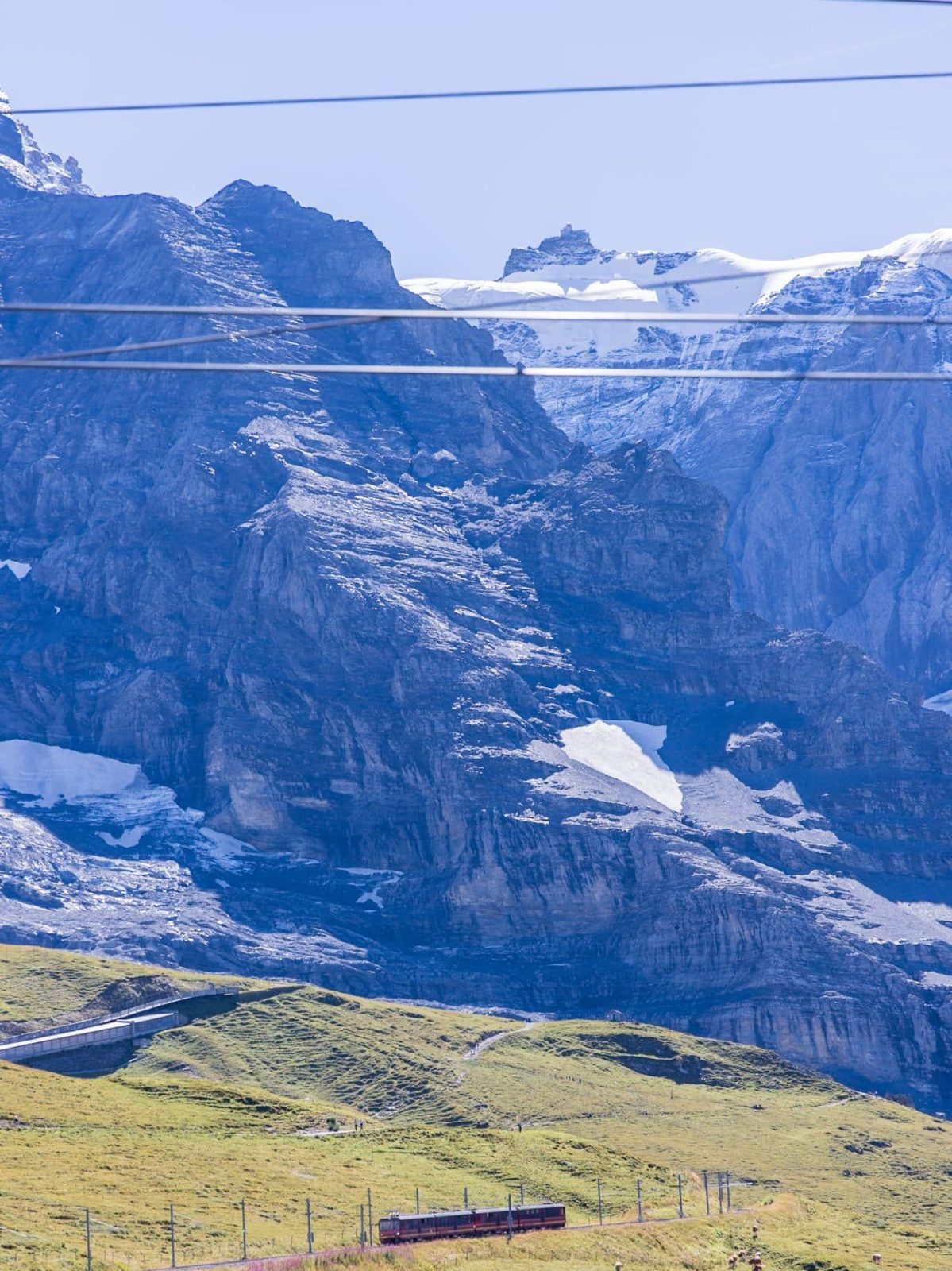
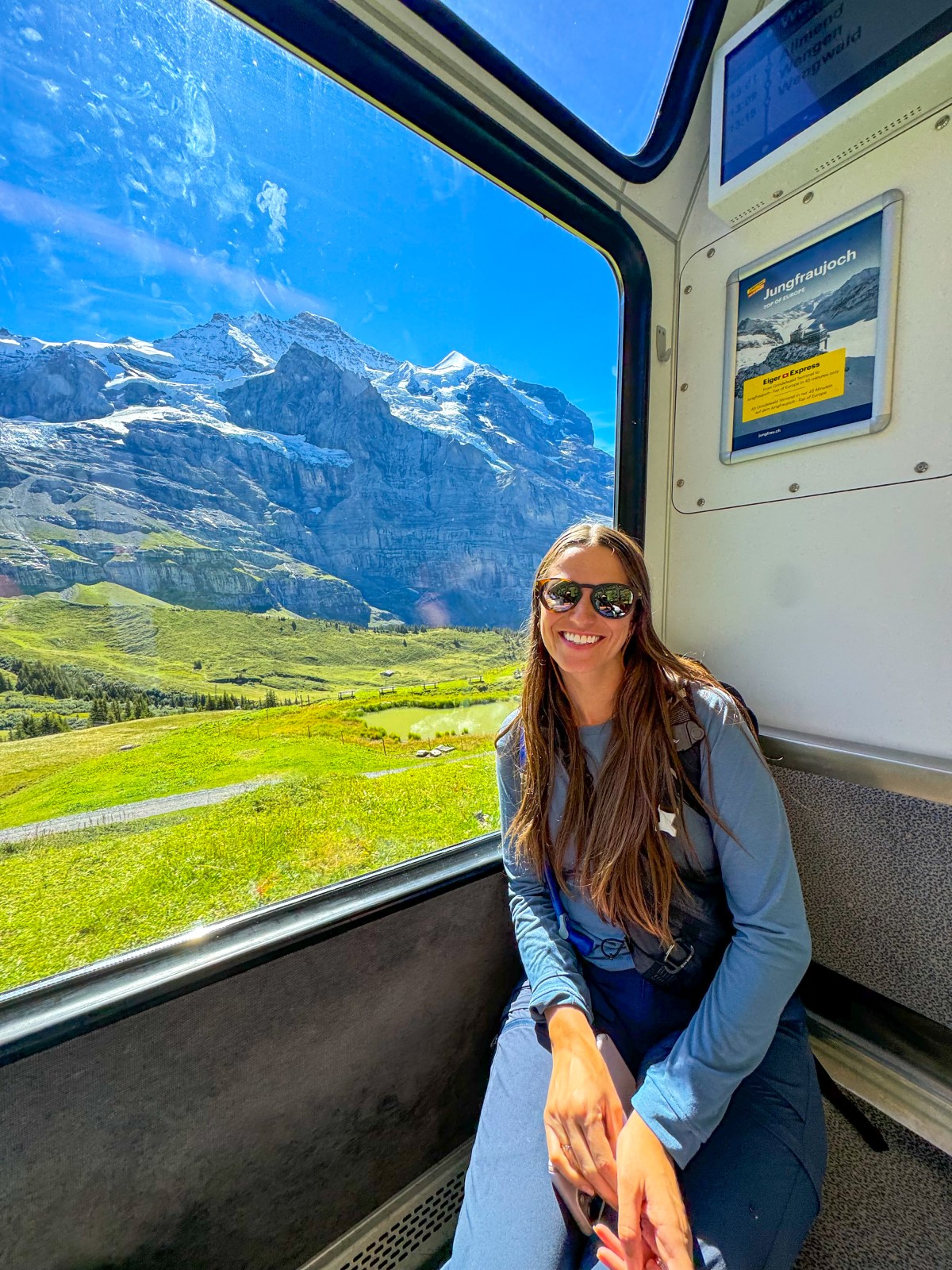
On our way back down from Jungfraujoch, we took a different route specifically so we could stop in Lauterbrunnen and we’re so glad we did!
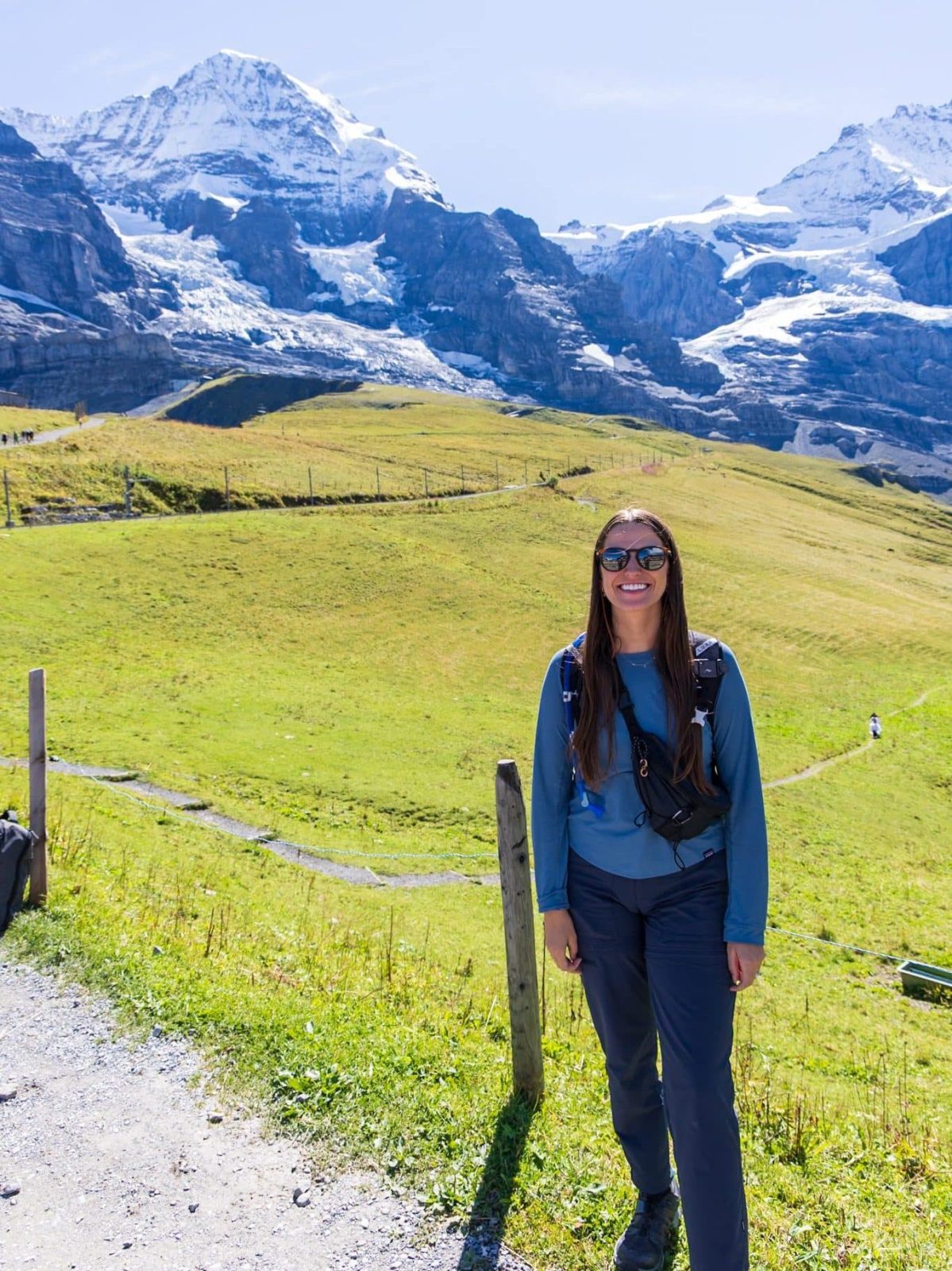
Along the way, we passed through Kleine Scheidegg, where we needed to change trains. We didn’t realize how scenic this area was until we got there. If we had known, we definitely would have planned more time to explore! Unfortunately, the weather earlier in the week had forced us to rearrange our plans.
From Lauterbrunnen station, we took a short walk over to see the iconic Staubbach Falls, one of the most famous waterfalls in Switzerland. Even with limited time, it was well worth the stop, and we’re already dreaming about coming back to explore this region further.

Interlaken to Zurich – The Final Transfer
After returning to Interlaken, we picked up our luggage from the hotel and grabbed to-go sandwiches from a grocery store near the train station to eat on the train.
This leg of our Switzerland 7 day itinerary turned out to be the most stressful. We had a tight connection in Bern, and the train to Zurich was crowded, but we were lucky enough to find seats.
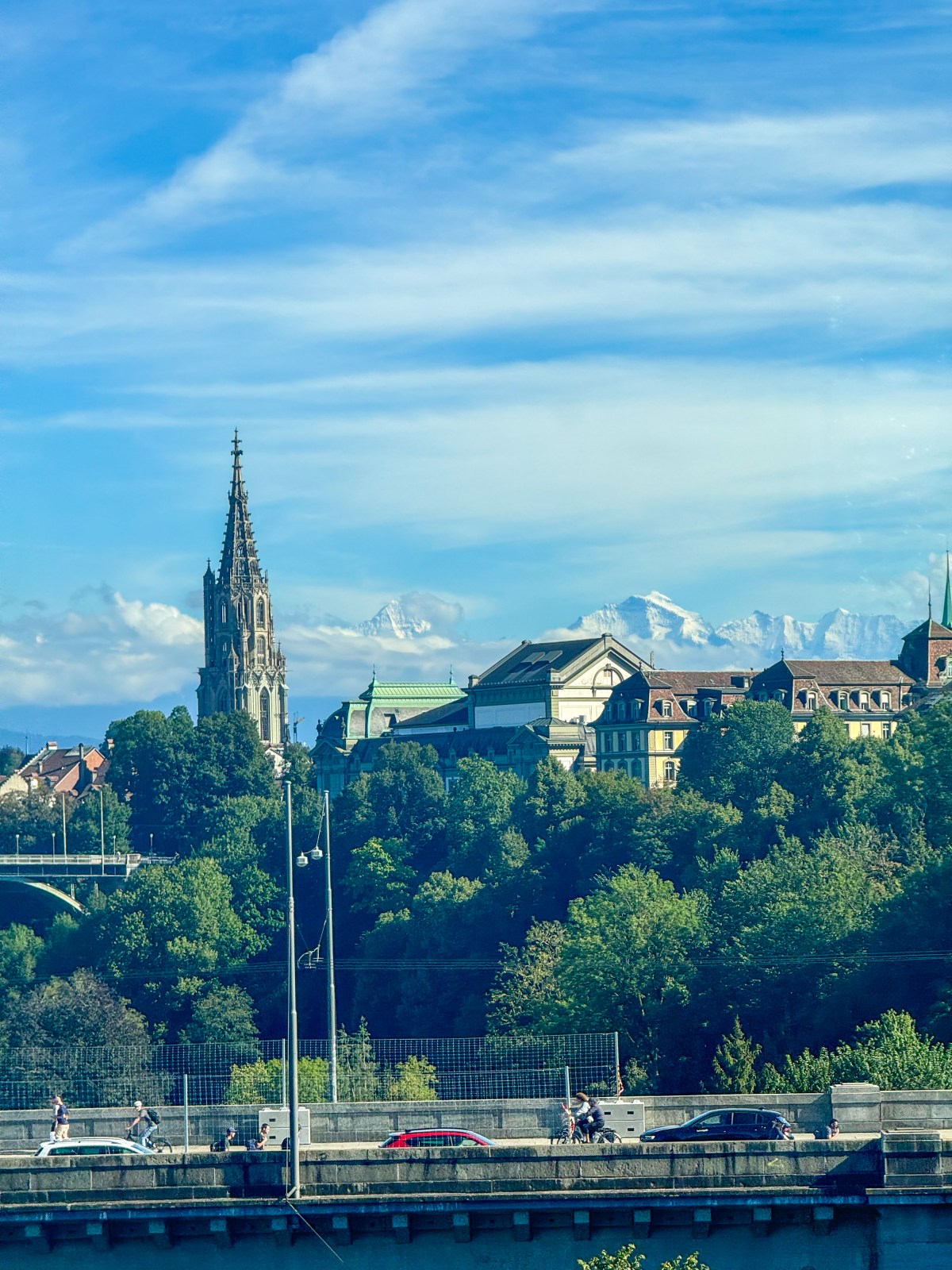
Unfortunately, our train to Zurich was delayed, and we missed our connecting train to the airport hotel. It was a bit chaotic navigating Zurich Hauptbahnhof, but after some confusion and wandering, we figured out an alternate route and made it to the hotel.
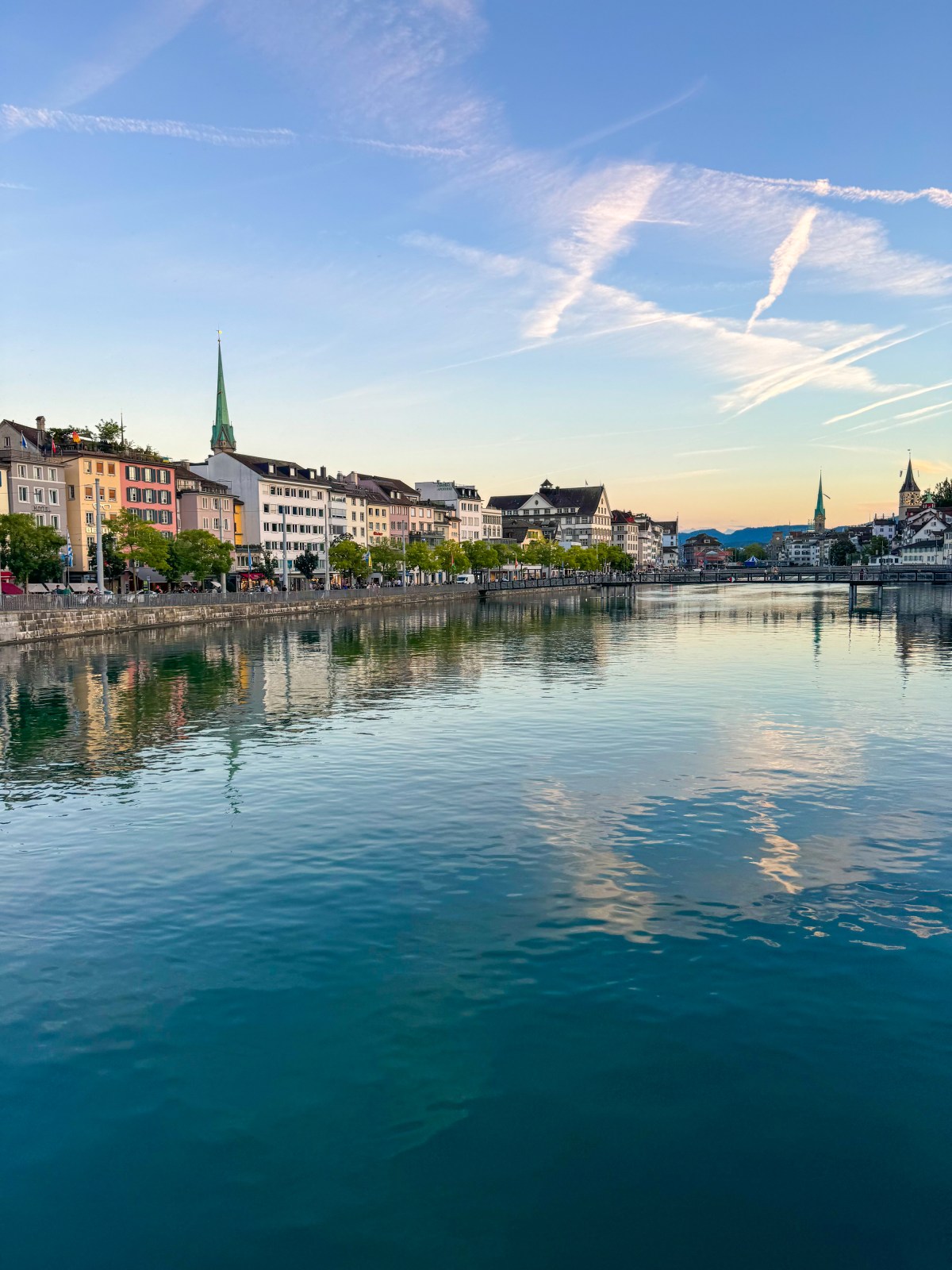
We stayed at the Hilton Zurich Airport again, quickly freshened up, and then headed into downtown Zurich for drinks and dinner with a friend. A fun and casual way to wrap up our final evening in Switzerland!