

The Ultimate Camping Checklist: Gear and Tips
Planning a camping trip? This camping checklist covers all the essentials — from tents and sleeping bags to food storage and cleanup gear. Whether you’re a beginner or a seasoned camper, this guide will help you pack smart and enjoy the outdoors. As we continue to update our gear and adapt to our needs, capability, or space available, we’ll make sure to update this blog post. We have multiple 2025 updates now included.
Table of Contents
The Basics of Camping
Camping is one of the best ways to experience the outdoors and immerse yourself in nature. In the beginning, it can feel intimidating and knowing where to start can be challenging, especially if camping experience was not passed down to you as a child. That is exactly why having a reliable camping checklist is so helpful. You do not need to go out and buy everything at once. We have been slowly adding to our camping collection for years. When we first started, we would borrow gear from Owen’s dad to fill in the gaps.
Camping gear can definitely get expensive, especially as items become more specialized around weight, compactness, or material strength. But a solid camping checklist can help you prioritize what to get first and what can wait. Investing in good quality gear should hopefully last a long time, and we have put together a list of the essentials to help get you started.
For example, in our first year or so camping together, we used a backpacking tent to car camp. We were young and on a tighter budget, and the backpacking bundle we found came with a tent, sleeping bag, and sleeping pad. It was a lot more affordable than buying a full setup one piece at a time. Eventually, we asked for a larger tent for Christmas and upgraded to a four person MSR tent. Let’s dive into our camping checklist and cover the basics.
Please remember to Leave No Trace when camping:
- Check campfire regulations & if the campsite has a fire ring
- Be sure to drown out your campfire before leaving it unattended
- Don’t burn trash
- Be prepared to go to the bathroom outdoors if the campsite doesn’t have restrooms (digging a cat hole for #2 & packing out your tissue for #1)
- Be prepared to hang food or have a safe spot for food to go if there are animals
Dispersed Camping vs Campground Camping
In this blog post, we are focusing on what we bring car camping, including both dispersed and campground camping. We plan to create a separate blog post that covers our backpacking and backcountry camping setup. If you are just starting out, our camping checklist can help you feel confident no matter what kind of camping you are planning. Some of the links below are affiliate links, which means we may earn a small commission at no cost to you. Thank you for your support.
Dispersed Camping
Dispersed camping, sometimes called primitive camping, is the term used for camping on public land outside of designated campsites. This type of camping is most common on national forest and Bureau of Land Management land. There are no restrooms, picnic tables, or water spigots — it is just you, your gear, and the outdoors. Often, but not always, dispersed camping is free. Most locations require you to camp within a certain distance of the backcountry road and limit your stay to 14 days.
If you are considering dispersed camping, our camping checklist includes everything you will need for a successful and responsible trip. It is very important to use an already established site — look for signs like a stone fire ring, cleared areas for tents or cars, and existing tire tracks. This helps minimize damage to the land and follows Leave No Trace principles.
Campground Camping
Campground camping is when there is a designated campsite built and maintained by the land manager. The level at which there are other amenities can vary. For example, state parks often have fire rings, picnic tables, toilets, and dish washing stations. However, some BLM or national forest campsites do not. Campground amenities vary and we highly recommend doing some research before you head out. Designated campgrounds will sometimes have sites that are tent only or have limits on vehicle length, including a trailer
We enjoy both dispersed and campground camping. Dispersed camping is more remote and peaceful but requires more preparation. Our camping checklist includes all the basics so you can head out confidently into either setting. If you are new to camping, we suggest starting at a state park or national forest campground to get familiar with your gear and routine.
What To Bring Camping
So what do you need to start camping? Our camping checklist below includes everything we personally use on our trips. Whether you are brand new to camping or just looking to upgrade your setup, having the right gear can make all the difference.
There are many places to find quality camping gear both online and in stores. We usually shop at REI and try to wait for sales. If you are an REI co-op member, you can also check out their secondhand section for great deals. Amazon is another reliable option with a wide range of sellers, and most sporting goods stores like Dicks, Bass Pro Shops, and Sportsmans carry solid camping gear.
If you are not sure where to begin, use this camping checklist as your guide. It is designed to help you build out your kit over time, based on what kind of camping you want to do.
Sleeping - Tent, Sleeping Bag, & Lighting
Tent
Unless you want to sleep inside your car (we know many people that do) then a tent is needed! When considering a tent, pay attention to the size of the tent, material and design, and what comes with the tent like rainfly and footprint. Often for more space in the tent, it’s best to have a tent sized for more people than sleeping in the tent. For example, a 6 person tent is best for 4 people to sleep with extra space and room for bags in the tent. Not every tent comes with a footprint which is helpful for protecting the bottom of the tent from sharp rocks and a wet ground. Usually, footprints not included can be bought as an accessory. Additionally, most tents come with a rainfly, but not always. Rainflies are important for protecting the inside of a tent from rain and are helpful in keeping warm air in the tent in cooler weather.
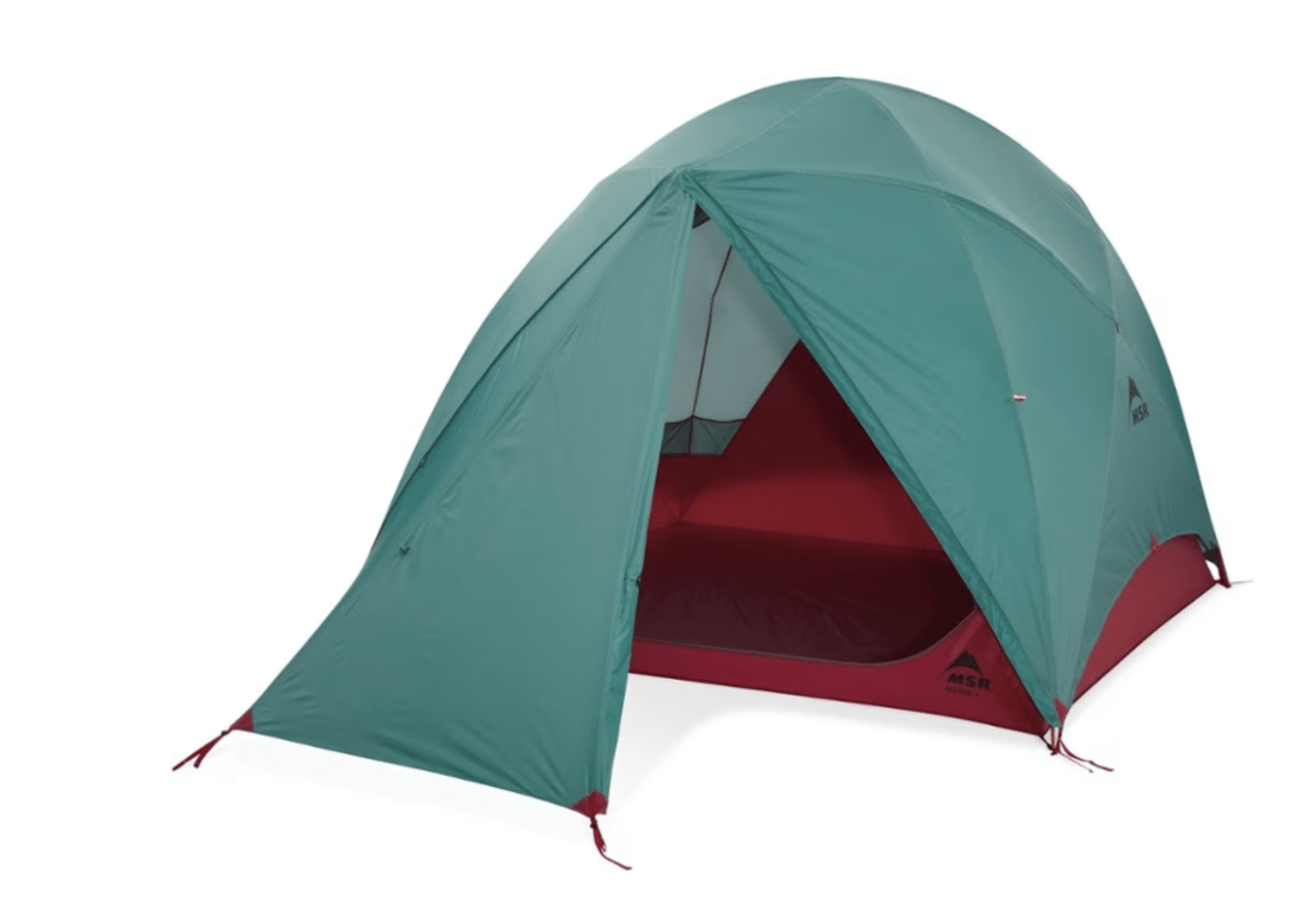
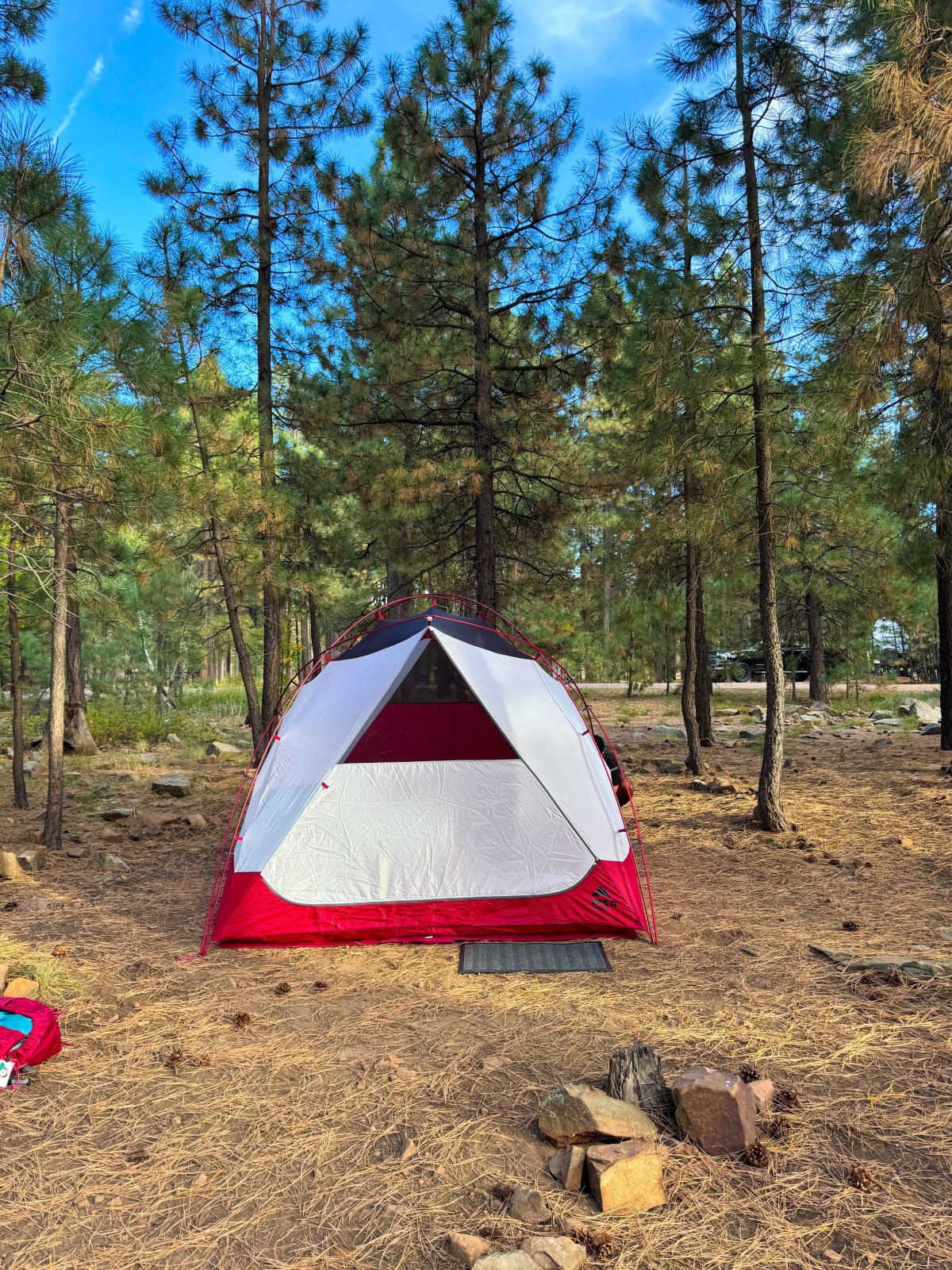
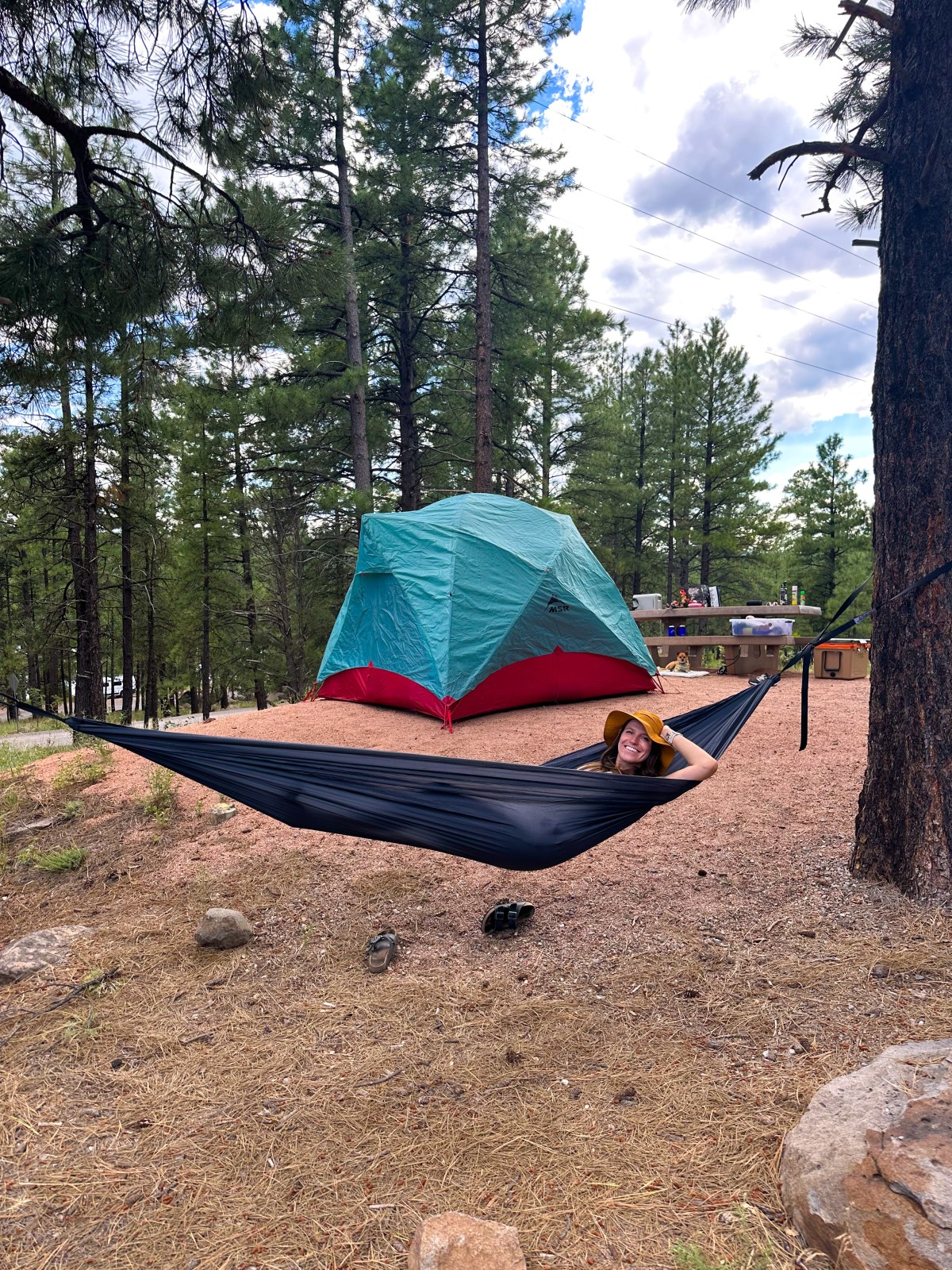
For car camping, we went with the MSR Habitude 4 Tent because of its size, material durability, strength in the wind, how well it packs down, and how easy it is to put together. However, when we first started camping together we used the REI backpacking bundle tent. If you don’t have any camping gear this could be a could option for you! The bundle comes with a 2 person backpacking tent, a sleeping bag, and a sleeping pad. We still use this bundle when we backpack, but we wanted something bigger for when we car camp.
Sleeping Bag
Besides a good shelter from the elements provided by the tent, the sleeping bag might be the next most important piece of gear. The nice thing about car camping, you don’t have to worry too much about the size and weight of your sleeping bag, therefore the price is often more reasonable and there are more options. When considering a sleeping bag there are some important factors to consider: what weather and temperature do you plan to camp in the most, and do you turn in your sleep a lot?
Sleeping bags have a temperature rating, meaning the minimum temperature suggested to sleep in the bag. It doesn’t not guarantee you’ll feel warm, but generally staying above the minimum will keep you out of hypothermia. To learn more, REI has some good resources on temperature rating. If you turn often in your sleep, we suggest purchasing a wider bag that gives you space to turn. Mummy bags, named for their shape and tight fit to the body, are better for back sleepers and backpacking because they’re often lighter in weight while still insulating.
Sleeping Pad or Mattress
In addition to a good tent, a comfortable sleeping pad or mattress and make for a great sleeping experience. We quickly upgraded to an inflatable camping mattress that we bought on clearance at REI. More on our camping mattress below!



Hest Sleep Systems
This has been a recent major upgrade for us. When we first started tent camping we would use backpacking pads that we inflated with our own lungs. Which let’s be honest aren’t the most comfortable. They work great for backpacking, but we wanted something more comfortable, especially because we weren’t concerned about weight. We bought a camping specific blow up mattress and it was so much better than the small sleeping pads we used to sleep on. The inflatable mattress was a great value and something we picked up on clearance at REI.
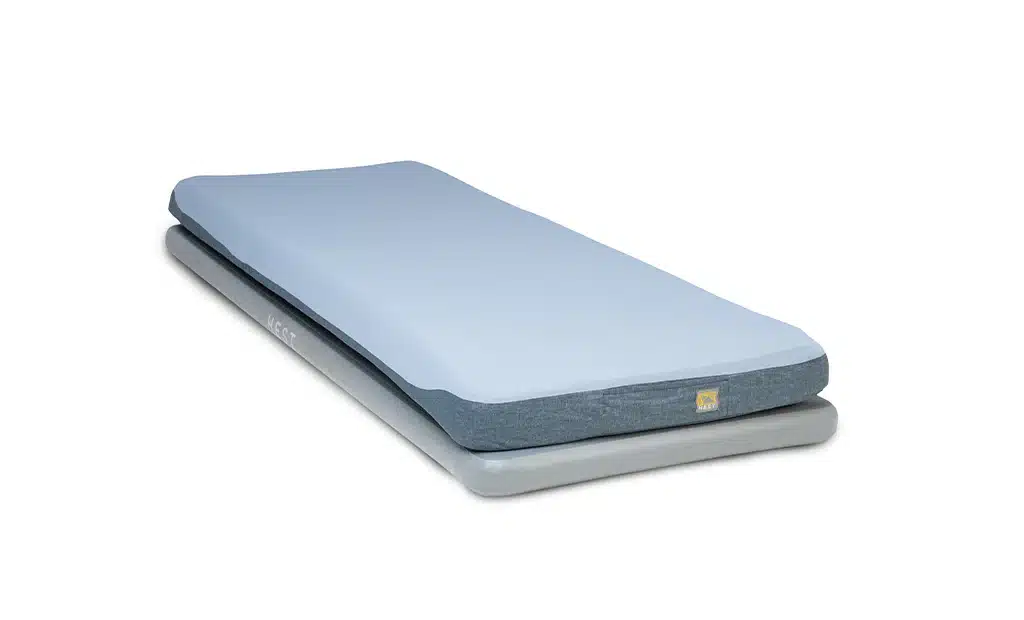
Today we have Hest Sleep Systems and we cannot tell you enough how comfortable these mattresses are. We each have the Sleep System Wide mattress, but overall Hest has multiple different options.
In addition to the Hest sleep Systems we have the Hest pillows and are obsessed with them! When we first started camping we would bring regular pillows, but we love how these pillows pack up small, but are still super comfortable.
Other items we have:


Camp Lighting
We have a few lights for inside of our tent so we can see at night! We love the Ledlenser ML6 Rechargeable Electric Lantern. There is a rubber hook for hanging and external USB ports if we want to use the lantern to charge. We hang it in the middle of our tent so it brightens the tent. It also has a magnet on it so it easily can attach to metal, a favorite feature of ours!
We also have a Black Diamond Lantern. This is also a great option to hang in your tent for light. Additionally, we’ll use our headlamps to see in the dark too and we have string lights that we occasionally hang up in our tent. They are more work to hang so we don’t always do it.
We love the Coleman Propane Lantern that we use mainly at the table. When we first started camping we would borrow Owen’s father’s lantern until we bought our own. For Owen, it reminds him of his childhood camping with his family. We like the Coleman Propane Lantern because of how bright it gets and we don’t have to worry about charging it or bringing enough batteries. However, it’s important to keep extra propane in case you run out!


2025 Update
In 2025 we made the decision to purchase the LightRanger 2000 from Devos Outdoors. This 4-panel telescoping LED light has outperformed our expectations. We decided to make the change to this rechargeable light for a few reasons.
- We have a large portable power station that we can recharge the light if we need to
- The light charge lasts multiple days, even at high power.
- The telescoping pole allows us to keep the light higher and therefore bugs out of our face and off our table
- The LightRanger 2000 can dim brightness and change to amber light and red light.
- The light is controllable with a phone app.


Power Bank
These days with so many electronics, a power bank is good to have. Technology has improved a lot and many of the top power bank models can store a lot of charge in a small size and are relatively light weight. We recently bought a Jackery on Amazon Prime Day and it works really well. Our previous power bank from a different company did well for a while but has started to lose it’s charge faster. For now we are bringing both power banks if we think it’s necessary, like when we bring our heated blanket.

2025 Update
We added a much larger and more powerful Jackery portable power station, the Explorer 1000 v2. We added this to our camping gear because we needed a power station that could power our new electric cooler and our electric blanket without being drained over night. Additionally, we use this to charge power the lights in our Go Fast Camper and charger devices and smaller power banks.

Cooking, Food, and Beverage Storage
Coleman Cascade Classic Camp Stove & Jetboil
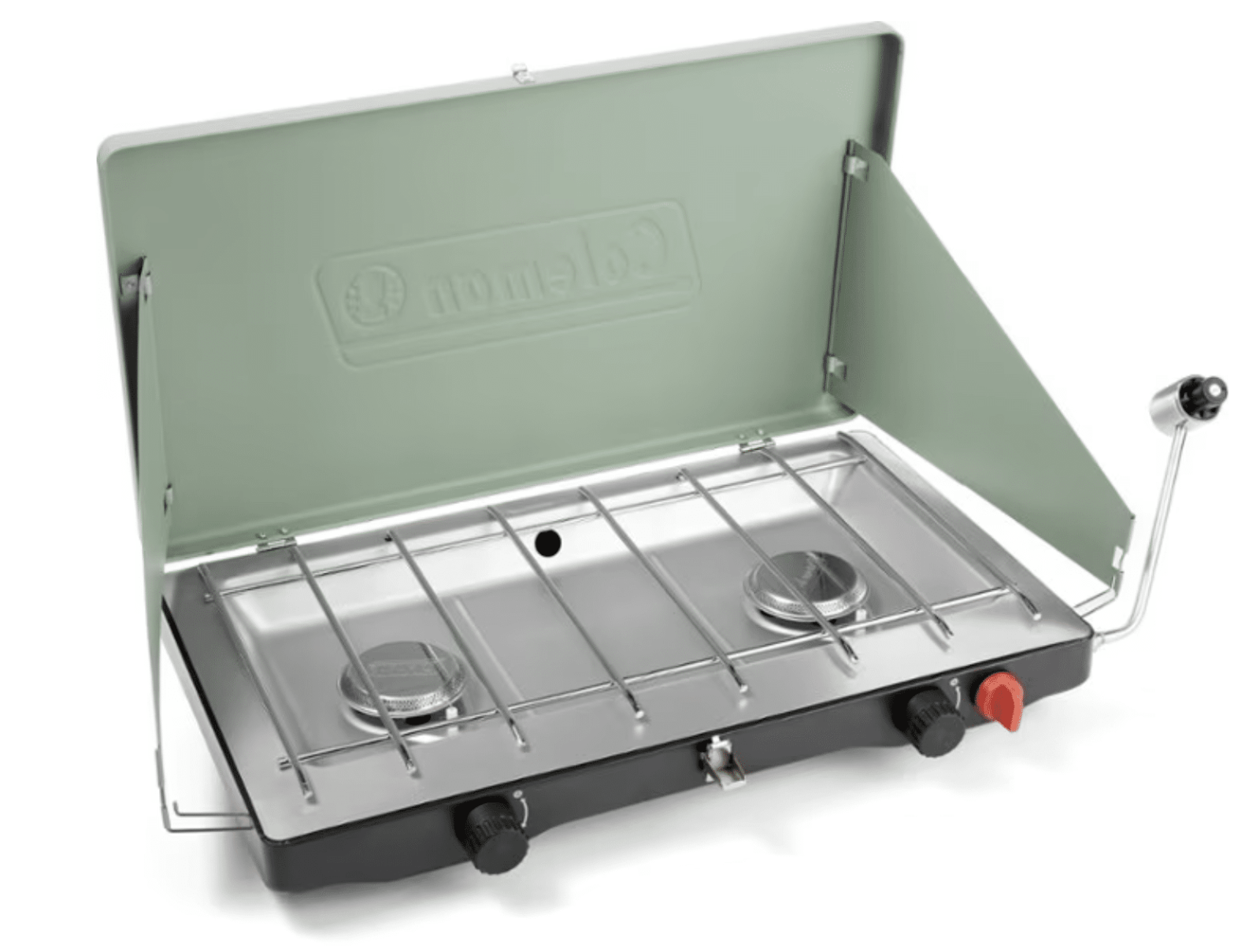
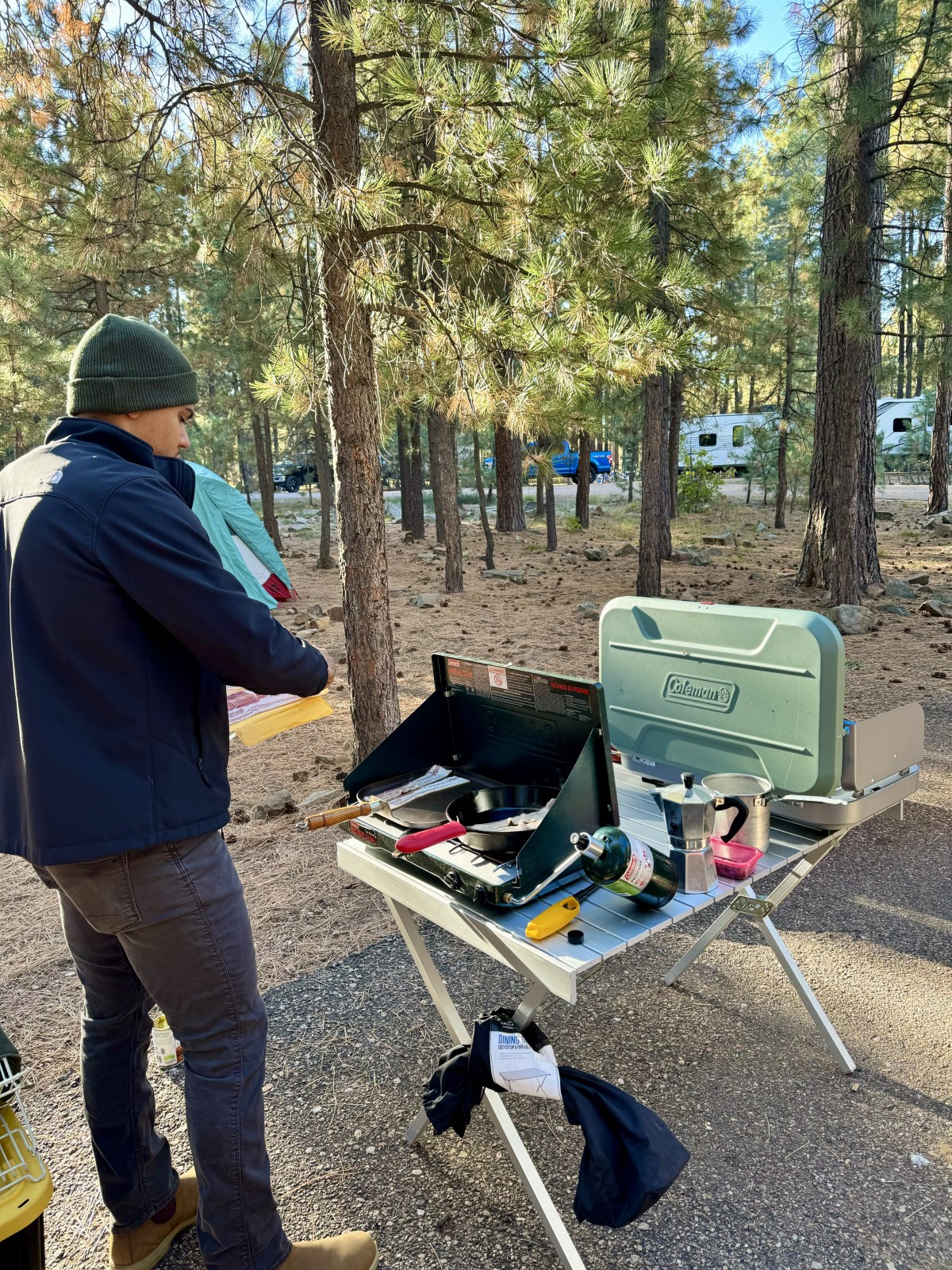
Being able to cook while camping is a basic necessity! We have a Coleman Stove that is a little different than this one listed below. Ours is the classic stove and doesn’t have the built in igniter, so we have to bring a lighter to manually light the stove each time. If we had to get a new one today we would go with this Coleman Cascade series stove. Coleman makes good quality products at a reasonable price.
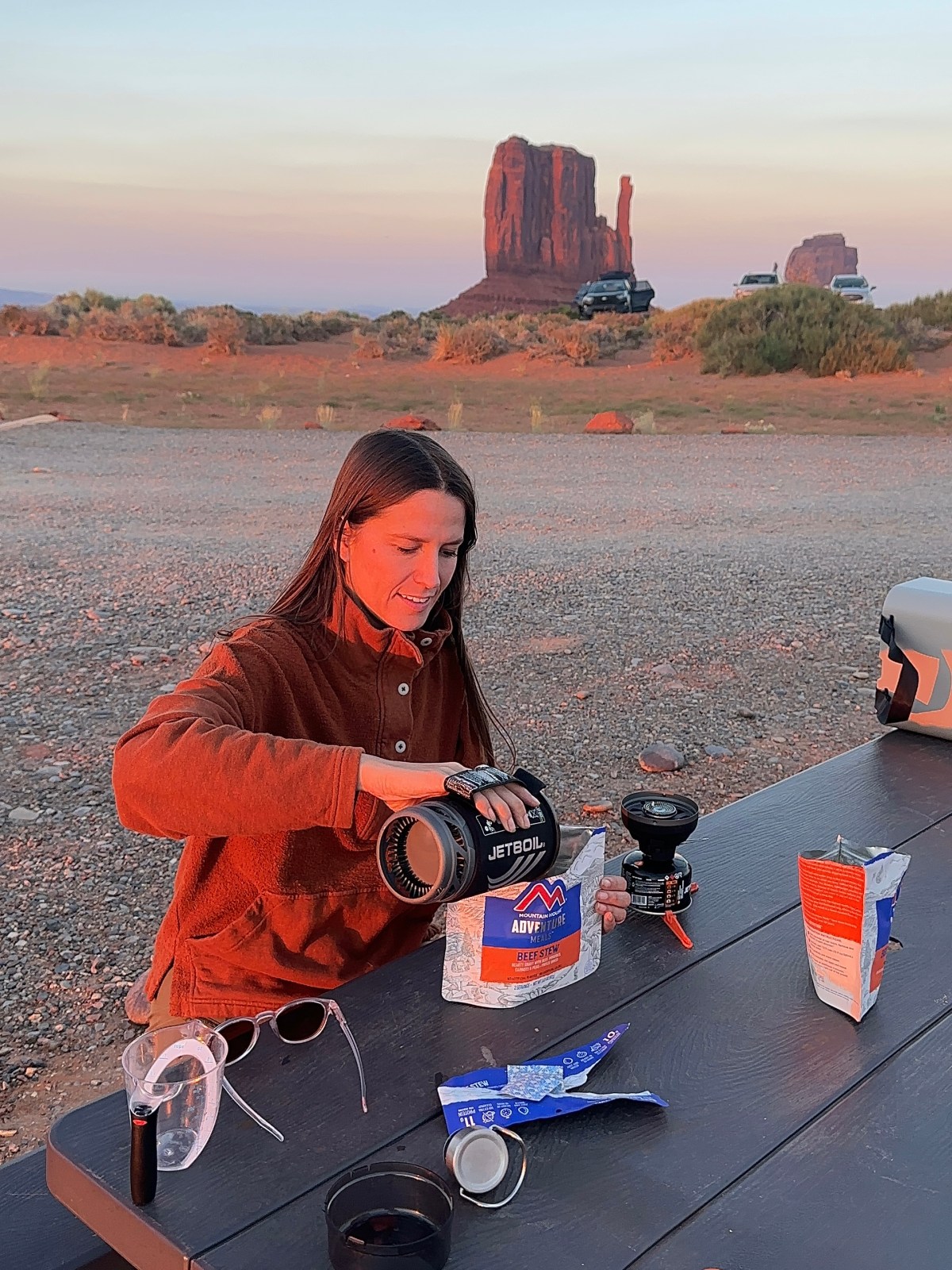
We also always bring our Jetboil Flash with us so we can easily heat up water quickly! We use the Jetboil to boil water for coffee with our AeroPress, instant coffee, oatmeal, and for Mountain House meals.
We also have a Coleman Grill that we were gifted! The grill is great because it allows us to grill foods and get a different flavor while also providing more space to cook more food at once. Additionally, there are optional accessories such as a griddle or stove insert that you can purchase.




Cooler
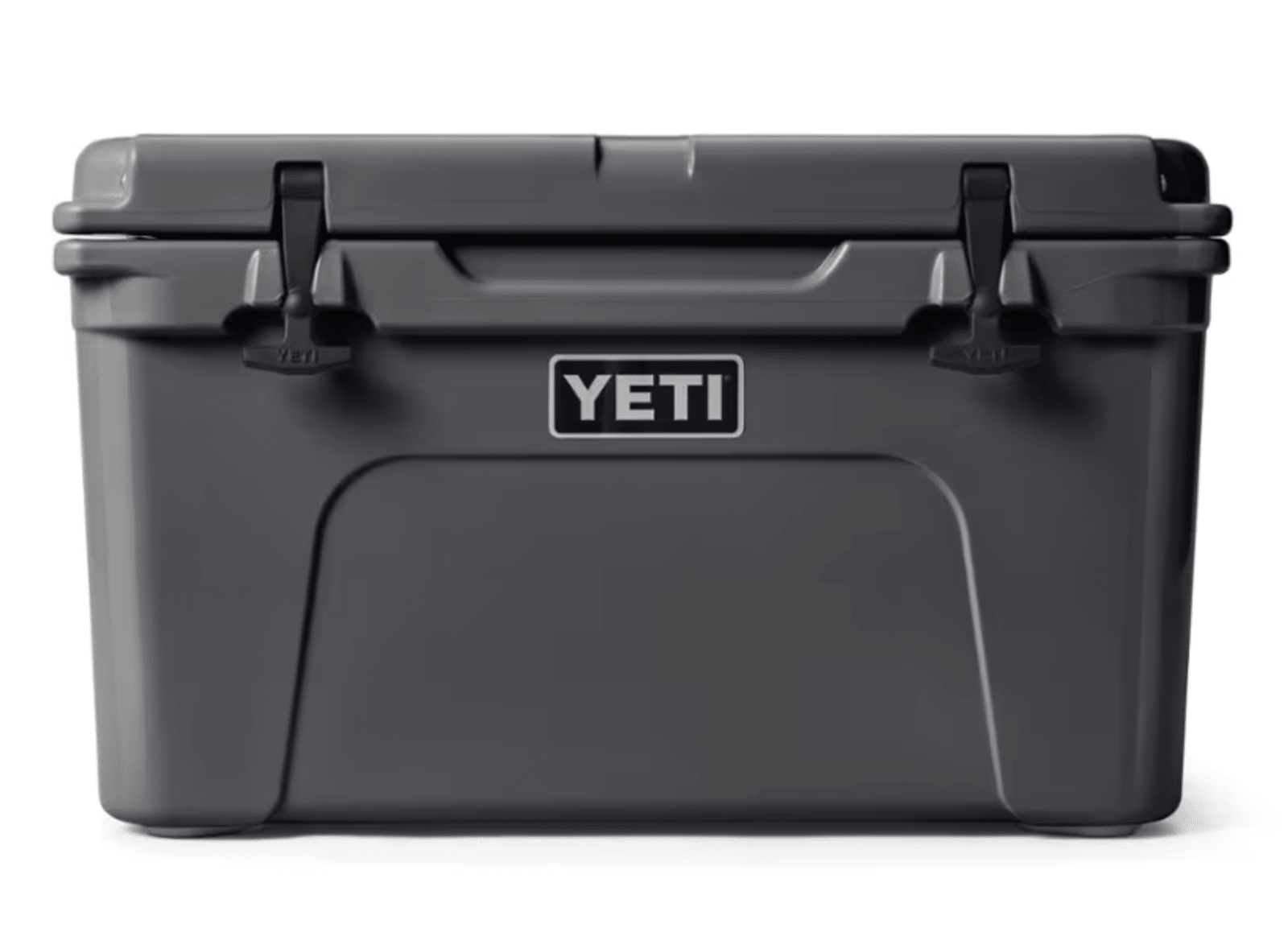
A good cooler that will keep your food cold is a must! We have the YETI Tundra 45 and the Roadie 24. In addition we have an RTIC 52 qt ultra light. This blog post that goes into the difference of the coolers and what we like best.

2025 Update
After a lot of research and careful thought about our camping setup, goals, and available space, we decided to purchase an electric cooler. We purchased the Dometic CFX5 45. This size is a little bigger than what we may always need for just us two on a weekend camping. However, it fits within our set up and allows us to keep more items cold. Also, on longer trips or with more people the cooler size is really helpful.


Food storage + Cooking Utensils
Food storage and cooking utensils is something that can be easily forgotten about, but is important! What will you cook your food on and what will you store your food in? Will you bring condiments? We’ve been using old pans and utensils that we keep them in our camp box so we don’t forget them. We also bring a cast iron pan to cook with as well.
A lot of these items we have acquired overtime. For example, the Hydroflask camp plates are an investment we just recently made, but they are good quality and keep our food warm. The small containers are great for putting condiments in. Often we are only camping for a few nights and don’t need to bring the entire condiment bottle so it saves room in our cooler! Additionally, it’s best to start a separate collection of camp cooking utensils that stay packed together with your camp gear, this way you don’t forget anything from your kitchen, which we’ve done more than we want to admit. Your camp collection can be old and used utensils because they’ll definitely get dirty and potentially break or get thrown out.
- Egg holder
- Camp stove cooking set
- Griddle
- Marshmallow & hot dog roaster
- Camp Plates
- OXO Knife
- GSI Coffee Mug
- Squeeze bottles (we use for coffee creamer)
- Stasher Reusable Bags
- Small containers
- Old can opener
- Old cutting board
- Utensils
- Lighter
- Wine glasses


Camp tables
Camping tables are needed if you are dispersed camping. But they also come in handy at designated campgrounds if you need an extra table! We have two sizes and like them because they pack down easily and are lightweight.


Water
Potable water is important! Many developed campgrounds have potable water, but it’s not a guarantee and we highly recommend checking ahead time, especially if the water is not running. Dispersed campsites don’t have running water put depending on location, there might be potable water at a spring or creek. Since we started camping, we’ve always brought water with us, sometimes in 1 gallon bottles or an Igloo 5 gallon cooler. In the last year we invested in Dometic Go Hydration refillable 11 liter water jugs. We have two jugs and usually designate one for drinking water and the other for washing dishes, brushing teeth, cooking, etc. If we’re camping where they have running water or wash stations, we won’t always bring both jugs.


Clean Up
Collapsible Sink + Soap Dispensing Brush
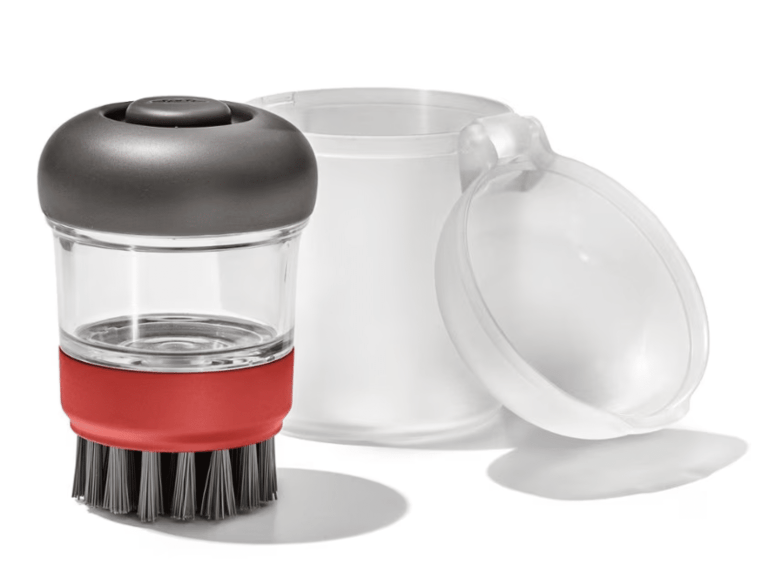
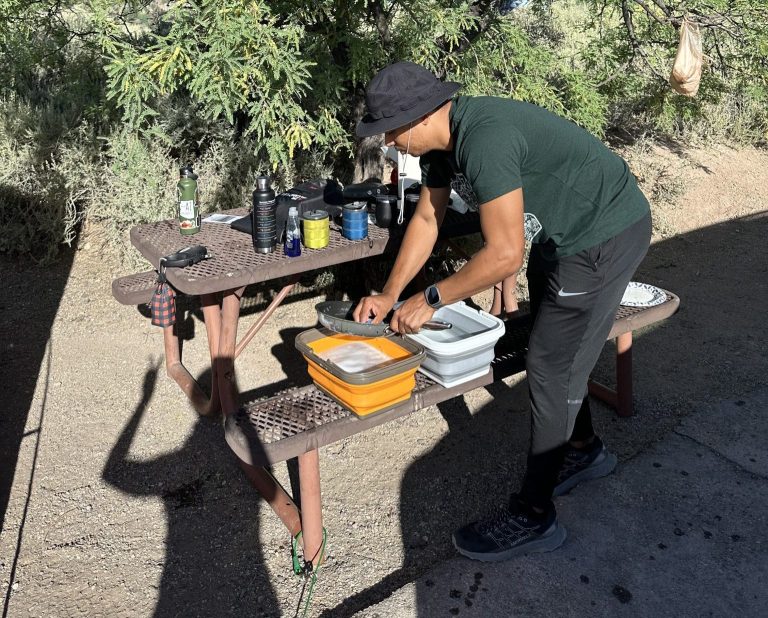
Doing the dishes is one of our least favorite things about camping, but it needs to be done! If the campground doesn’t have water or a sink we bring our collapsible sink. This allows us to easily be able to wash our dishes. We also love this soap dispensing brush! Trash bags are so important to remember. We always bring a good amount just incase. We also bring a trash bag for recycling and will bring the recycling home with us to recycle if the campground doesn’t have a recycle bin.
Other Items:
- Lodge Chain Scrubber
- Lodge Scraper
- Paper Towels
- Biodegradable Soap
- Trash bags
- Dish Towel

Camping Storage
Kelty Camp Bag + Storage Bins
The Kelty Camp Bag is fantastic. We keep a lot off our cooking items in this bag and it easily hangs so we can get into it with no problems. We use Costco storage bins to organize our camping gear and we also have some clear bins from Target for smaller items. REI and other brands also sell storage bins too! We like the hard shell bins because they are stackable and durable.


Camp Fire
2025 Update
Now that we have a pickup truck most of our gear is kept in the truck bed and exposed to dust on all the dirt roads we take as well as water when it raining. We wanted to ensure our sensitive gear stayed dust free and dry so we upgraded our storage boxes to Rugged Cases from Roam Adventure Co and Yeti LoadOut GoBoxes. These boxes are very durable and dust and water proof. Both brands offer different sizes and we have multiple boxes from both to best fit our needs.
Roam Adventure Co Rugged Case 86L | Roar Adventure Co Rugged Case 105L
Camp Chairs + Firepit
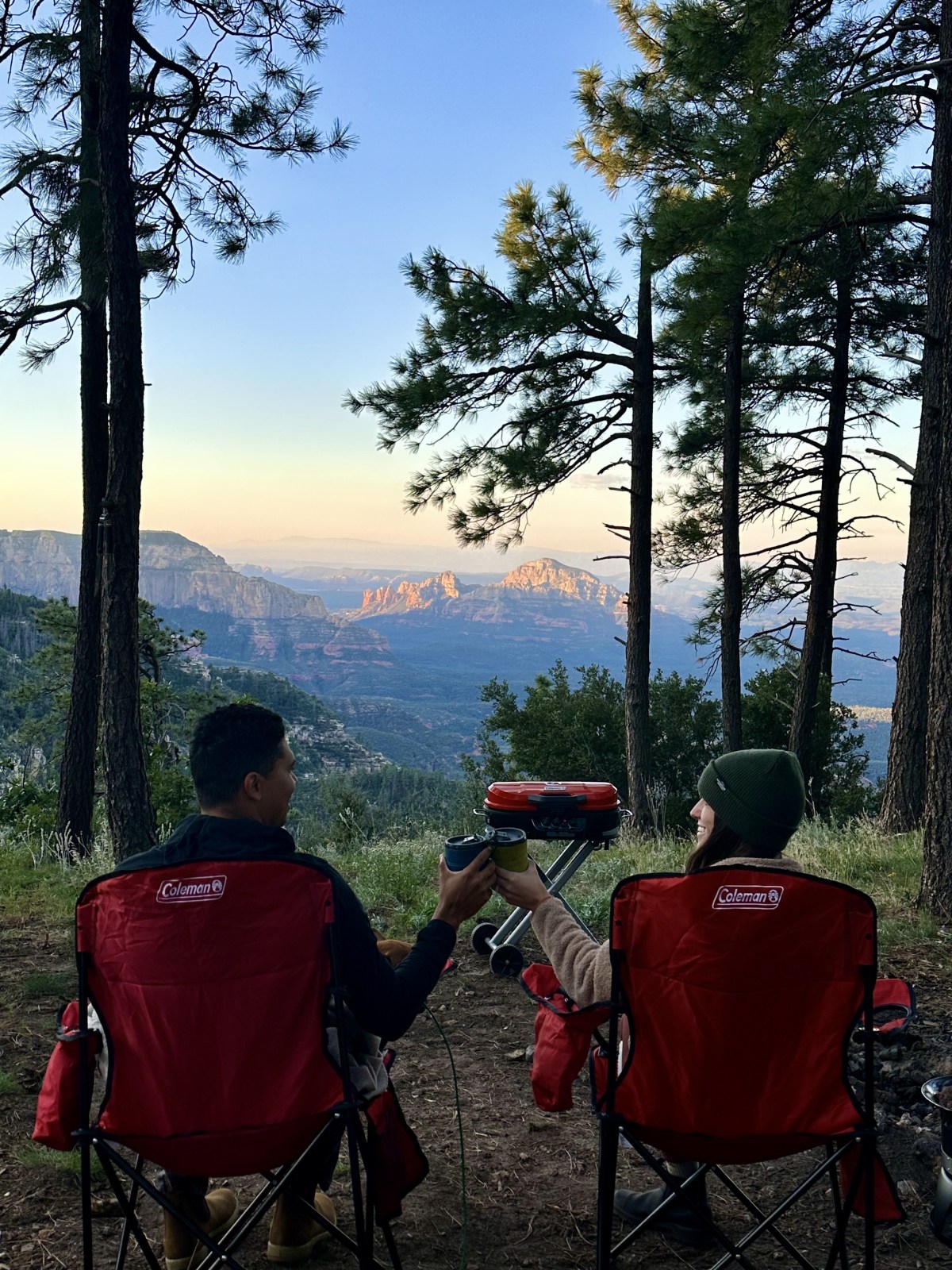
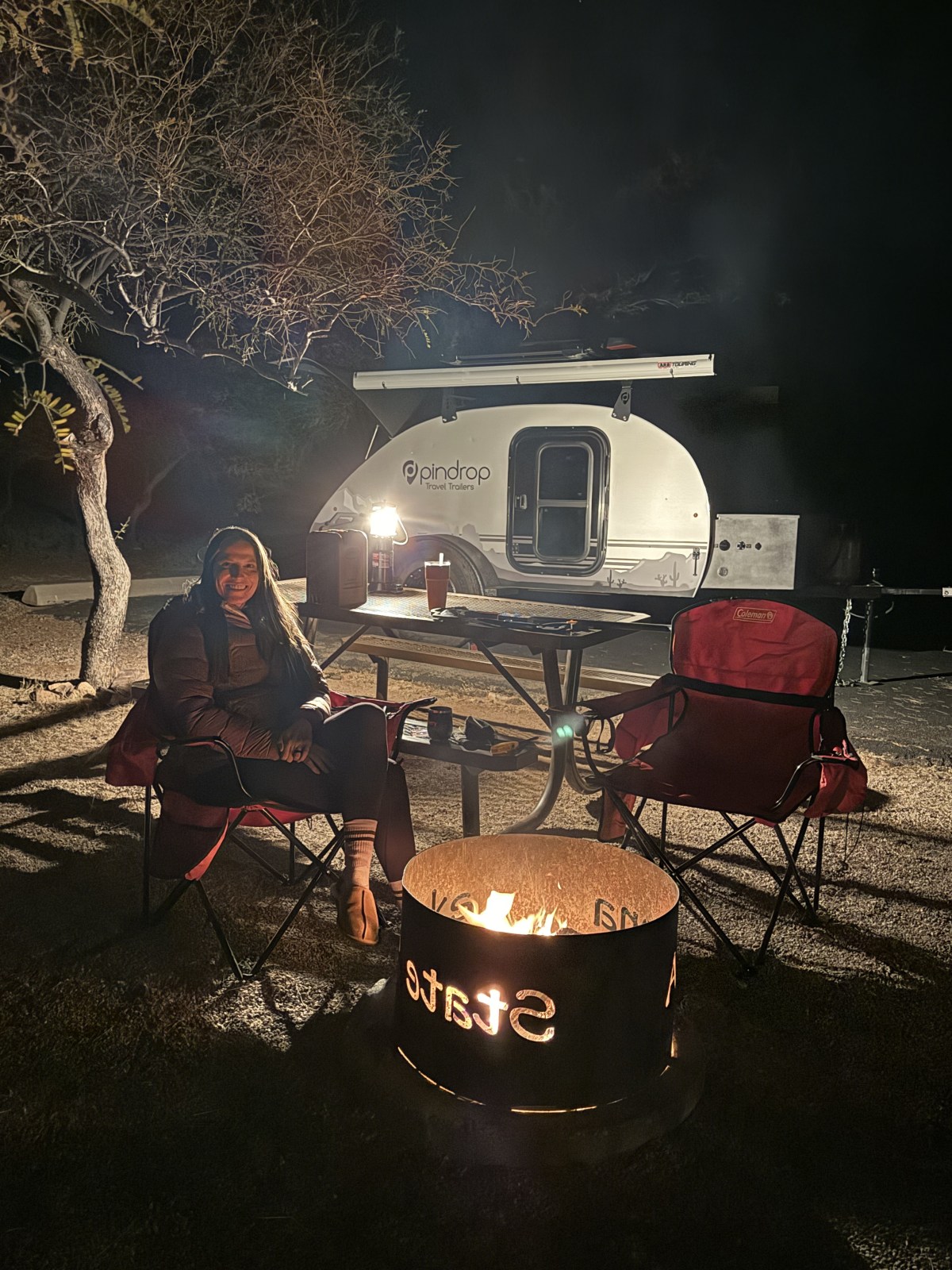
We were gifted Coleman camping chairs and love them! We like that they are big, have a built in side cooler, and pockets to pur your phone or other items in. For a long time we used cheap $10 chairs from Dick’s Sporting Goods. We will bring them with us still when we camp with other people and need chairs. The con about both of these chairs is that they don’t pack down small. Costco sells great packable chairs and there are other brands on REI’s website as well.
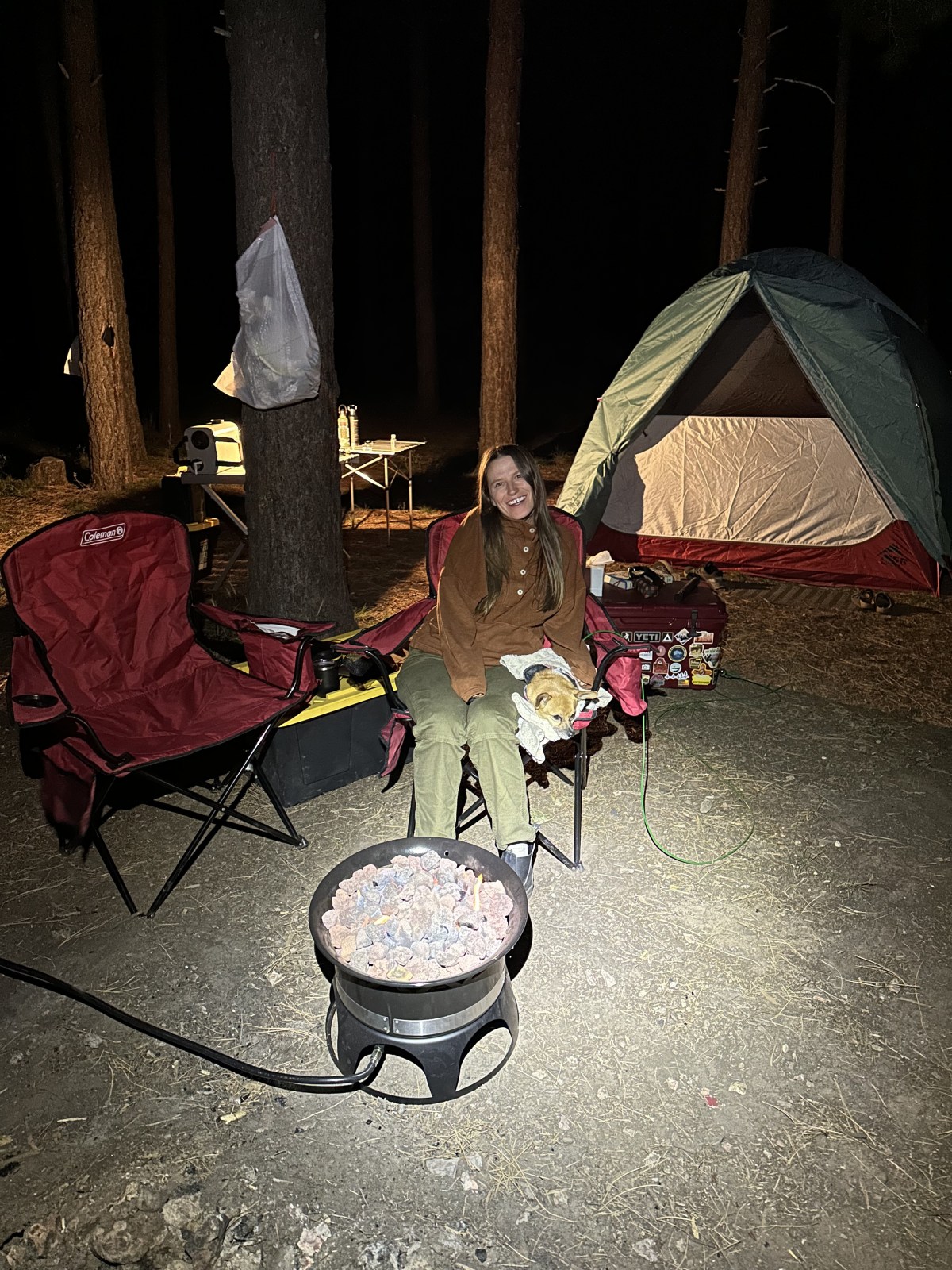
We bought a propane fueled Camp Chef fire pit because often times when we camp there are fire bans. This allows us to still have a fire! When we bring the fire pit we bring propane too. The fire pit works with a normal 20lb tank, but because they take up so much space, we bought a 5lb tank from Ignik. The Ignick gas growler isn’t too heavy and the carrying case helps protect the tank in the car.




2025 Update
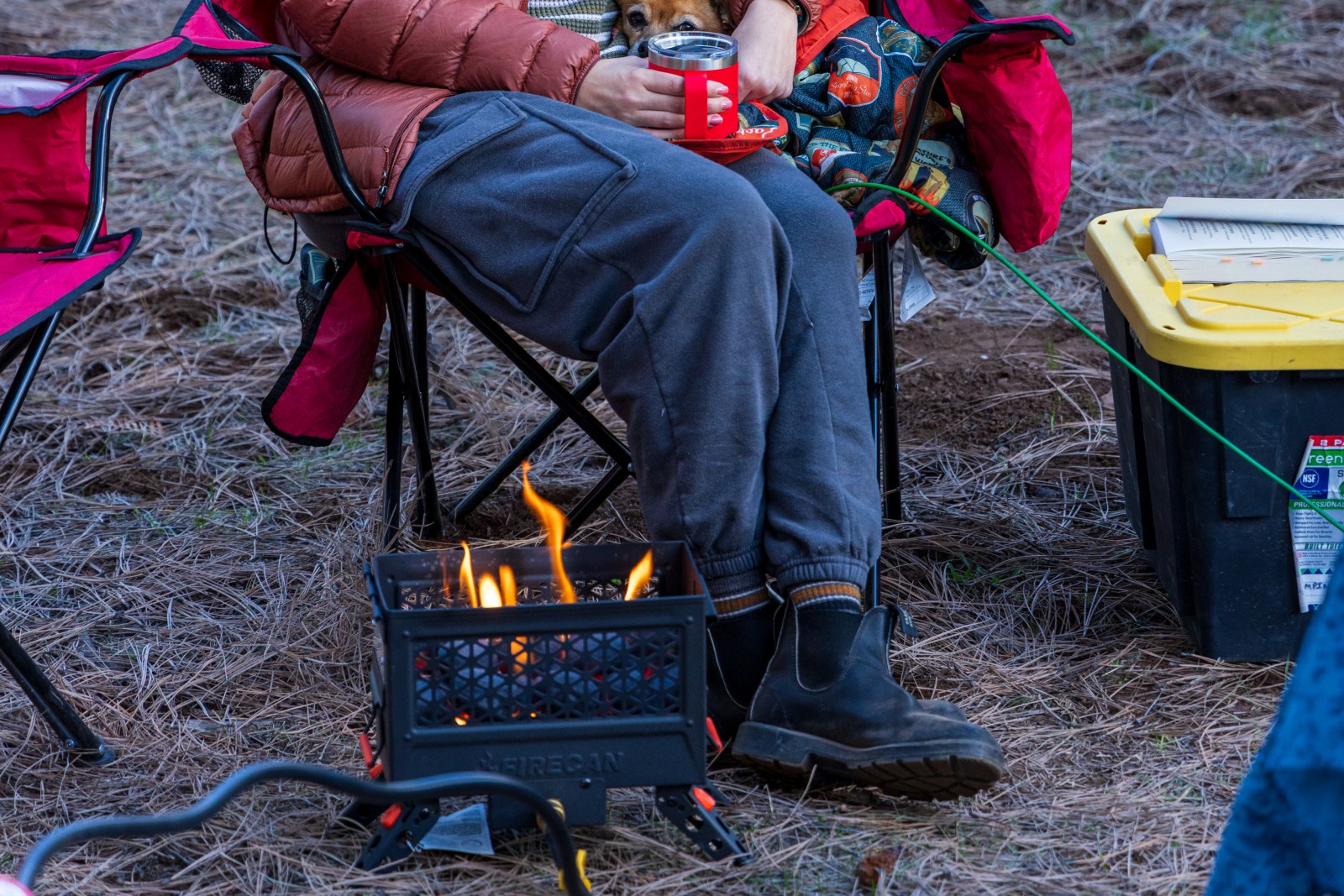
After taking our larger fire pit out a couple times we realized that we needed a more compact fire pit to better fit with our packing. We bought the the Ignik Firecan fire pit. To get some increased warmth and more of the dancing flame aesthetic, we also bought the moon rocks from Ignik, we highly recommend these as well.
Arizona State Parks - Family Campout
Arizona’s State Parks and Trails is a great place to start camping. Not only do many of their State Park campgrounds come with graded tent spots, fire pits, picnic benches, toilets, showers, and more, the organization also offers Arizona Family Campouts. These family campouts are perfect for first time campers or those still learning. AZ State Parks provides tents, sleeping mats, flashlights, chairs and all activity equipment for families that register. For all the details and future Family Campouts, check out their website.

